Pat Flynn

From The Classroom To The Stage w/ Pat Flynn /  by William Green

I've always liked the little moments that happen between the things I originally set out to document. The conversations that start without anyone asking a question, the stories that come up while someone's showing you around, the seemingly insignificant details that end up being some of my favorite parts of the day.

I brought a camcorder with me when I traveled up to Massachusetts to spend the day with Pat Flynn. I didn't necessarily have a particular film in mind. I just figured there would be things worth recording along the way.

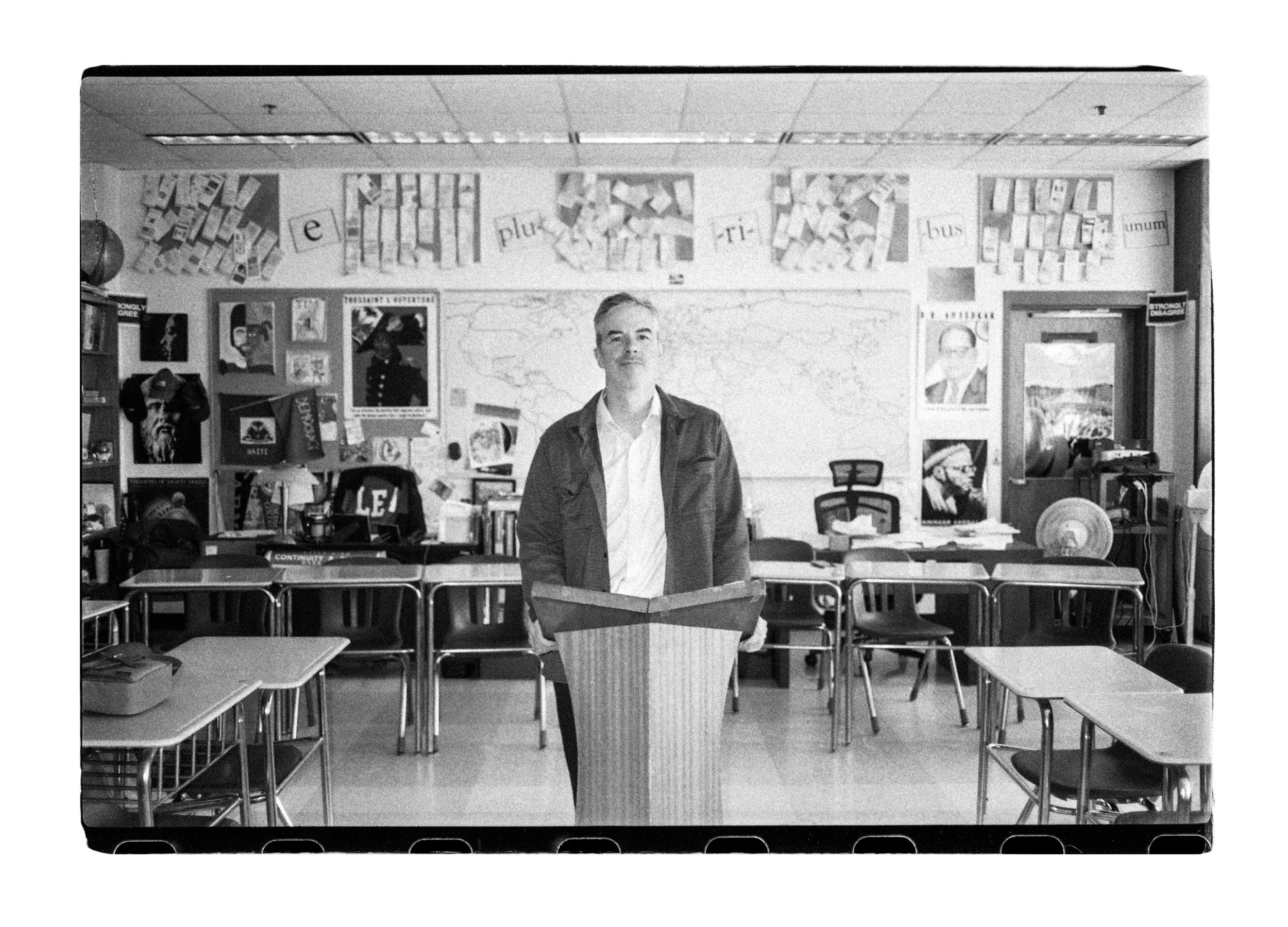
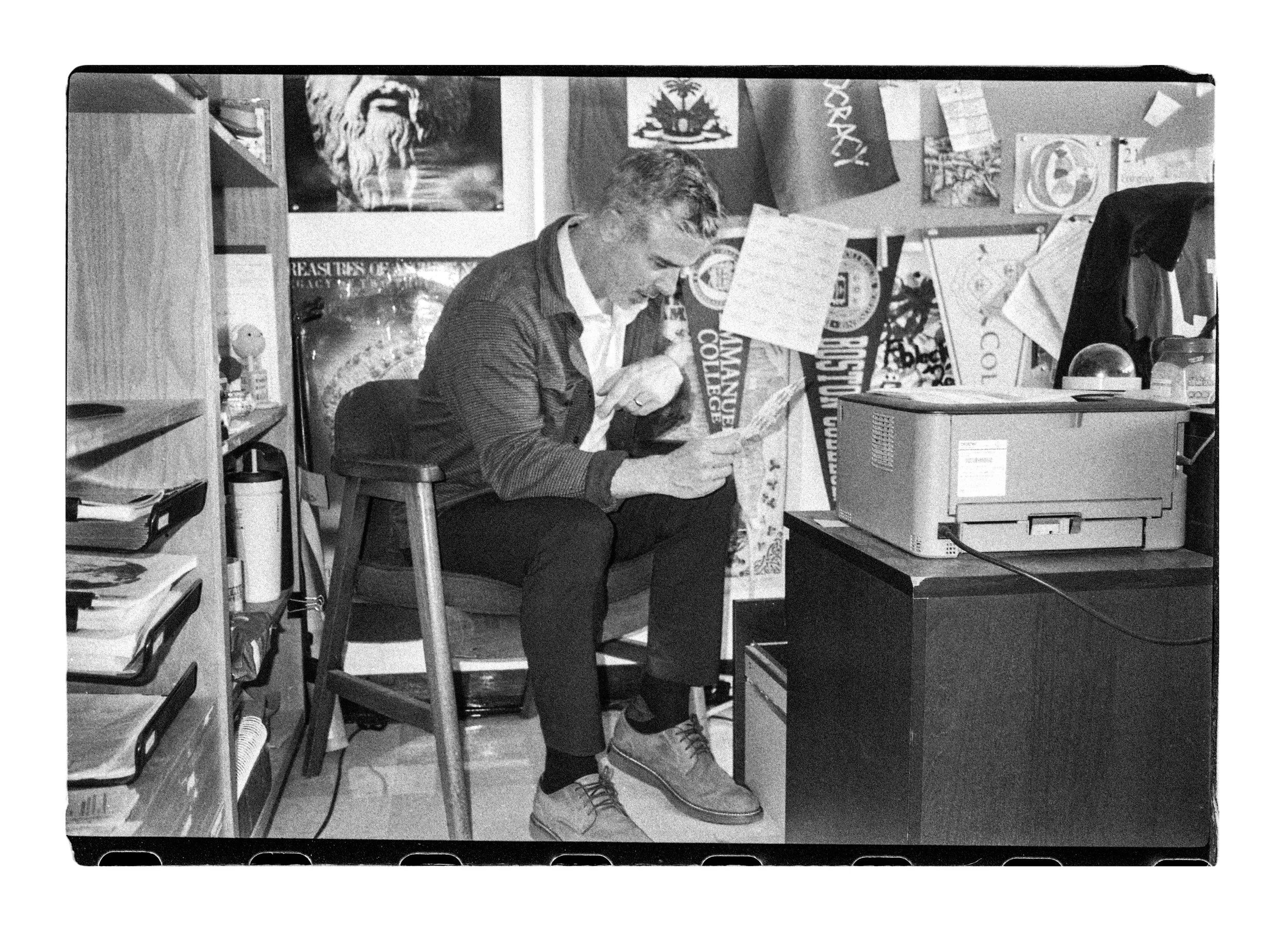
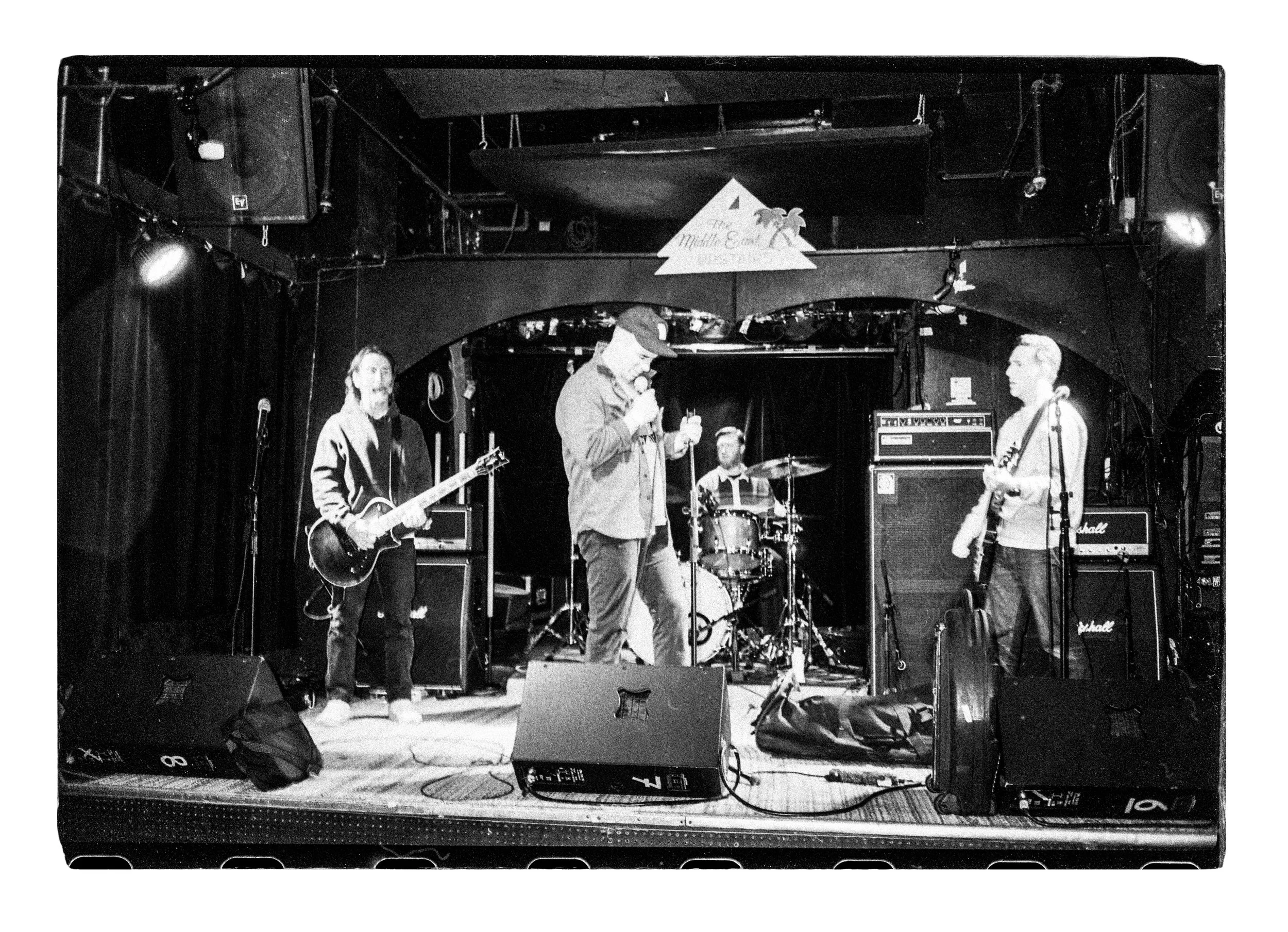
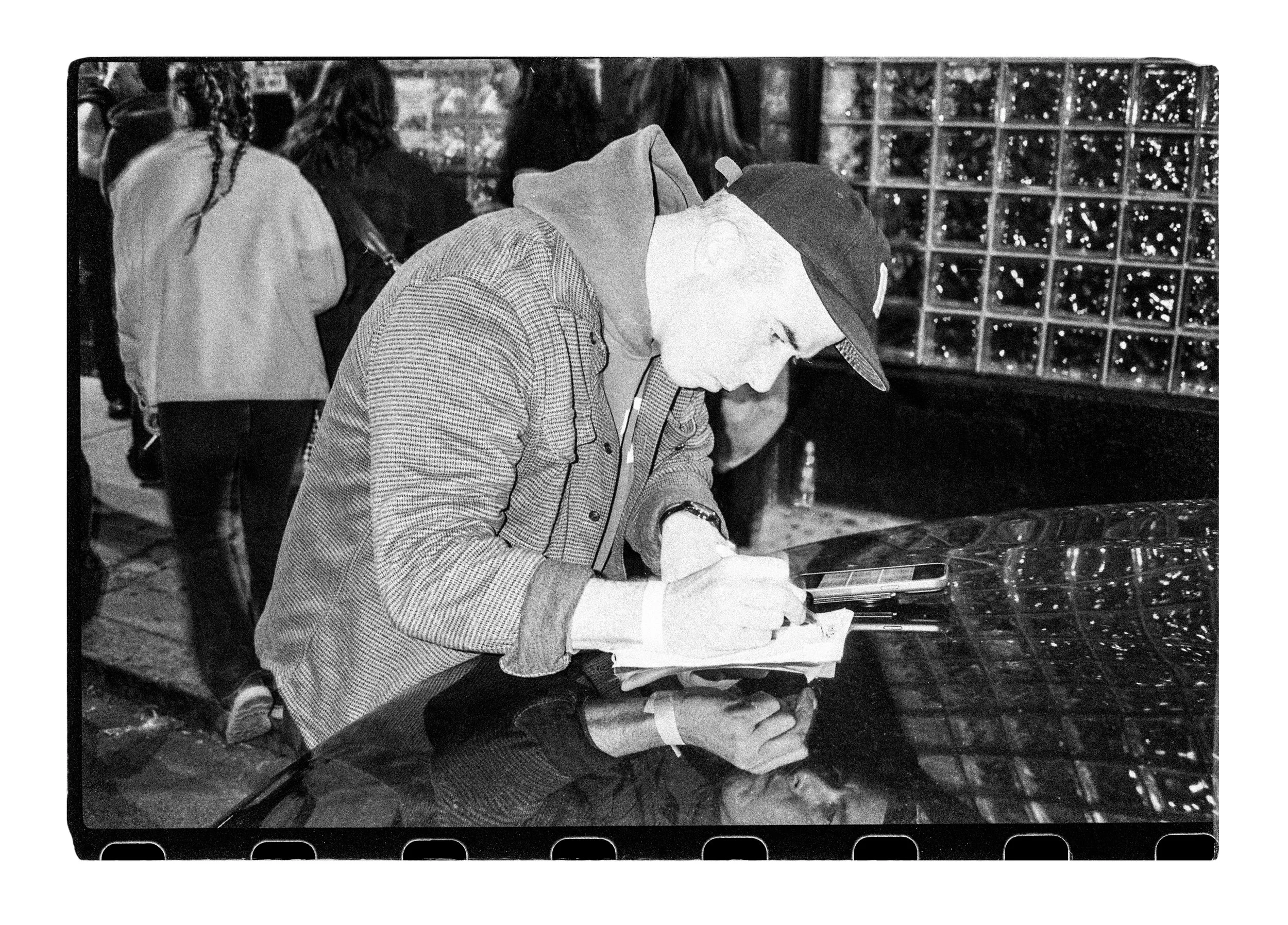
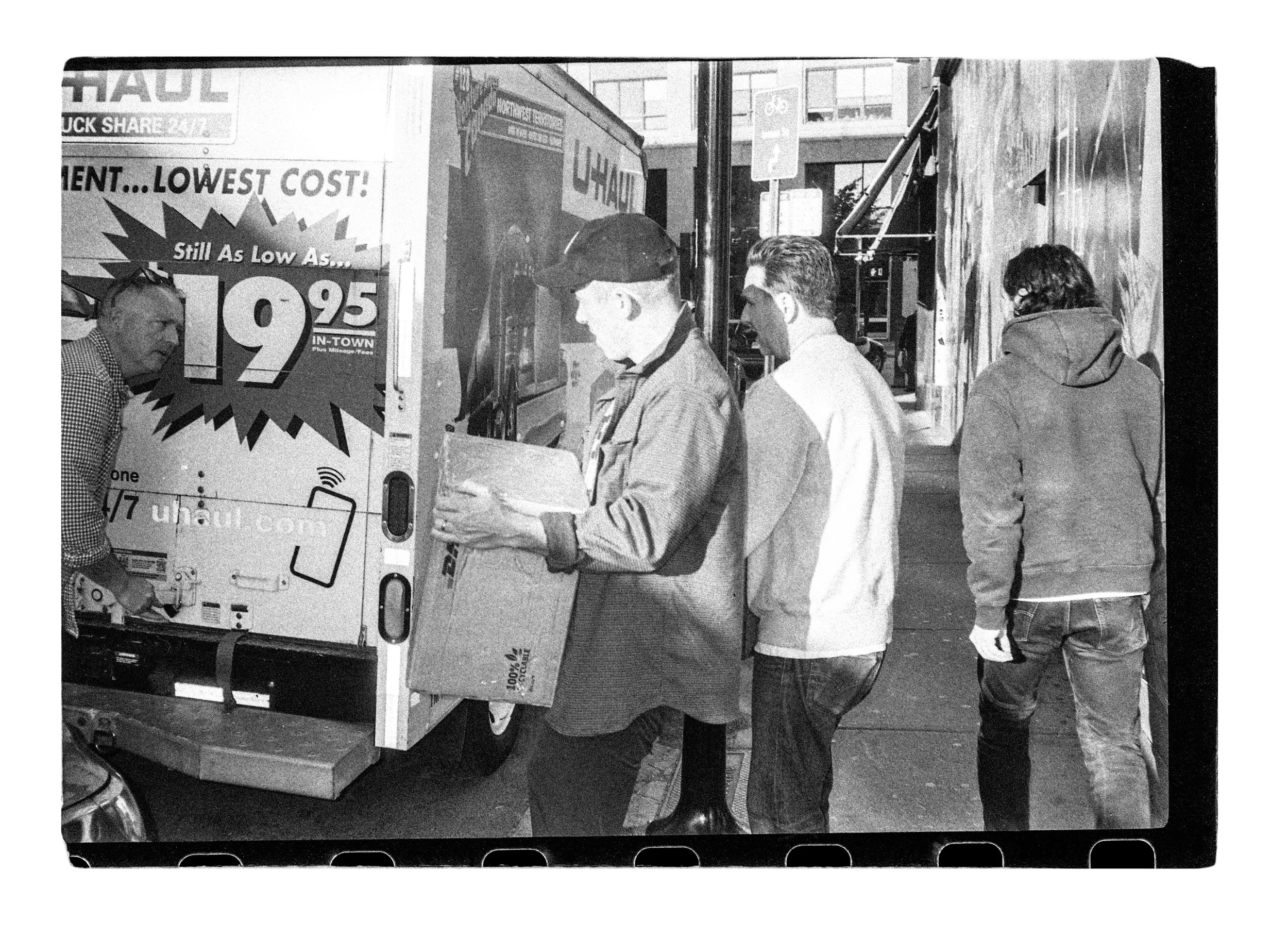
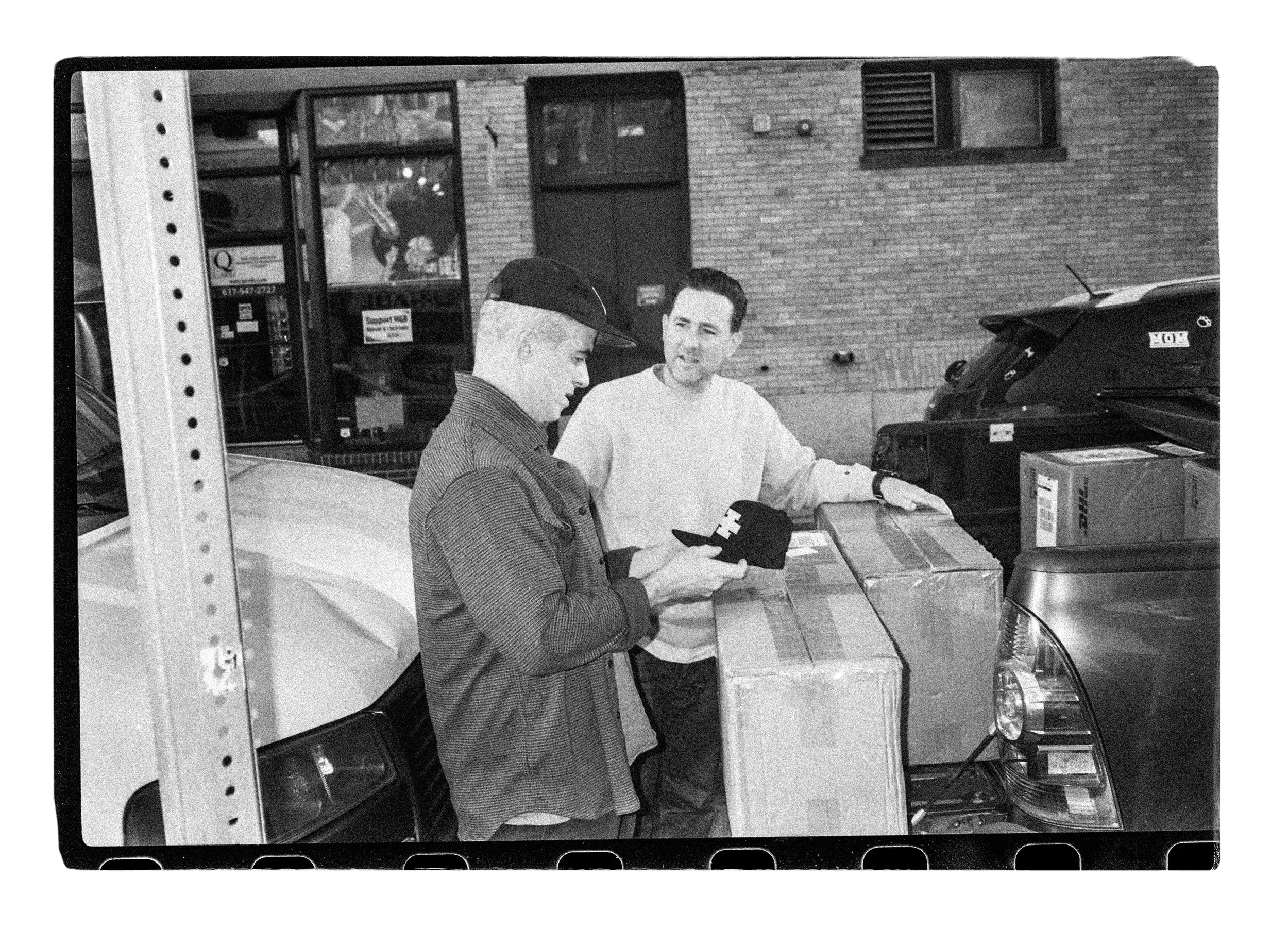
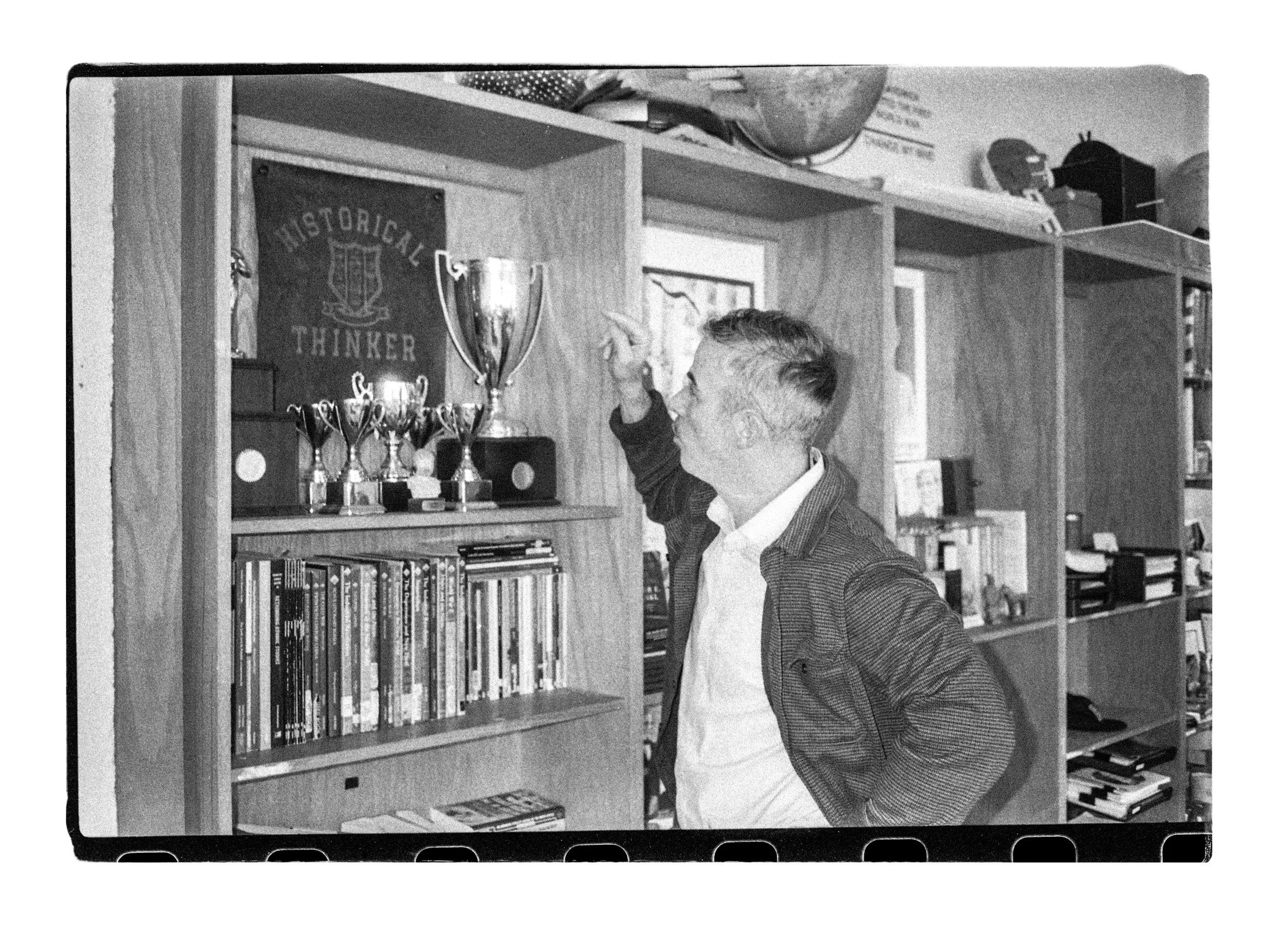
What follows is a collection of those moments, beginning with my commute from New York and eventually finding my way into Pat's classroom. He shows me around, tells stories about the various things he's accumulated over the years, and lets me photograph him standing behind a podium that once belonged to his father. Somewhere along the way, the classroom gives way to the car, and eventually the stage.

You can teach a man history, but you cant teach him to have heart.

The Lives We Leave in Others: A Conversation with Pat Flynn Of Have Heart /  by William Green

Fifteen years ago, I was in my early twenties watching videos of Have Heart performances on YouTube, completely captivated by the music and the energy surrounding it. I don't think I could have imagined that all these years later I'd find myself sitting in Pat Flynn's classroom, listening to him speak so openly about his life, his students, and the things that have shaped him.

I've spent a lot of time around musicians over the years, but meeting someone at the high school where they teach is an entirely new experience for me. Usually, these days begin outside a venue, in a van, or around whatever restaurant happens to be closest to soundcheck. Today is a little different.

I hadn't really considered the possibility until Pat suggested meeting at his school during our initial phone call. Even then, I wasn't entirely sure what to expect. I'd seen plenty of videos of Have Heart performances accompanied by some variation of the joke, "Imagine this is your history teacher," but there aren't many photographs of Pat in that environment.

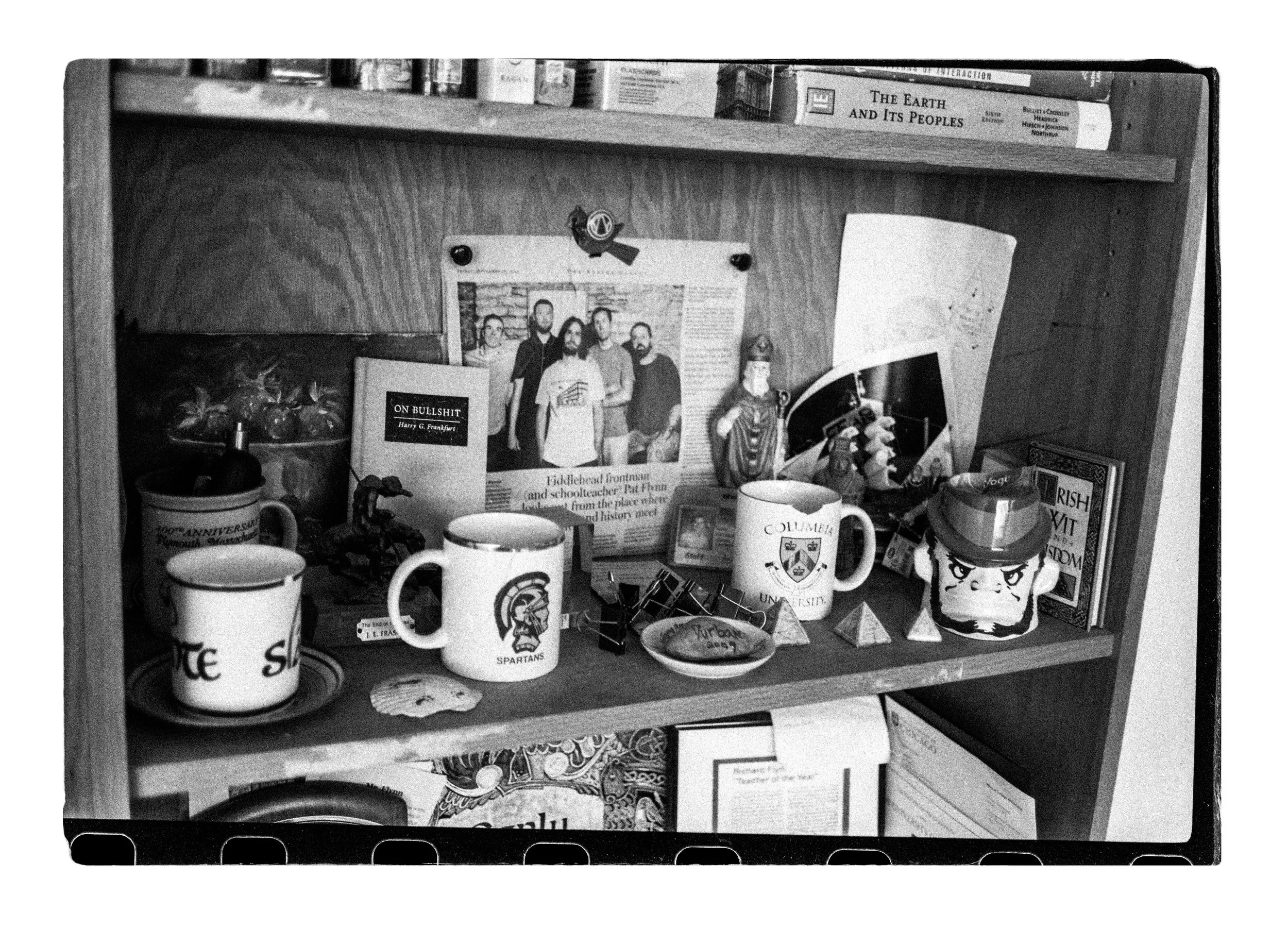
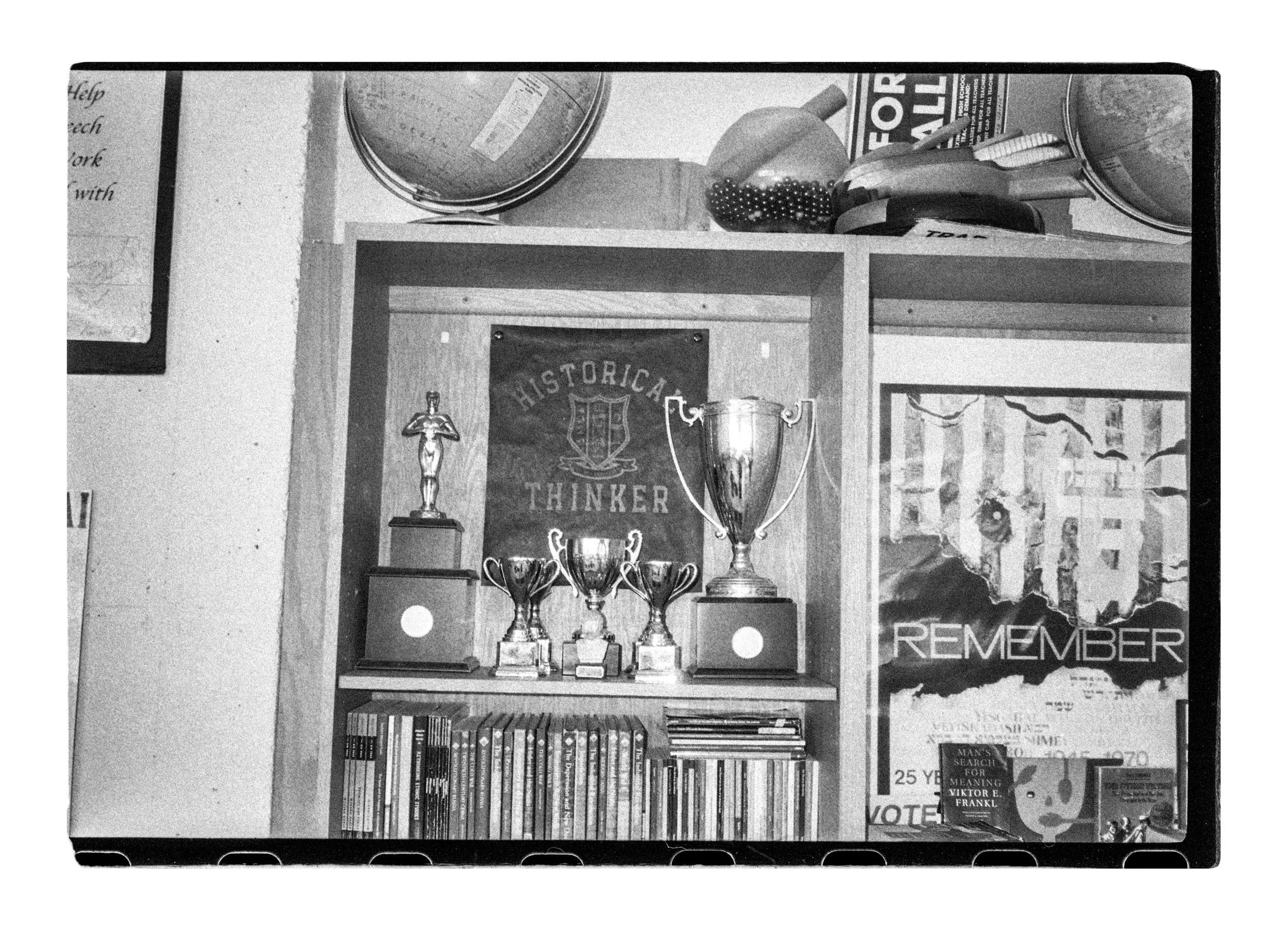
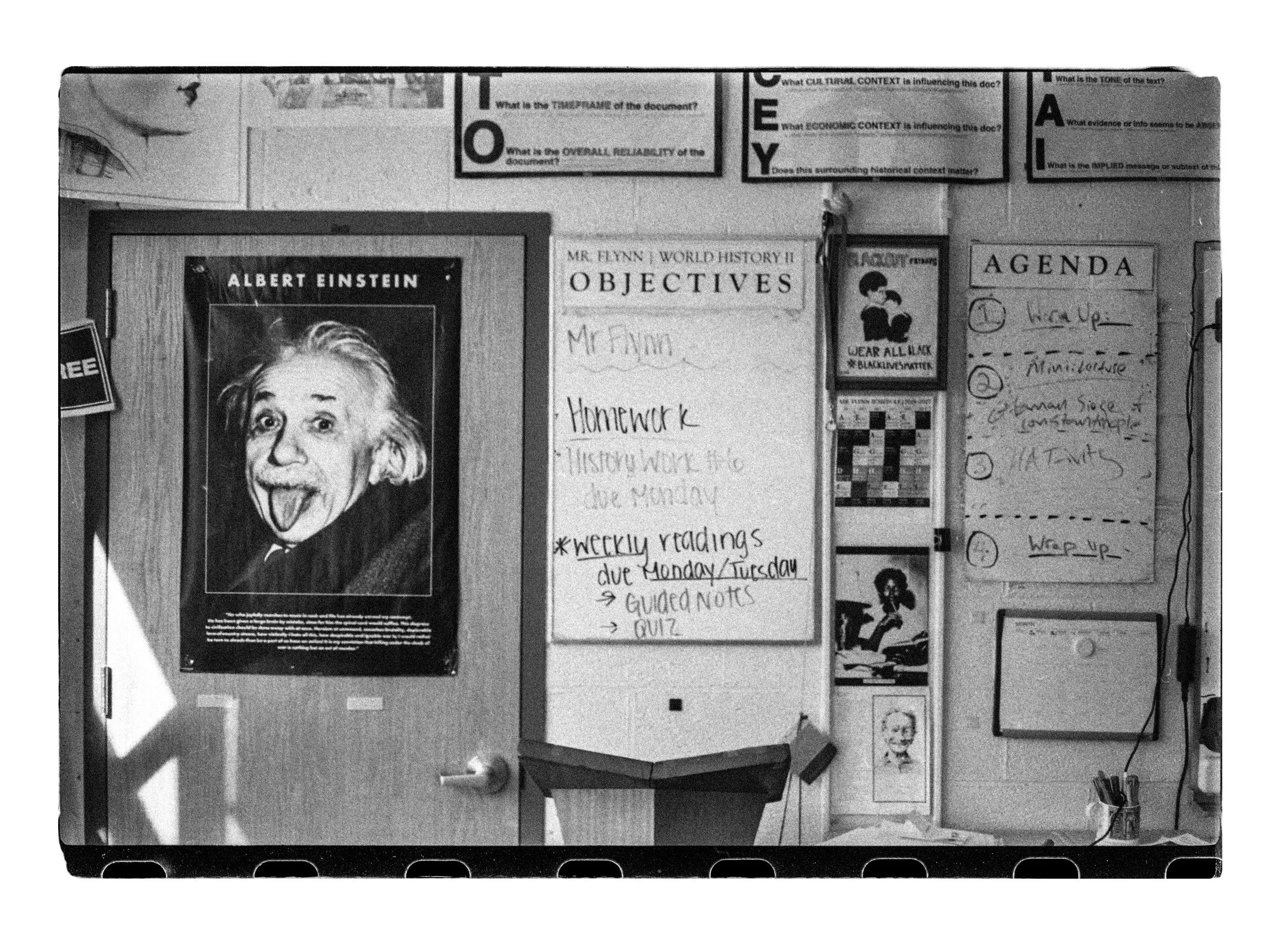
Inside, I quickly realize this isn't simply a classroom with historical figures pinned to the walls. Nearly everything seems to have been placed there deliberately, and everything has a story attached to it. What becomes immediately apparent is just how thoughtful and passionate Pat is about what he does. There's an extraordinary amount of intention behind his words, whether he's talking about hardcore, teaching history, or the smallest details scattered throughout his classroom.

Pat begins showing me around.

There's a podium that belonged to his father, which he's carried with him through different classrooms. There are posters of historical figures whose stories he feels deserve considerably more attention than they've received. Student projects, old photographs, and bits of hardcore-inspired graphic design occupy different corners of the room.

At one point, he shows me a collection of thank-you letters from former students. He tells me that if there were ever a fire in the building, these would be the first things he'd grab. One letter in particular has stayed with him. Written by the parents of a former student, it describes how their son had begun gravitating toward extremist ideology before taking Pat's class. Through the way Pat approached history, questioning ideas and allowing students to work through their own reasoning, their son began reconsidering what he'd been listening to.

It's a letter that means a great deal to him.

What strikes me most is how much of his approach to teaching seems connected to the ideas that have followed him through hardcore. Community, responsibility, questioning authority, and the importance of allowing people to arrive at their own conclusions.

We spend a considerable amount of time talking about the relationship between memory and history. Pat describes them almost as two people living under the same roof, related to one another but experiencing things very differently. Memory is emotional, imperfect, and often considerably more entertaining. History is the one asking for evidence, questioning the details, and reminding everyone that what they remember isn't necessarily what happened.

Eventually, the conversation turns toward Have Heart.

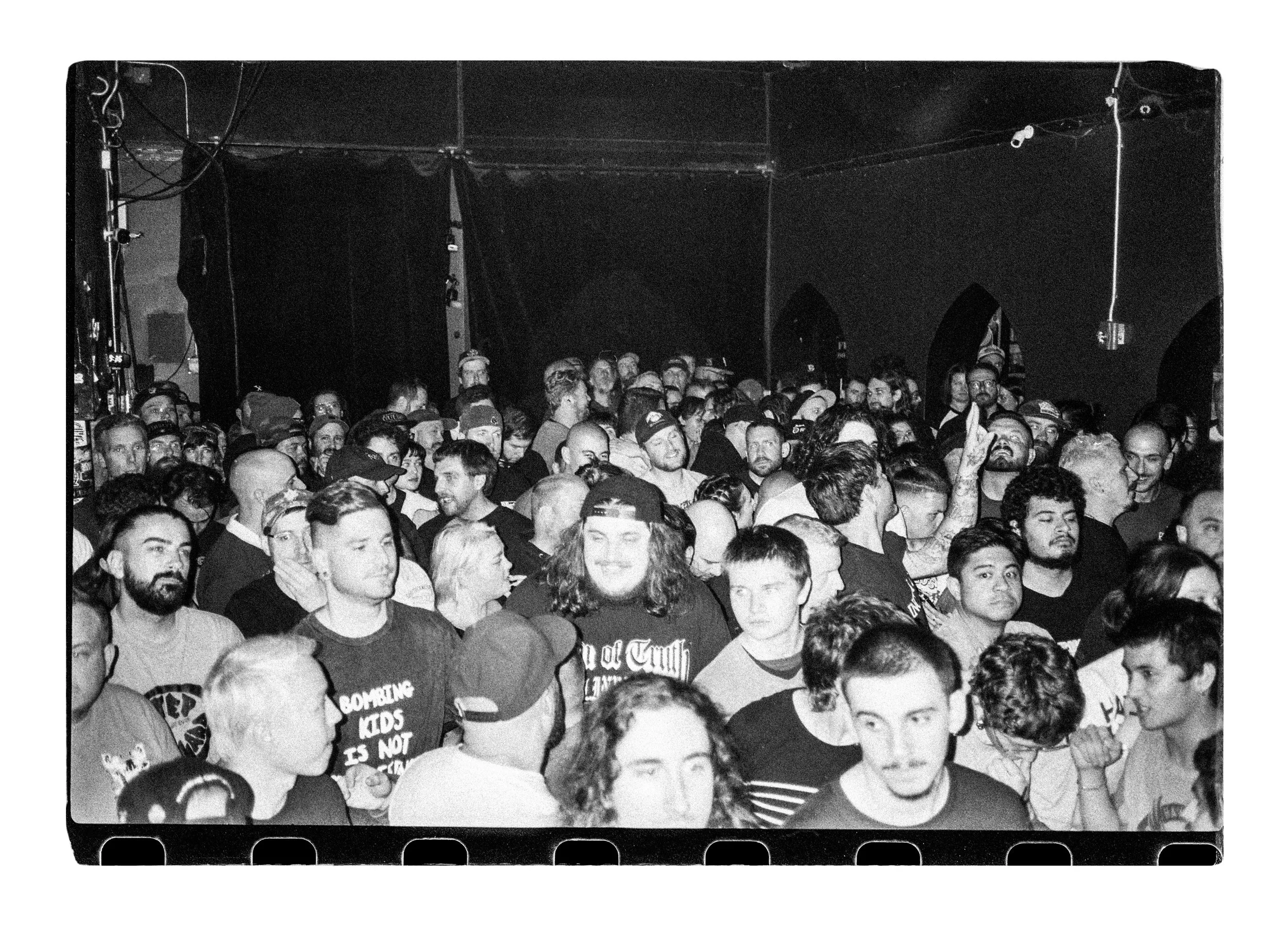
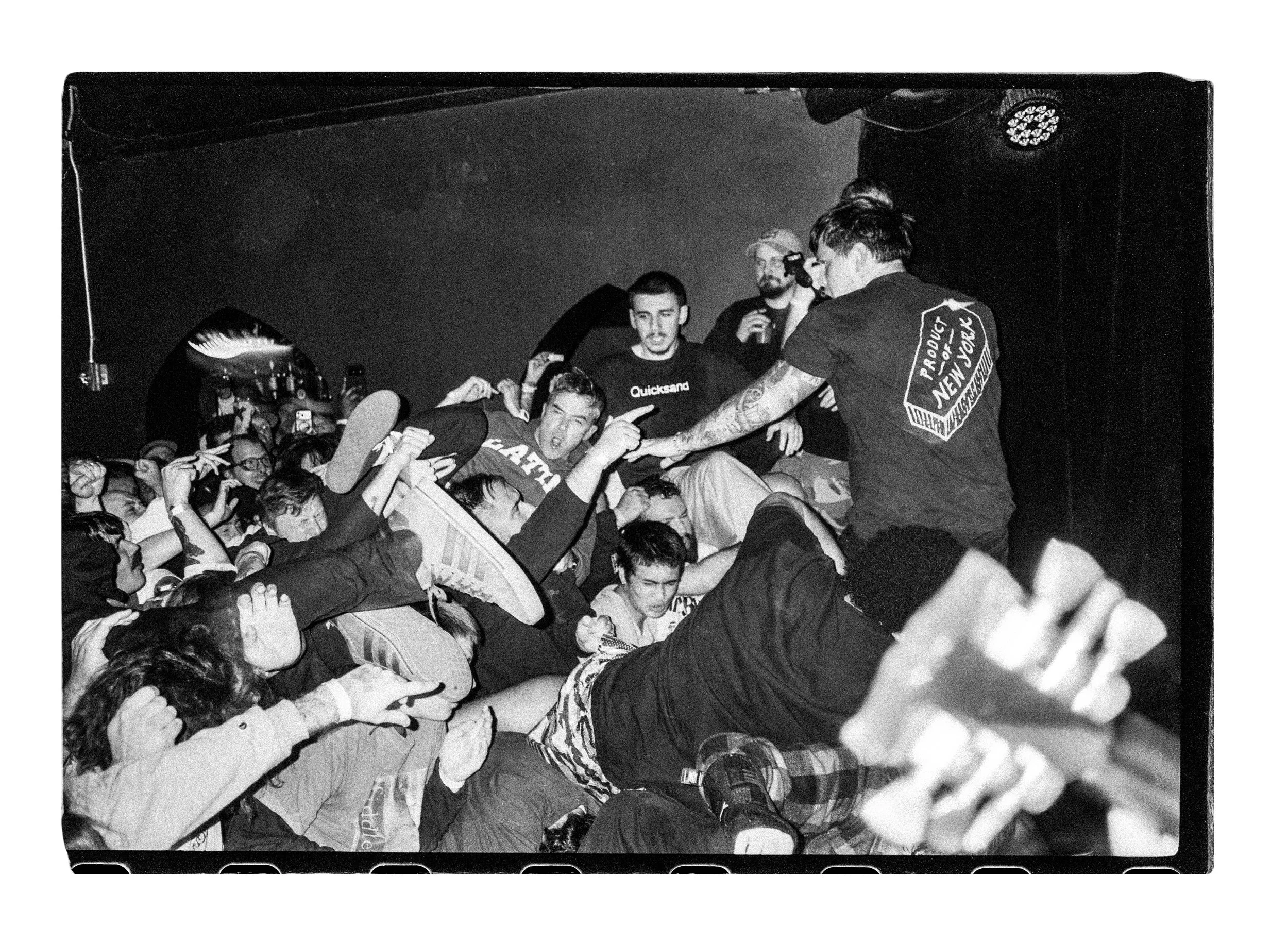
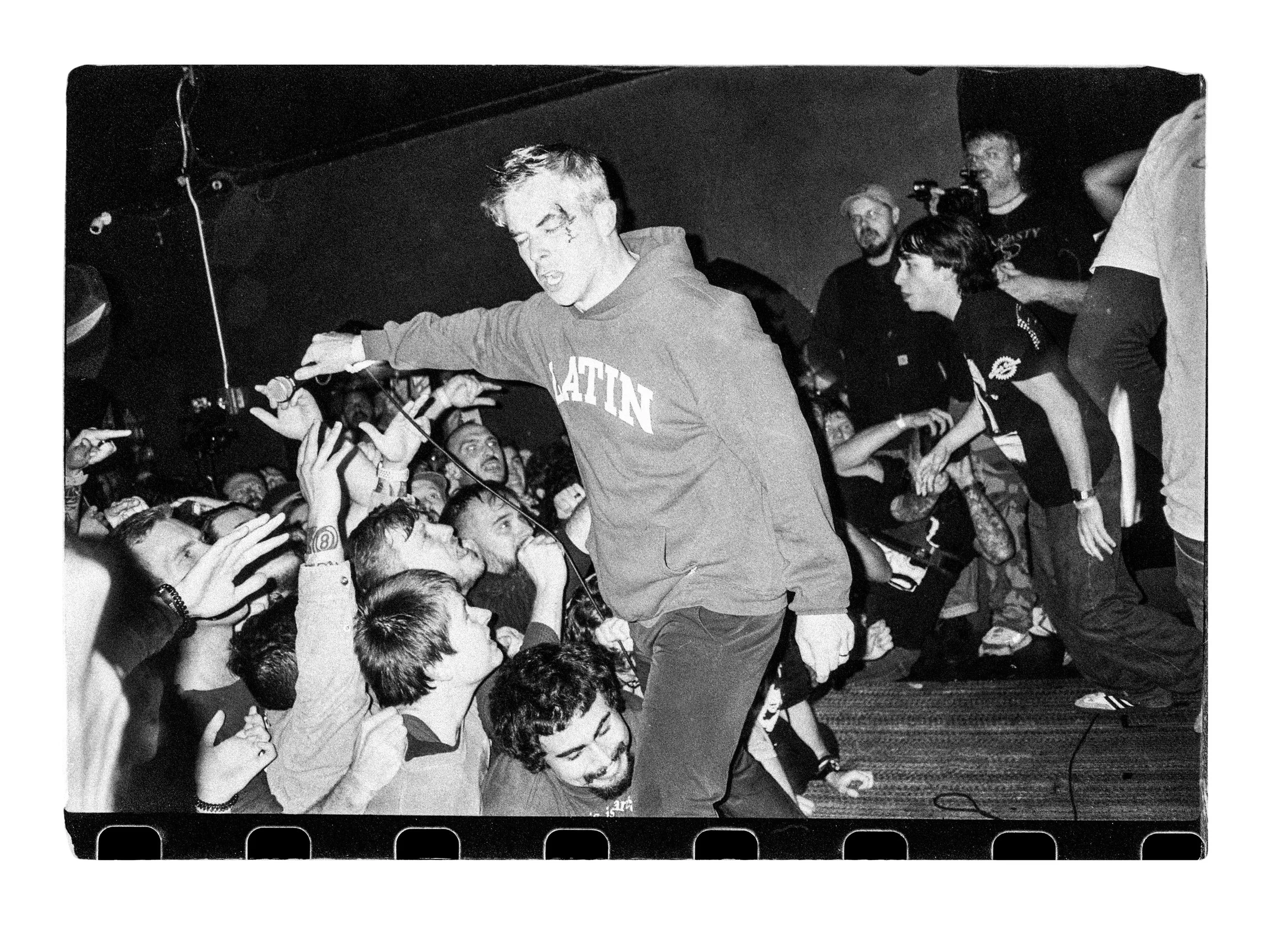
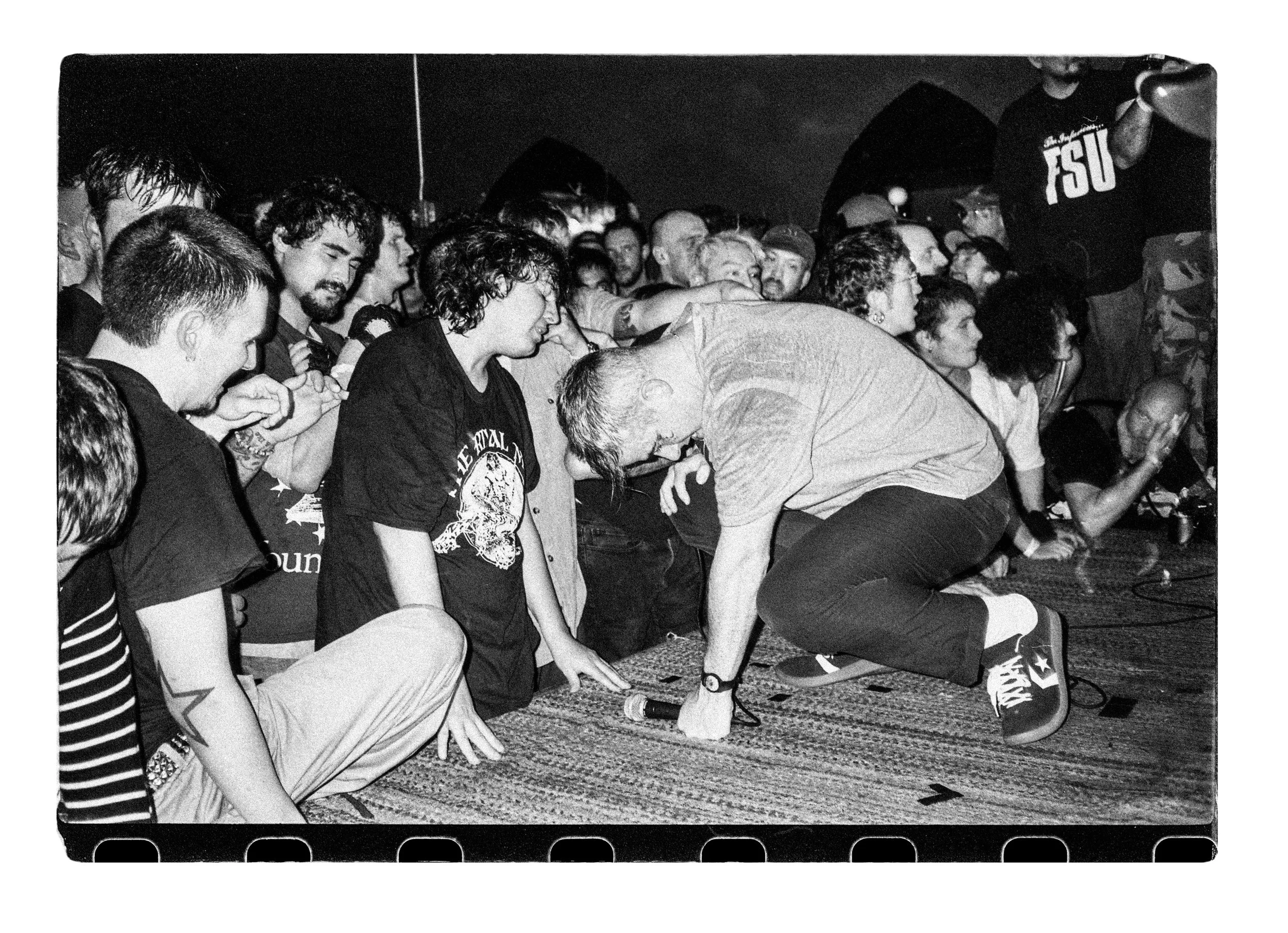
He talks about how they initially expected their reunion performances to attract a relatively small group of people who'd been around the first time. Instead, thousands showed up. What's surprised him even more is how much younger the crowds have become with each subsequent run of shows. He describes his continued involvement in hardcore as a kind of youth service. It was something he needed when he was younger, and the possibility that it might provide a similar place for someone else remains important to him.

There's also an interesting contrast in how he views his own abilities. He tells me that if his children had him as their teacher, he'd be grateful. It's a level of confidence he's developed through years of work, student relationships, and the environment he's built around himself.

That same confidence doesn't seem to carry over to Have Heart, though. "I don't know why people continuously like this band," he tells me, still struggling to make sense of the band's lasting impact. It's funny to hear him say this knowing that, in a few hours, he'll be standing in front of a room full of people who could probably give him a thousand different answers.

He tells me he needs to change and shave before we leave. He's getting into what he jokingly refers to as his "costume."

He says if anyone comes by the room and ask, I'm his cousin. We both kind of laugh.

Not long after, we're in the car heading toward Cambridge. Along the way, I pull up some questions I had written out and what follows is our conversation.

As a child, you struggled to read and often missed recess to catch up academically, but eventually discovered that history was a subject where you felt genuinely capable. Years later, you've become the person responsible for helping other young people learn. I wonder whether those early experiences changed what you believe intelligence actually looks like. 

When you're working with a student who doesn't necessarily respond to the way something is being taught, do you find yourself thinking about how easily someone's abilities can be overlooked simply because they haven't found the right way to demonstrate them?

Pat Flynn:

I saw this Jane Goodall quotation the other day where she said, "Of our species, we are the most intellectual species, but we are not the most intelligent species."

I thought that was pretty powerful.

There's this education researcher, theorist, named Howard Gardner, who wrote about a theory of multiple intelligences, and I feel like we can get out of the theoretical stage and kind of get into the more practical understanding that, yeah, there are multiple ways of expressing intelligence and of knowing things.

I think a lot of that has to do with the fact that, you know, we needed a church or a cleric, or any type of figure to help us understand our relationship with, uh, the whatever is beyond us. And then, in history, we kind of started to shift towards saying, maybe we don't need that middleman.

And then we've went from there to maybe there is no whatever, to there is no whatever in some stances, not even a maybe.

And I think as a species we're stuck on pretty ancient ways of thinking about the human society we exist in and what the purpose and the meaning of it is. That kind of convoluted through line can complicate how we come to understand what it means to know thyself and think about the world around you.

[Pat interrupts himself after recognizing a place along the way.]

Pat Flynn:

Oh, man, I used to live right here.

This was the worst years of my life.

I slept on the singer of Shipwrecks floor here.

William:

Should we get out and make a photo.

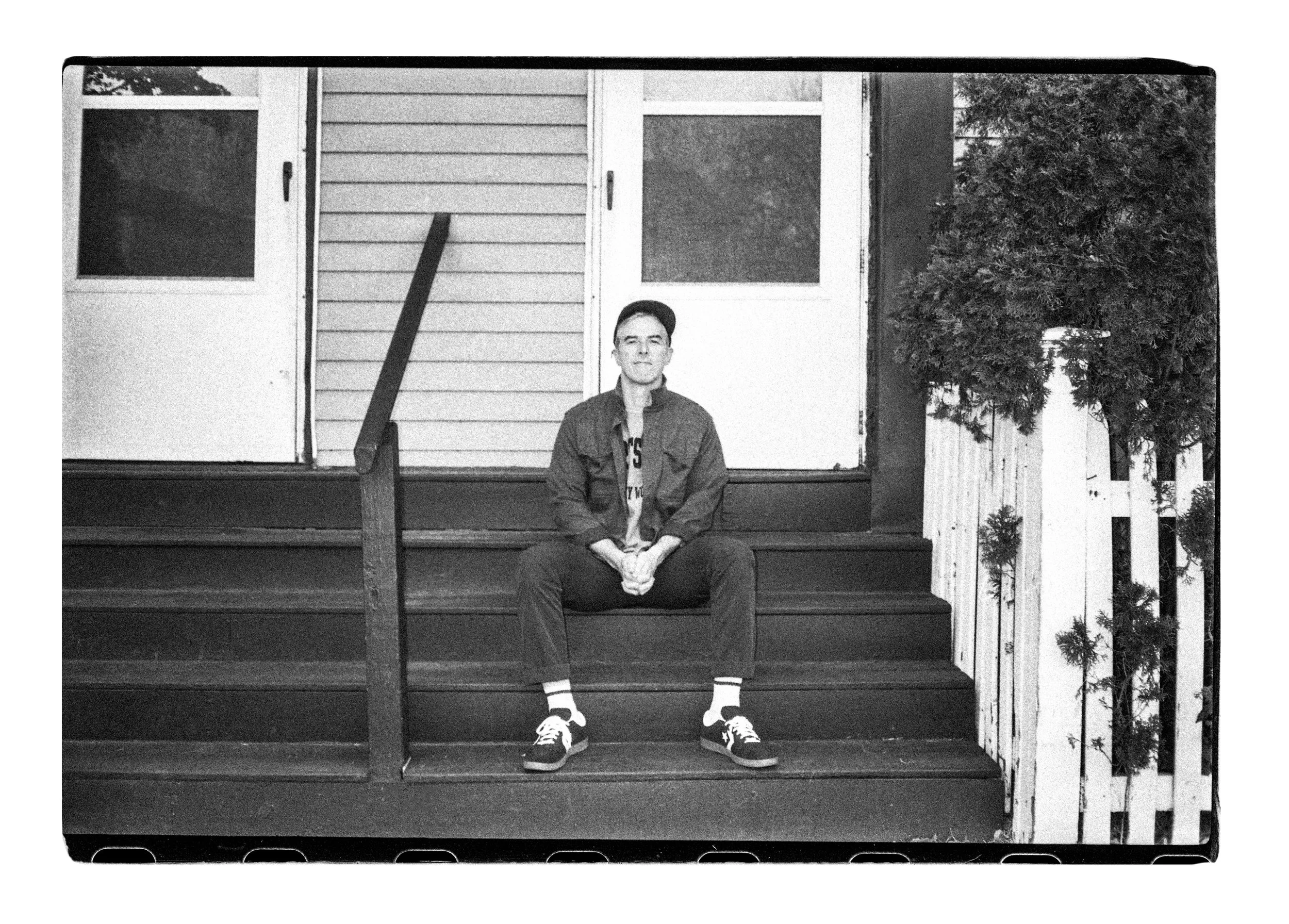
[Pat pulls over the car & we take the photo]

[Interview continues once back in car]

Pat Flynn:

One thing that's made me think about this is the scientific revolution. It seems like it was an attempt to deal with the problem of coming to conclusions based solely on a hunch or an emotion. Maybe that emotion is hatred. Maybe that emotion is love. But I think that with the scientific revolution and the emergence of a more secular way of interpreting the world, we threw the baby out with the bathwater. We've abandoned the heart of interpreting the world in favor of the head, and I think there has to be some type of intersection between the two.

You had this childhood friend Gregory, who made a point of including you when other kids weren't particularly welcoming. Growing up in a military family and moving around so frequently, I imagine establishing those kinds of friendships wasn't always easy. You described him running alongside your father's car waving goodbye when your family eventually moved away. Do you think that friendship shaped your understanding of what it means to really show up for someone? As you've gotten older, have you found yourself returning to that experience when thinking about the friendships you've built or the kind of friend you want to be to others?

Pat Flynn:

Yeah, that's a good question. Yeah, in many ways, it did.

I still have this really powerful image in my head of this one kid, in a neighborhood where I was being bullied, who stood up for me and literally ran after our car as we were leaving forever. That sets a standard for friendship at a very young age that's almost unrealistic. It's idealistic, and maybe that kind of thing comes naturally to children, but I've had to accept that it's not always realistic to expect that same kind of social courage from adults.

This kid, at least as my memory serves me, couldn't have cared less that the whole neighborhood disliked me. We'd go on adventures together, and I think that experience really shaped how I approach friendship. I have people in my life who are flawed, and I'm flawed myself. I believe every human being is worthy of redemption. Part of friendship is having people who are willing to point out your blind spots, help you recognize your failures, and hopefully you can do the same for them. But nowhere in that equation, at least for me, is banishment.

I've had falling-outs with friends that still really bother me. They eat at me. And I think a lot of that comes back to Gregory. Here's this kid who stood up for me, expressing how much our friendship meant to him in this incredibly dramatic way, running alongside our car as we left. It's one of my favorite images from my life, and it's always stayed with me.

And, you know, Have Heart broke up at what you might call the peak of our time as a band because our friendships were in a total state of decline. We'd rubbed them raw by touring the world together. We'd kind of overwatered the plant, if you will.

Preserving those friendships was more important to me than continuing the band. So we stepped away, and here we are, twenty years later, playing music we wrote together all those years ago. And I think that's pretty cool. We're happy to do it. It's joyful. We're laughing.

I'd rather have that than continue playing in a band with people I absolutely hate. I don't think that's how you serve friendship.

And yeah, I think I was served friendship by old Gregory, who, you know, I wonder where he is.

I keep coming back to this image of you as a young altar boy attending funerals with almost no mourners. Sometimes it was just you, another altar boy, the priest, an organist, and the person being buried. That's such an unusual thing to experience as a child, being present for such a significant moment in the life of someone you never actually knew.

I know you've talked about how those experiences shaped your understanding of mortality, but I wonder if they also changed the way you thought about strangers. Did you ever find yourself wondering who those people were, what their lives had been like, or how someone could reach the end of their life with so little of their story visible to anyone in that room?

Pat Flynn:

That was definitely part of my development, this weird period of my life where I was attending funerals as an 11-year-old altar boy, oftentimes with almost nobody there.

I think it was a really powerful thing to experience at such a young age. I wouldn't say it was alienating, but it was moving, just seeing how these rituals could honor everyone.

I still think about this one guy who was always there, no matter what. He was a gentleman with long gray hair, and I think he just felt some obligation to attend. In fact, he might have been the most consistent presence at those funerals, aside from Father Tom, me, and my best friend and fellow altar boy, Mark Sweet.

Those experiences still echo in my head. I think they've contributed to this appreciation I have for the prosaic things in life. Or maybe pedestrian is a better word, just the ordinary, everyday things.

I don't know. Maybe it's because I believe there's real meaning in everything. Sometimes you just have to sit with something long enough to recognize it. Like being on your knees while incense is passed around you. There's a lot to gain from those experiences, even the strange ones.

Every now and then, during my never-ending commute to work and back, those memories will come up. And I don't know how often I think about the absolutely forgotten, because I don't really believe those people were forgotten. I'm still talking about them.

They left a ripple in my life, and I think that's one way of looking at the story of an unattended funeral.


Your father was a speechwriter, taught English and Latin, and had a tremendous appreciation for poetry. Much of your own life has also revolved around language, whether through writing lyrics or teaching. I'm curious what it was like growing up around someone who placed so much importance on words, and whether there were certain habits, expressions, or ways of thinking that you picked up from him without realizing it.

As you've gotten older, have you started to recognize some of those things in yourself?

Pat Flynn:

Yeah, my father was very intentional about what he said, when he said it, and, just as importantly, what he chose not to say.

I think his appreciation for the power of words, and even the power of silence, really showed itself on September 11th, 2001.

Two days earlier, I'd watched my high school burn. My father taught Latin and English there after retiring from the Army, and I was a junior at the time. School had been canceled on September 10th, and I wasn't sure whether we'd have classes the following day.

So I woke up that morning a little later than usual, figured school was still canceled because parts of the building hadn't been repaired, and went downstairs thinking it was just another day. Then I looked at the television and realized some pretty fucked up shit was going on.

I remember walking into the kitchen, confused and curious, thinking my father might have something to say about it, especially given his military background.

And I'm sure he had plenty of thoughts, but his understanding of what to say, what not to say, and how to say it really came through in that moment.

I knew kids whose parents were freaking the fuck out. They were telling them things like, "We're going to war. You're going to war." There was this fearmongering happening, and I don't think some of those parents realized how much their children were looking to them for guidance on how to understand what was happening in the world.

But my father was different.

I remember he paused, barely even looked at me, and simply said, "It seems like the country is under some type of attack, and we're just going to have to read the information carefully, day by day." And that was it.

Then I asked if I could go see DS-13 that night, and he said, "Yes, of course."

Now that I'm a parent myself, I look back on that and think it's kind of insane. But I've also come to realize that everything my father did was intentional. He understood that his reaction, the words he chose, and the way he delivered them would have an immediate impact on how I processed what was happening.

He understood the power of language, not as something performative, but as a way of informing someone. I think what he wanted me to understand was that you can't allow fear and emotion to dictate how you interpret the world. You have to make room for reason and rational thought.

And that's something I've carried into my own classroom.

Whenever there's a conflict happening somewhere in the world, I try to address it with my students. Not because I'm required or obligated to, but because I want to.

Whether we're discussing the past or something happening in the present, I try to approach those conversations the way my father approached that morning. With an understanding that emotion shouldn't be the shot caller when it comes to how we interpret the world and make decisions.

The proceeds of your final show went toward a women's shelter in New Bedford run by your mother. I came across a quote where you recalled her saying that she and your father had raised good kids, not necessarily nice kids.

I've always found that distinction interesting, especially considering how much of Have Heart's music deals with compassion, personal responsibility, and standing up for what you believe in. What did your mother mean by that, and how did those values shape your upbringing? Do you think watching her dedicate so much of her life to helping others influenced the ideas you eventually expressed through your music?

Pat Flynn:

I think my parents could see some bullshit. I sensed their ability to sense the bullshit.

My dad grew up poor, in the projects, and my mom had a pretty standard lower-middle-class experience. Just middle class, I would say. Her dad was a printer.

But my dad kind of got out of the lower class and had a pretty standard middle-class experience. I think that kind of class-hopping gave them an ability to see the bullshit on different sides.

My father went to West Point, a prestigious place where I'm sure there was nepotism and legacy, like there are in any places of so-called prestige. And I've inherited a little bit of that in-betweenerness as well.

I think it comes down to just following through. You can have really nice-sounding language, a really wonderful, beautiful yard sign that says, "In this house, we don't accept racism," and all this stuff. But what are you doing inside that house? Who's allowed to come to that house? Who would you welcome in this house in actuality?

I think maybe the sentiment of that response was, worry less about how you appear and focus more on how you are.

It's not so much a rejection of political correctness, because my parents were decent people who believed in the importance of language and it mattering. Even the small things that might seem like a micro-micro problem could mean a lot more to other people.

I inherited that too, to be decent and not to just scoff at being decent. But it's more than just words. How are you acting toward your fellow human beings?

I know I inherited that from them because I don't know where else I got it from.

I think my parents also had an ability to kind of sneer at the administrative class, who really likes to poo-poo and encourage nice behavior, but the follow-through on their end perhaps is missing.

Yeah, I think that's my two cents.

Leading up to Have Heart's final shows, you talked about wanting to play one last smaller show at Anchors Up in Haverhill because your friend Josh Hynes, who ran the venue, had supported the band since its earliest days. I thought there was something meaningful about making sure that both the venue and the person behind it were part of the band's goodbye.

Years later, you mentioned wanting to organize shows in New Bedford to help younger musicians build a community of their own, and I couldn't help but draw a connection between the two. What did Josh's support mean to you back then, and do you think your desire to create those same opportunities for younger bands comes partly from remembering what people like him did for you?

Pat Flynn:

Oh, yeah. Josh Hynes, wonderful human being.

Josh was on the North Shore, Jimmy Flynn was in Boston, and we were from the South Shore. Our scene had kind of gotten its nuts cut off because the venue we had stopped doing shows. We tried another place called El Dangeroso, and even a practice space, but it all fell apart. It was really hard to build a community when there was nowhere to play.

So we started going to more shows on the North Shore, where Josh had built this incredible community. Jimmy was booking shows in Boston, at what I like to call Hardcore Stadium, but the North Shore was really where the scene was happening. Boston was a little dead at the time, although Jimmy was actively working to build it back up. Josh gave us our first show on the North Shore. I haven't thought about that in a long time, and I should.

The North Shore is such an important part of Boston hardcore history. You had bands like Ten Yard Fight, Converge, Piebald, Cave In, guys from In My Eyes. They were all coming out of the North Shore, eventually going to school in Boston and playing there, but they'd always come back. I'm a firm believer that a lot of magic happens in the suburbs.

The suburbs are a weird place. I think a lot of people end up there because they can't afford to live in the city, but there's this perception that everyone living there owns property and has money. That's not necessarily true. There's real hardship in those places, just like there is in cities. And there's something about being in a city that people find legitimizing, especially when you're playing music. But that whole experience taught me that it really doesn't have to be that way.

I was reminded of that a couple of years ago when I visited Penny Rimbaud and Gee Vaucher's Crass house, way outside of London. It was rural, surrounded by this idyllic English countryside, and it was essentially where a fucking fuck ton of everything Crass happened. It wasn't happening in the slimy, anarcho-punk streets of London. It was happening out there, in the countryside. And here were these people making music that was pulverizing and confronting some of the worst aspects of human society, in a place where those things probably weren't even being talked about explicitly. I couldn't believe it. It was sick.

All of that is to say that Josh took us into this community he'd built, one that came out of a long history of hardcore on the North Shore. And being welcomed into that was huge for us. He wasn't a gatekeeper. There were no gates. His attitude was basically, "Come on in. Anything that helps build this beyond what it is right now is what we're going for."

I remember those first few shows. We didn't even have anything recorded yet. We just played, and Josh kept checking in, asking, "When's that demo coming out?" He was a little older than us, and that encouragement meant so much. We didn't have much of a scene of our own, and we weren't necessarily quote-unquote cool. But he didn't care about any of that.

I remember being nervous about playing the North Shore because this was where bands like Piebald, Converge, and Ten Yard Fight had come from. They had this long-established scene. And by long, I mean this was 2003, and some of that stuff had only been happening for maybe nine years. But to us, that felt like an eternity. It was this hotbed of hardcore, and suddenly we were being welcomed into it.

That experience sent a message to me about how important it is to let people into spaces they might not normally have access to. Because when you do that, things get messed up in a really awesome way. Things start to swirl, they grow, and new ideas begin to form. That's what Josh represented to me.

And I think that's part of why, as I've gotten older, I've become less interested in the idea that people need to be playing music in cities. I'm really passionate about kids in any fuckhole town feeling like they can create something wherever they happen to live.

There were these kids from Wrentham, Massachusetts, who put on this sick show in a barn. Something like 200 people showed up, just a couple miles off the beaten path. It felt like Peter Pan, Neverland stuff. Like, wow, hardcore isn't supposed to be here, but it's happening.

I'm totally into that. I just gotta find the time to consistently book more shows of my own.

There's a certain tension in continuing to perform words you wrote at a point in your life when you were still figuring out what you believed. Have Heart's lyrics often carry a tremendous amount of conviction, and I wonder whether there are moments when you find yourself singing something your younger self believed wholeheartedly that you'd approach differently today. Not necessarily something you regret, but something you might want to sit down and have a conversation with that younger version of yourself about.

Pat Flynn:

I think I was oddly very careful, almost unknowingly. At the time, I didn't think I was particularly thoughtful. I remember feeling like I was struggling, but looking back, maybe I was consciously trying not to be too specific, especially on The Things We Carry. There were more universal themes going on there. I'm pretty proud of that 19 or 20-year-old who was writing that shit. I think it's pretty good for someone that age.

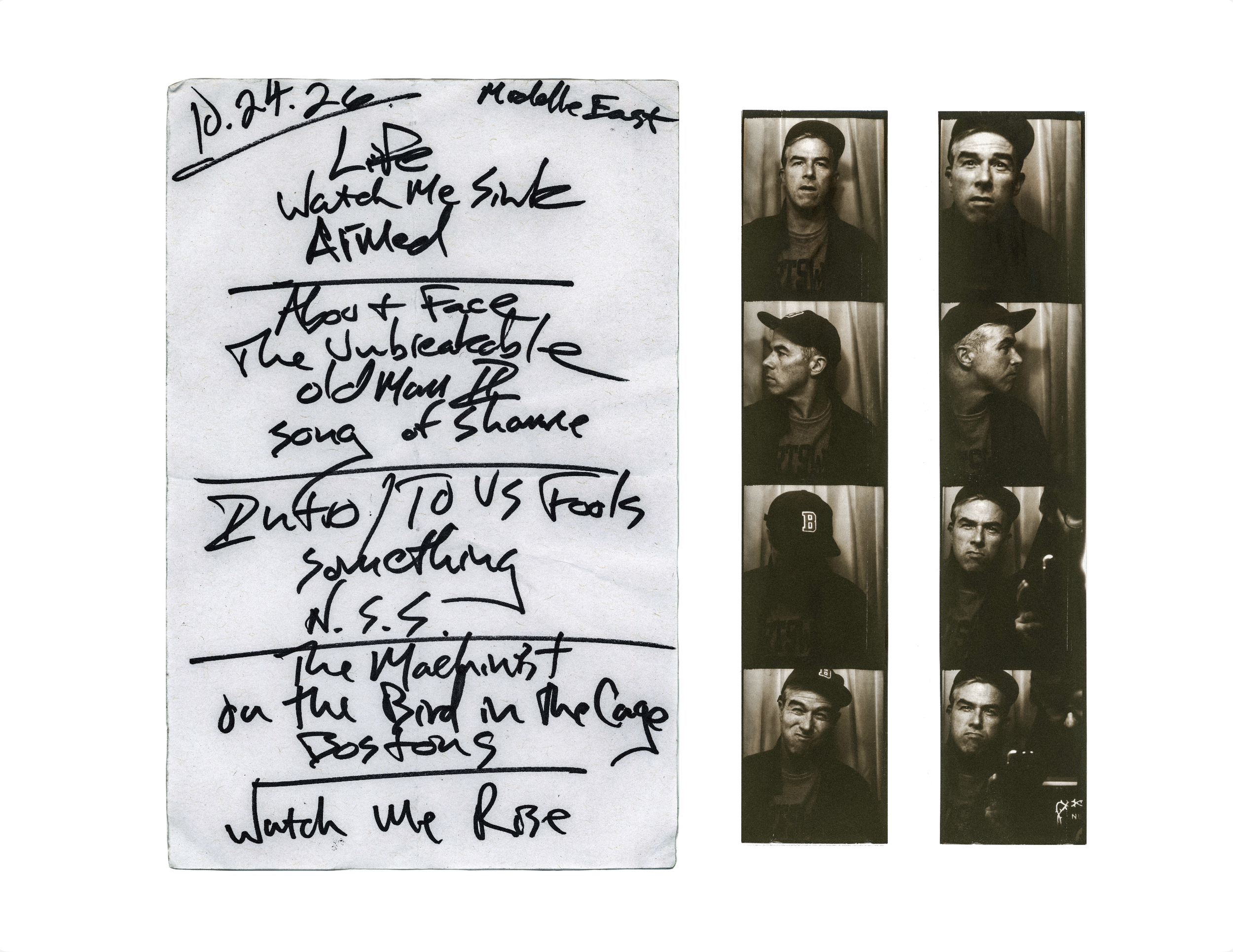
I don't want to focus on the little, tiny things, but I'm glad I approached it that way. I don't like certainty. Life changes, and I don't like a lot of judgment. But sometimes you do judge things, and you can take a stance. When I think of songs like "Watch Me Sink," that's a pretty self-reflective song, I guess you could say. I don't know why, but I think I was just quite thoughtful.

Have Heart's weird because, especially on that first record, The Things We Carry, I hadn't really tapped into anything deeply personal yet. I was trying to. There was some stuff going on in my life, and I think that starts to reveal itself as the record progresses. By the time you get to "The Machinist," it's not obvious to the listener, but that song is about something deeply important to me. Then you get to "Watch Me Rise," which is fairly thinly veiled. I'm talking about somebody.

And then, for some reason, I just kind of broke through and said, "I'm just gonna write about myself here."

So The Things We Carry is more universalistic. It's easier for people to get on board with. Then, when I went into Songs to Scream at the Sun, I decided to focus more on myself. But I'm glad that in that earlier, less personal material, I wrote in a way that wasn't so judgmental or self-righteous. I think there was a tendency in straight edge to be that way.

Even our song "Something More Than Ink" is kind of a funny straight edge song because I was pushing back against that classic "you broke edge" mentality. At the time, there were songs that were basically saying, "Fuck you, I'm edge," and I remember thinking, I don't like that.

It's funny because "To Us Fools" was originally a demo song that we put on The Things We Carry. I was 16 when I wrote it, and it's a very 16-year-old straight edge song. "To all our foundations that fell apart, and all those kids who believed in you..."

I'd have to double-check those lyrics. It's hard without the music. But then there's, "We won't let go like you." It's weird. It's very much like, fuck, you know?

But I think it makes sense that I wrote a song like "Something More Than Ink" after that, because it was almost a direct response. Like, yo, that's fine. You do you, I'll do me. Nothing's changed here. Right on. I'm still here. This is my thing.

Now that I'm 41, I'm really glad I had that careful-mindedness. Because even with "To Us Fools," I'm basically saying, I feel like a fool, but I'm not going to do that. It's not really a "fuck you," outside of the fact that I scream "motherfuckers" on there, which is just fun.

[Pat notices Nancy outside the car. -Rolls the window down- ]

Pat: Nancy!

Pat: That Al Barile's wife.

Pat: Hey, Nancy!

Nancy: Hey! How you doing?

Pat: I'm doing a little interview. This is William, he's a photojournalist from New York.

Nancy: Oh, Nice.

Pat: Yeah. I'll chat with you in a bit.

[Finishes train of thought]

Outside of those tiny, neurotic things, like wishing I'd used one word instead of another, I'm really happy with it. If I met that 20-year-old version of myself, I think I'd be pumped to meet a kid who's thoughtful, who doesn't have everything figured out and knows it, who's okay with that, and who wants to do right by people.

I'd do what I do with my students. I'd call their parents and say, "What'd you do?"

So, in a way, if 19-year-old Pat Flynn got into the car right now and I got to know him, I'd want to talk to his parents and ask, "What did you do?"

So, you know, there's that.
You've spoken about your records existing as a kind of personal archive for your children, and you've also expressed concerns about how hardcore history is documented and preserved. So much of what survives tends to focus on the larger moments, while the smaller, everyday experiences gradually disappear.

I wonder whether that awareness has influenced how you think about your own life and the things you leave behind. Do you feel a need to document your experiences outside of music, through journals or personal recordings, or does songwriting already serve that purpose for you?

Pat Flynn:

My immediate response is that I'm not an archivist, and I don't want to do things for the archivist. What I really want to try and do, as best as I possibly can, is simply be in the world. I think it comes down to how you define what it means to be human.

I want to be a... Oh, fuck. Sorry.

William:

You're good.

Pat Flynn:

I should be taking a left here, but that's all right.

[Continues Conversation]

As a human, I want to be in the world, and that means interacting with people. It means making decisions, causing effects, making things happen, and having things happen to me. That's where I kind of focus. And the added bonus is that I think those experiences become a breeding ground for a well of clues about the past for those who weren't there.

At a very basic level, I think that mystery of how things used to be is one more reason life feels worth living. I love history because there's this endless well of stories, and historians are constantly going towards the clues. But the clues I leave behind for the people who come after me, chronologically, I want them to read as genuine.

And so, I kind of struggle with writing a journal unless I really need to, unless I'm trying to figure shit out. That's what lyrics are for me. I think I struggle with journaling because I've been so lucky to have this thing called songwriting in my life. In many ways, the songs I write are my little journal entries.

William:

You don't feel a need beyond that, essentially, is what you're saying?

Pat Flynn:

Yeah. I imagine I would be scrawling on the wall to showcase that I am in the world if I didn't have songs. So perhaps, at that point, I probably really would be writing in a journal.

I do want to scrawl and vandalize the world with me on it, but not in a literal way. I want the world to kind of feel my presence. I'm here. And I don't mean that in a tyrannical takeover kind of way. I just mean I'm in it. Here's my fingerprint.

And when you find those fingerprints, you can kind of swim in the cool, but entirely imperfect wonder of what that was like. And I'll take that, having lost a lot of really important people in my life who I didn't fully get to know.

I was thinking about the lyrics to "Bostons" just yesterday, and I literally refer to my father as "a father I hardly know." And then two years later, he passed.

So all I got is the wonder. But I have some clues to work with, and I'm good to wonder.