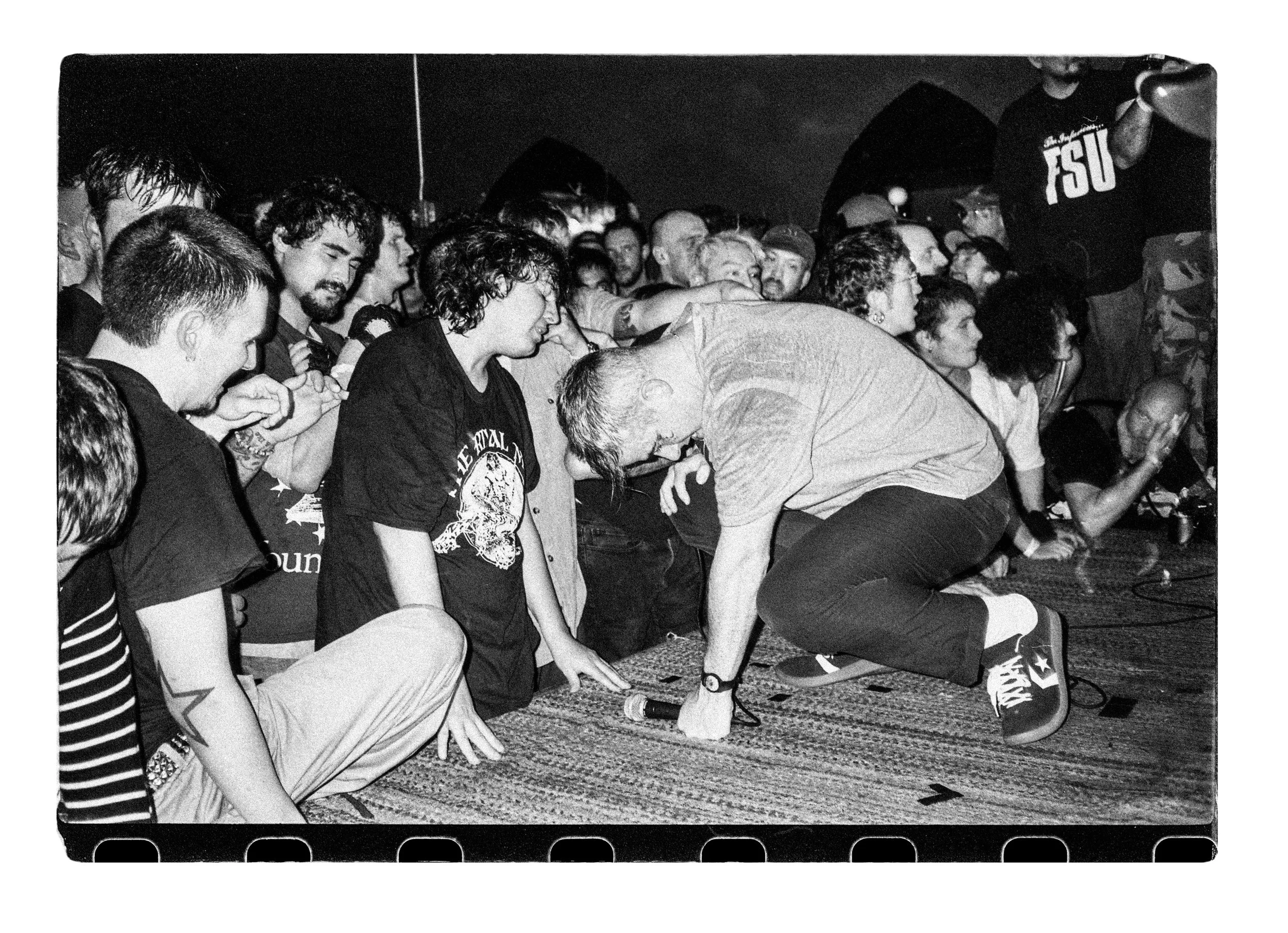
There's a certain tension in continuing to perform words you wrote at a point in your life when you were still figuring out what you believed. Have Heart's lyrics often carry a tremendous amount of conviction, and I wonder whether there are moments when you find yourself singing something your younger self believed wholeheartedly that you'd approach differently today. Not necessarily something you regret, but something you might want to sit down and have a conversation with that younger version of yourself about.
Pat Flynn:
I think I was oddly very careful, almost unknowingly. At the time, I didn't think I was particularly thoughtful. I remember feeling like I was struggling, but looking back, maybe I was consciously trying not to be too specific, especially on The Things We Carry. There were more universal themes going on there. I'm pretty proud of that 19 or 20-year-old who was writing that shit. I think it's pretty good for someone that age.
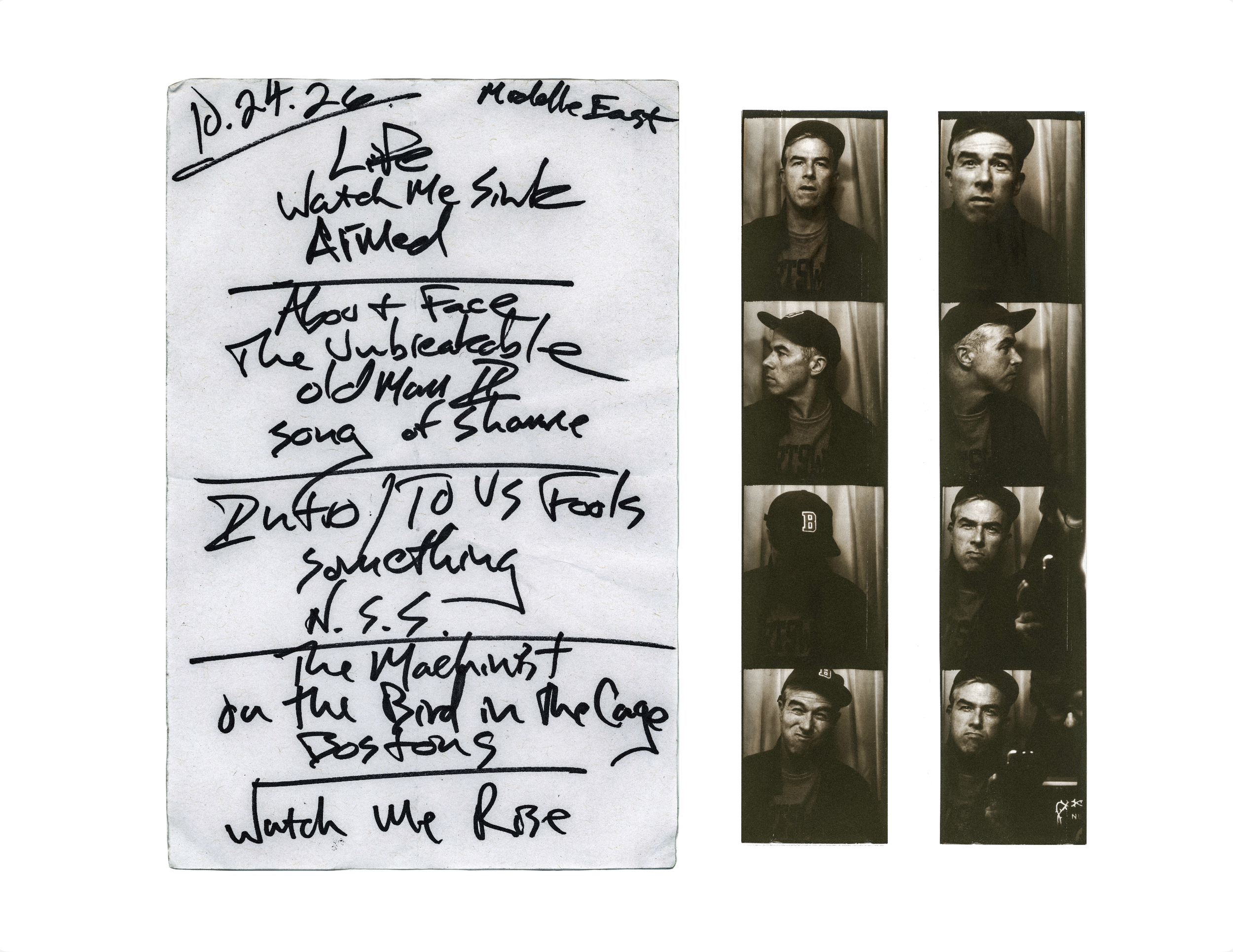
I don't want to focus on the little, tiny things, but I'm glad I approached it that way. I don't like certainty. Life changes, and I don't like a lot of judgment. But sometimes you do judge things, and you can take a stance. When I think of songs like "Watch Me Sink," that's a pretty self-reflective song, I guess you could say. I don't know why, but I think I was just quite thoughtful.
Have Heart's weird because, especially on that first record, The Things We Carry, I hadn't really tapped into anything deeply personal yet. I was trying to. There was some stuff going on in my life, and I think that starts to reveal itself as the record progresses. By the time you get to "The Machinist," it's not obvious to the listener, but that song is about something deeply important to me. Then you get to "Watch Me Rise," which is fairly thinly veiled. I'm talking about somebody.
And then, for some reason, I just kind of broke through and said, "I'm just gonna write about myself here."
So The Things We Carry is more universalistic. It's easier for people to get on board with. Then, when I went into Songs to Scream at the Sun, I decided to focus more on myself. But I'm glad that in that earlier, less personal material, I wrote in a way that wasn't so judgmental or self-righteous. I think there was a tendency in straight edge to be that way.
Even our song "Something More Than Ink" is kind of a funny straight edge song because I was pushing back against that classic "you broke edge" mentality. At the time, there were songs that were basically saying, "Fuck you, I'm edge," and I remember thinking, I don't like that.
It's funny because "To Us Fools" was originally a demo song that we put on The Things We Carry. I was 16 when I wrote it, and it's a very 16-year-old straight edge song. "To all our foundations that fell apart, and all those kids who believed in you..."
I'd have to double-check those lyrics. It's hard without the music. But then there's, "We won't let go like you." It's weird. It's very much like, fuck, you know?
But I think it makes sense that I wrote a song like "Something More Than Ink" after that, because it was almost a direct response. Like, yo, that's fine. You do you, I'll do me. Nothing's changed here. Right on. I'm still here. This is my thing.
Now that I'm 41, I'm really glad I had that careful-mindedness. Because even with "To Us Fools," I'm basically saying, I feel like a fool, but I'm not going to do that. It's not really a "fuck you," outside of the fact that I scream "motherfuckers" on there, which is just fun.
[Pat notices Nancy outside the car. -Rolls the window down- ]
Pat: Nancy!
Pat: That Al Barile's wife.
Pat: Hey, Nancy!
Nancy: Hey! How you doing?
Pat: I'm doing a little interview. This is William, he's a photojournalist from New York.
Nancy: Oh, Nice.
Pat: Yeah. I'll chat with you in a bit.
[Finishes train of thought]
Outside of those tiny, neurotic things, like wishing I'd used one word instead of another, I'm really happy with it. If I met that 20-year-old version of myself, I think I'd be pumped to meet a kid who's thoughtful, who doesn't have everything figured out and knows it, who's okay with that, and who wants to do right by people.
I'd do what I do with my students. I'd call their parents and say, "What'd you do?"
So, in a way, if 19-year-old Pat Flynn got into the car right now and I got to know him, I'd want to talk to his parents and ask, "What did you do?"
So, you know, there's that.