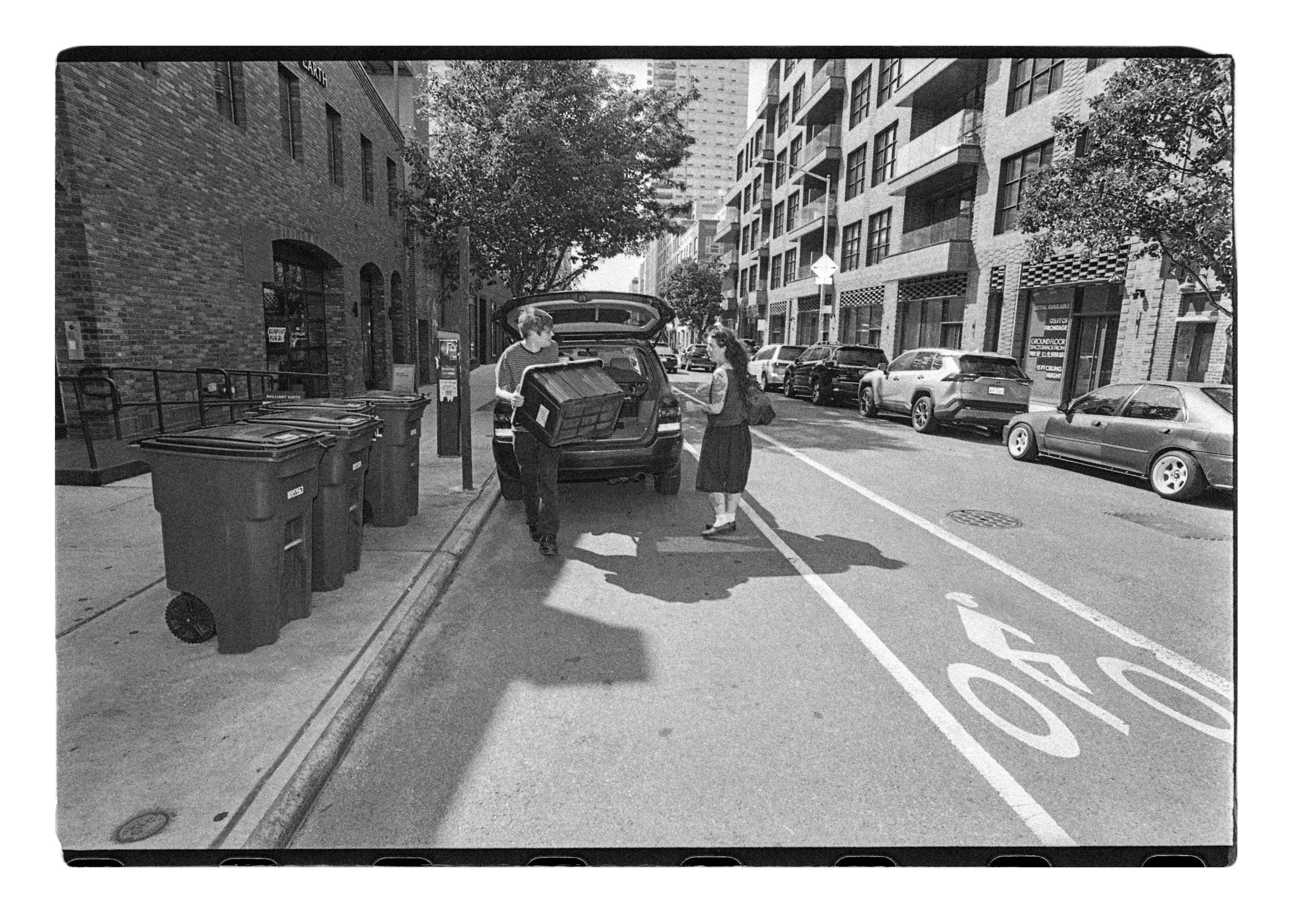
Greg pulled up in his car and greeted me before even putting it in park. There was no big arrival, no entourage, Just a car, a few pieces of gear, and Greg moving things inside while I took some photos. It felt fitting for someone whose songs often seem to begin the same way, inside something ordinary enough that you might miss it if you were looking too hard for a dramatic entrance.
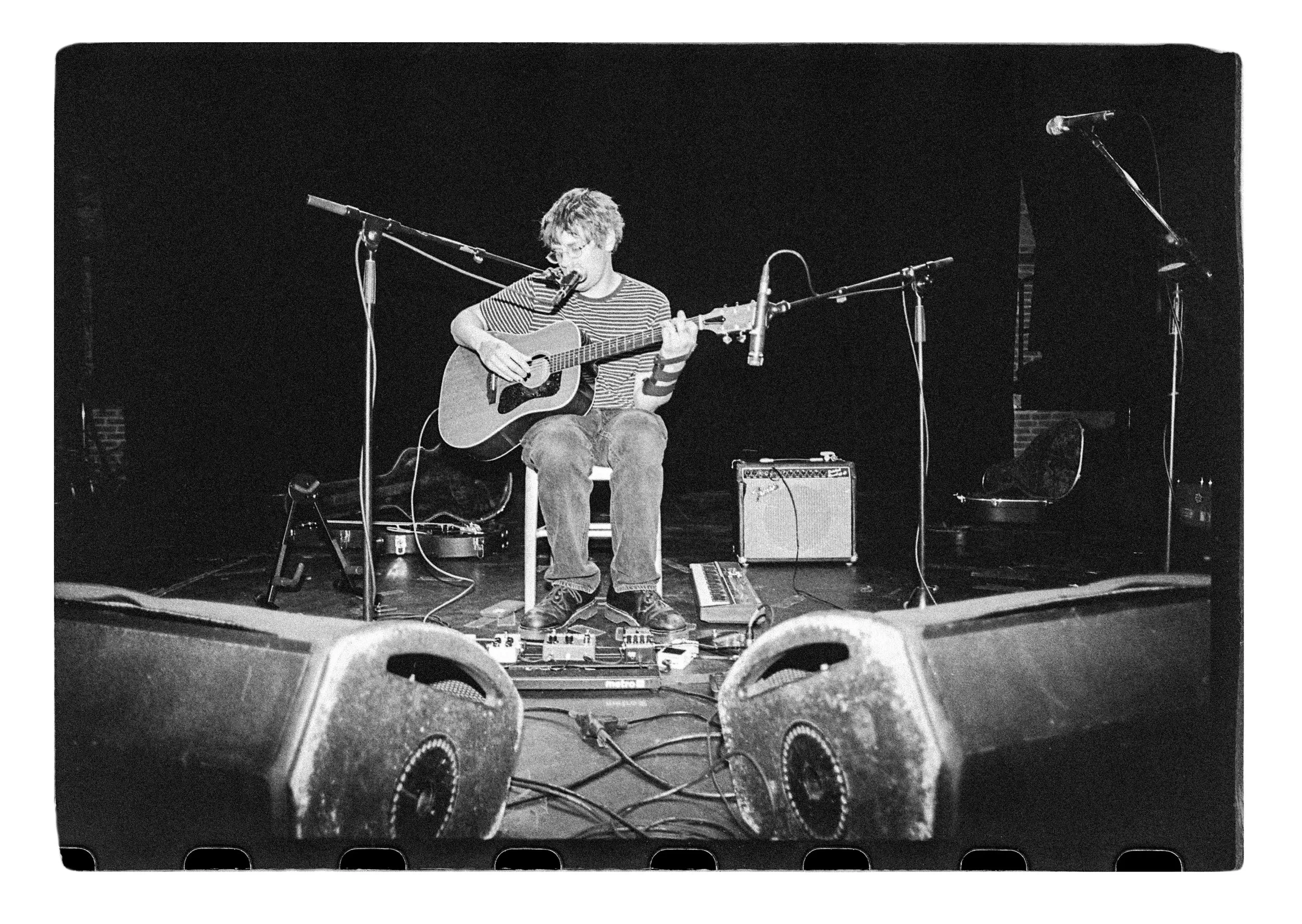
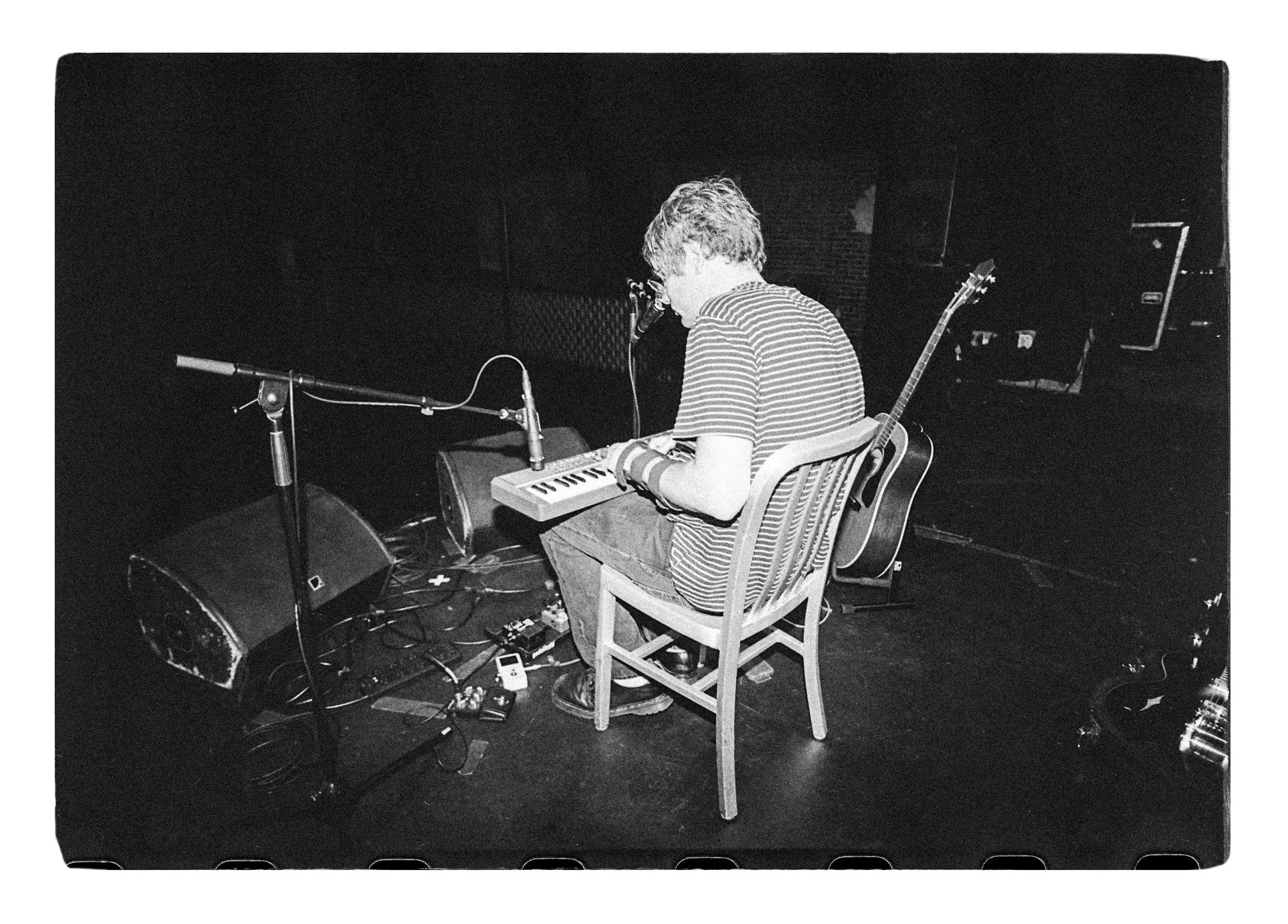
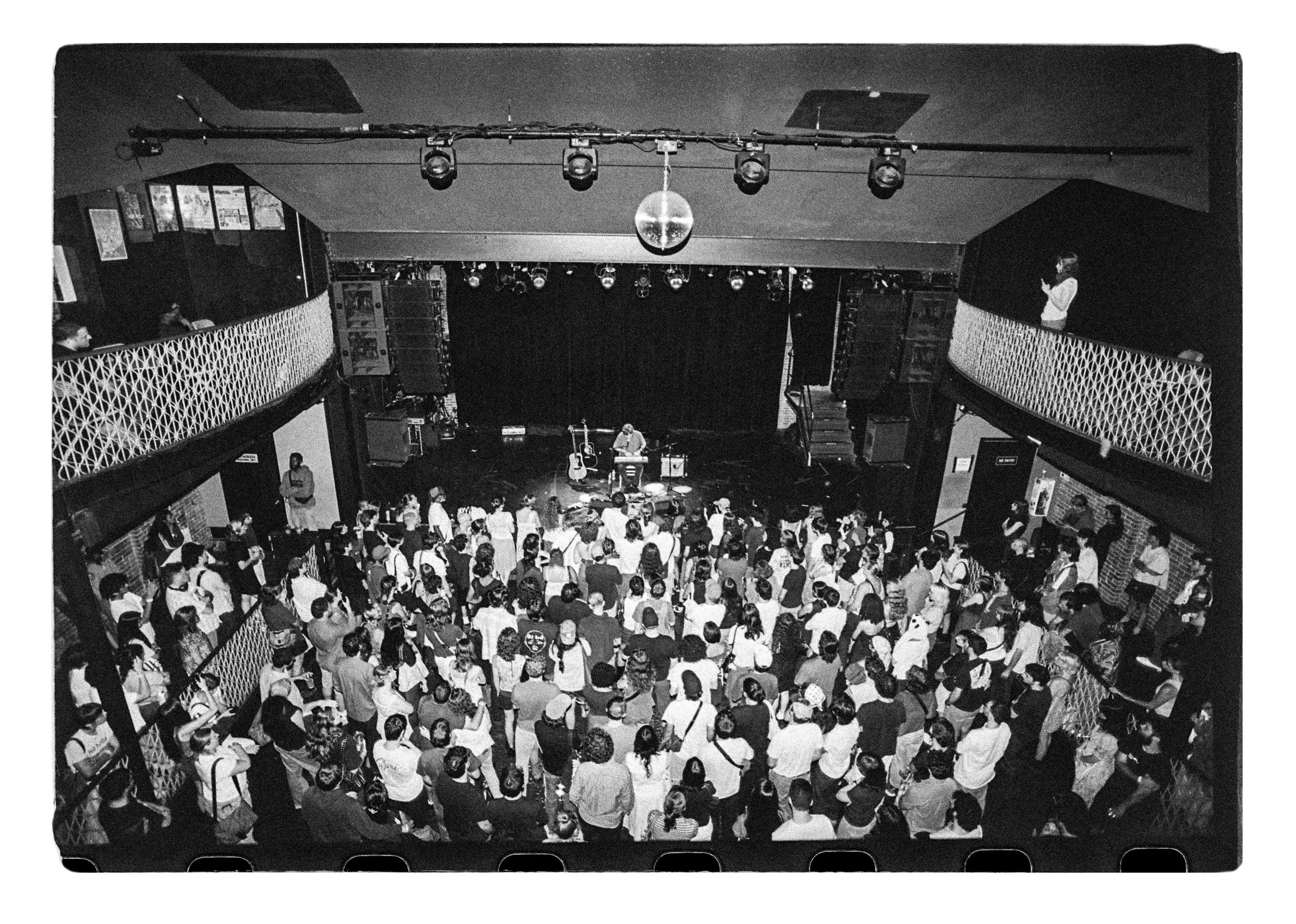
As he sat on a folding chair with this brownish grey Casio balanced on his lap, I couldn’t help but find myself thinking about the room itself. Twenty-three years earlier to the month, Elliott Smith played what would become his last New York show on this same stage. It wasn't that Greg reminded me of him, It was that they seemed to share the same quiet gravity. The ability to stand alone on a stage with nothing more than a guitar and a handful of songs, and pull everyone in the room to complete silence.
It had been a while since I’d seen a soundcheck that easy. He played a song once, asked the sound person how it felt, agreed with the answer, and moved on. No second guesses. No long negotiation with the room. Just a small adjustment, a nod, and the sense that the song would either hold or it wouldn’t. It reminded me of one of the questions I’d been sitting with before the show. Listening to Greg talk about writing, he’d almost never described himself as searching for songs. Watching soundcheck, it felt the same way. Nothing forced, nothing overworked. Just small adjustments until the songs settled comfortably into the room.
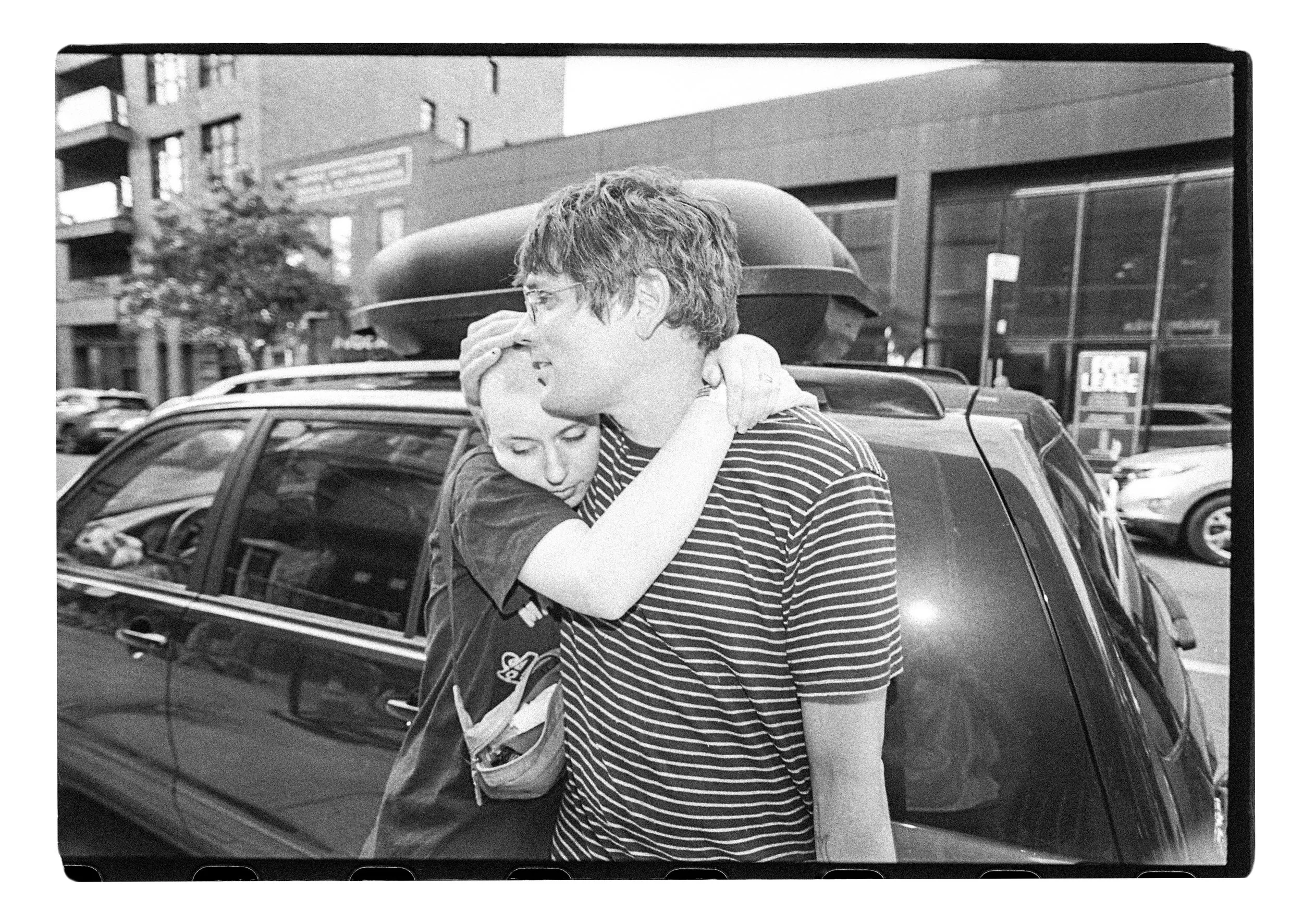
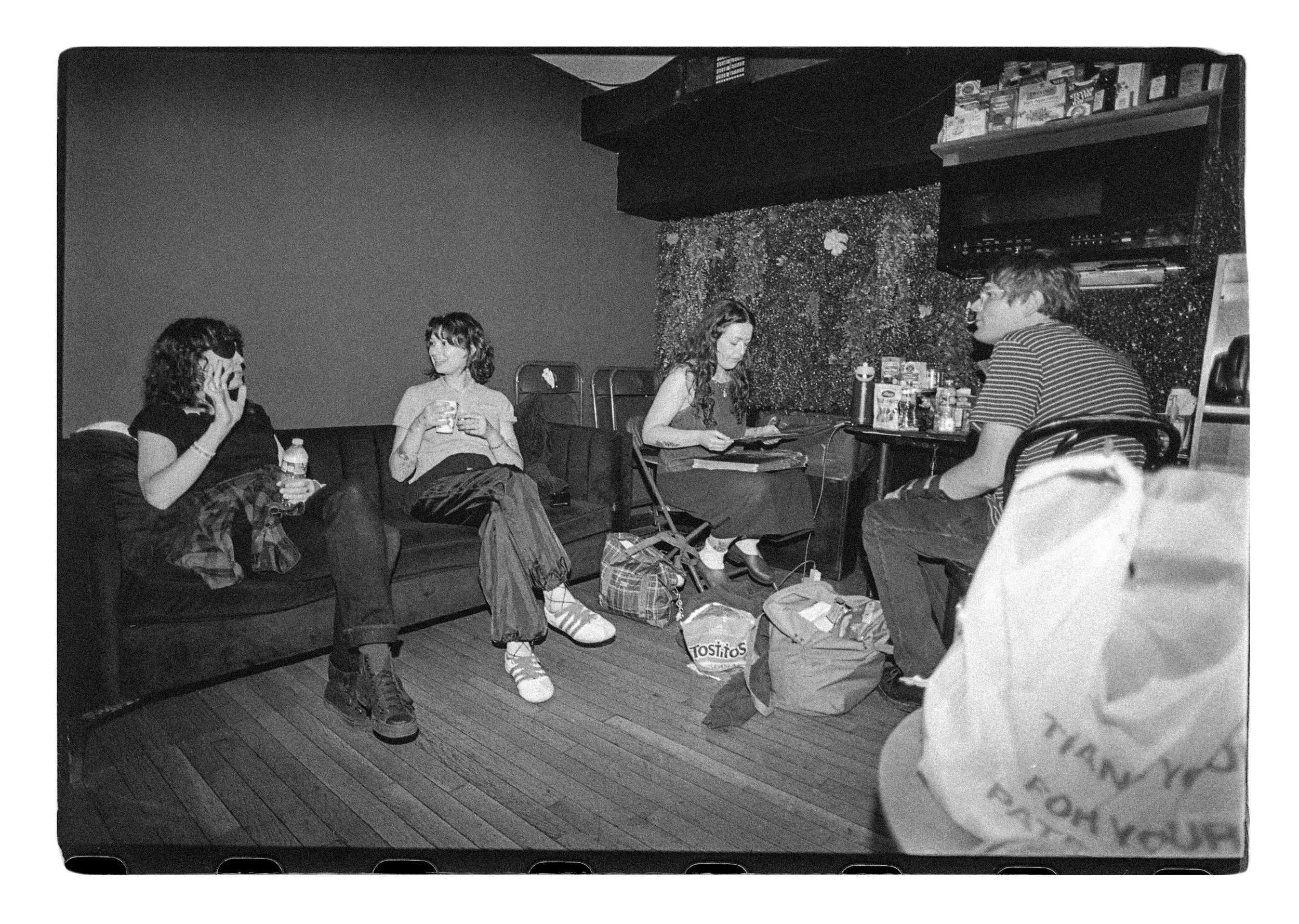
Around six, his wife and sister showed up and surprised him with cookies, as if their mere presence was not already enough of a gift. I spent the rest of the night in the green room with them, watching the kind of teasing only family can get away with. Sweet, casual, precise. The kind of love that hides inside jokes because saying it plainly would ruin the rhythm.
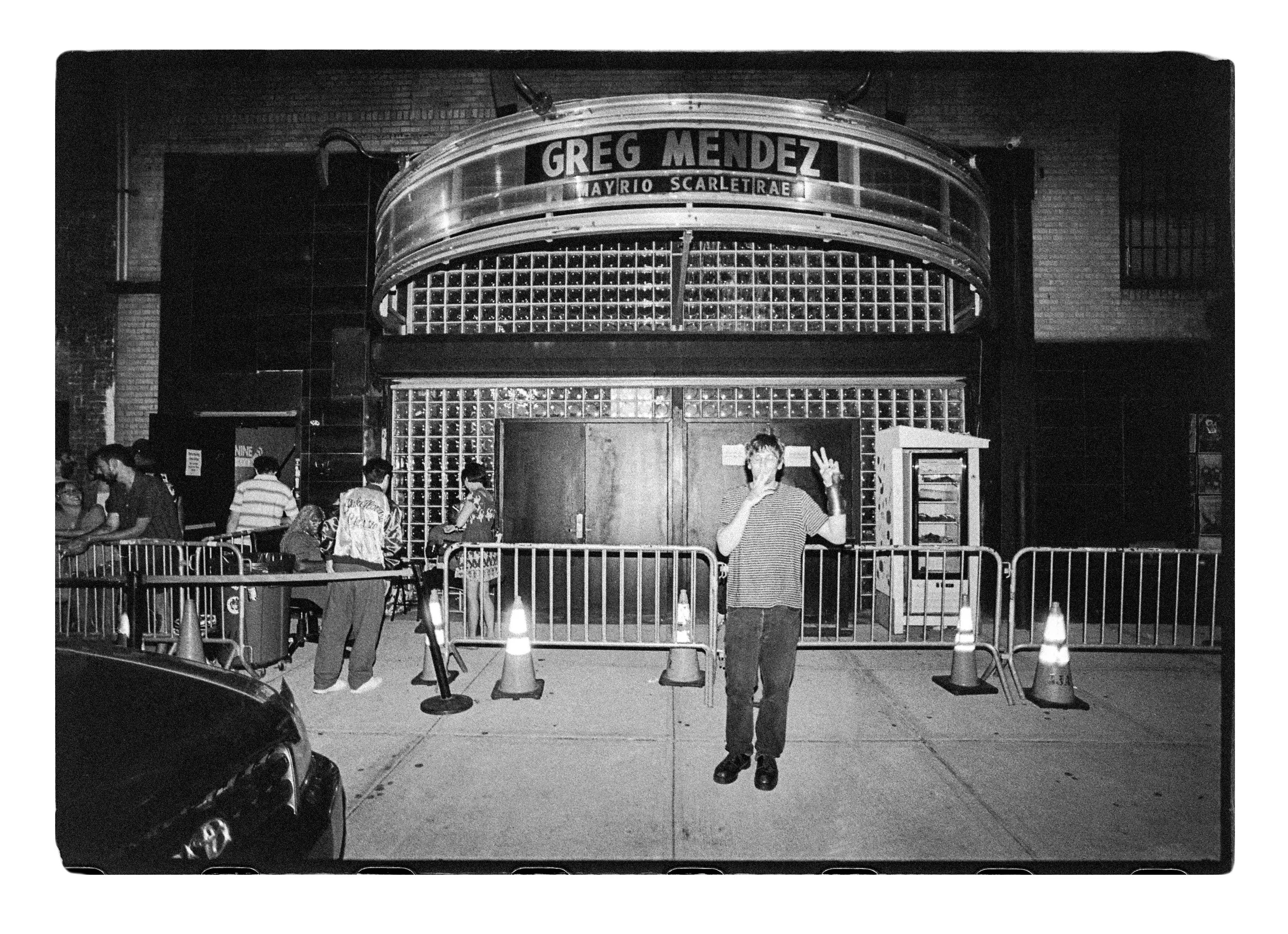
Outside, while we were standing around, a girl wandered over to bum a cigarette and asked if he’d play “Gum Trash.” He smiled and told her he couldn’t. She paused for a moment, then asked about “Sweet 16” instead, explaining that she’d gone to rehab when she was sixteen and that the song had stayed with her ever since. It’s interesting how naturally songs become placeholders for parts of people’s lives. She wasn’t really asking for “Sweet 16.” She was handing him a memory that happened to have his name attached to it.
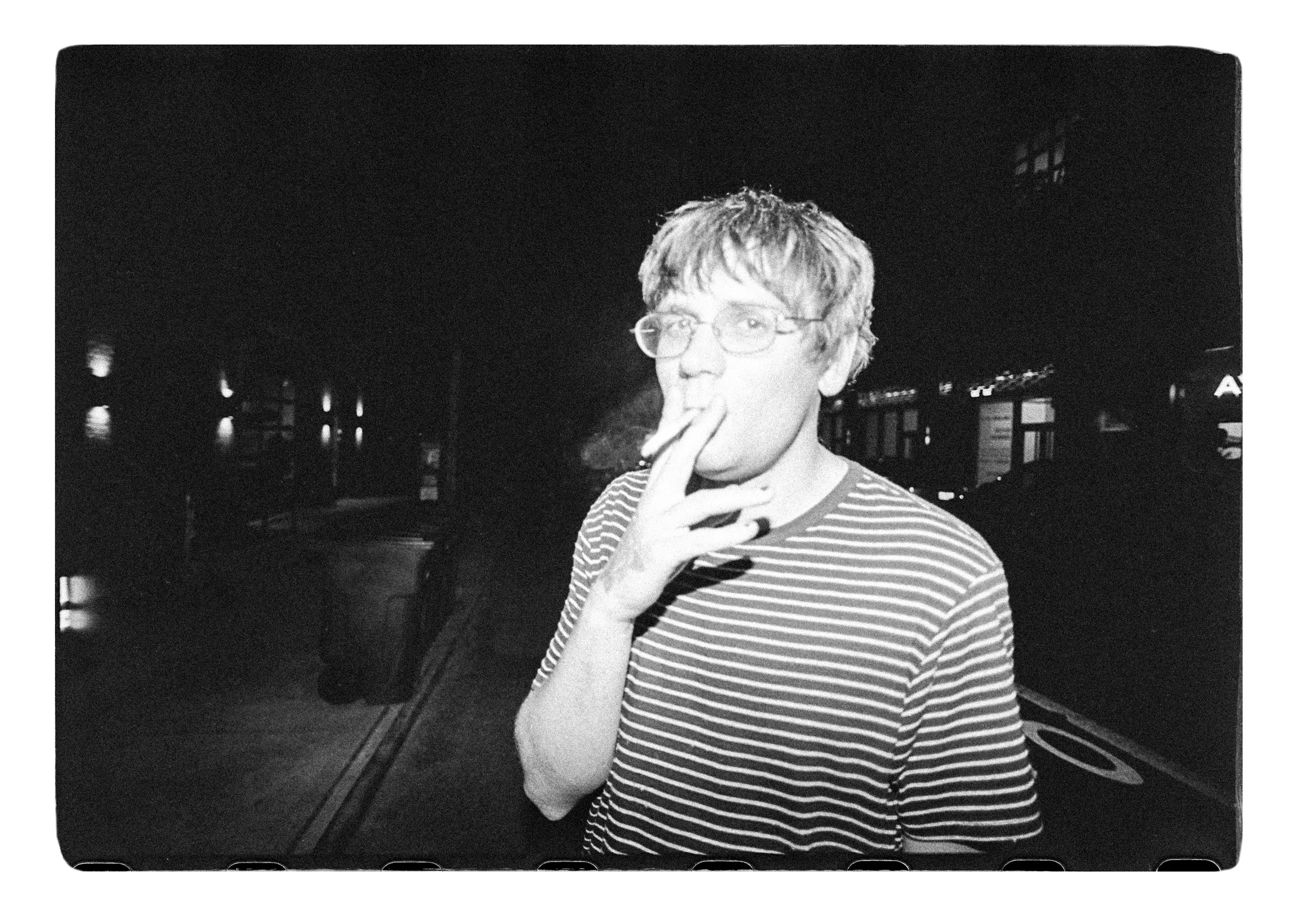
Five minutes before the set, we stepped outside again so he could have a smoke. On the way back in, I asked if he was okay with flash while he was onstage. He told me not to worry and that I could do whatever I wanted. As we walked toward the stage, I asked if he had written out a set list. He said he would figure it out when he got up there. At one point, someone sneezed during a song, and without breaking the shape of it, Greg slipped in a perfectly timed “bless you.” The crowd laughed softly, but the quiet stayed intact. It was less of an interruption as it was proof of how closely everyone was listening.
A lot of people discovered your music through your self-titled record, which almost creates the illusion that your story starts there. I’m curious what it’s been like watching people work backward through years of songs. Have those older records started to feel different now that they’ve become part of a larger conversation?
Well there are definitely people who still think the s/t is my first, which is fine by me to be honest. I’m happy if anyone listens to any of it in any capacity. It’s been cool to see people connecting more with the older ones too, my relationship with them is pretty distant at this point but I still can feel the songs when I play them live.
One thing that struck me is that you almost never describe yourself as searching for ideas. You describe noticing them. Then, once a song arrives, you seem incredibly disciplined about shaping it. It made me wonder if those are really the same instinct. Is writing mostly about learning to notice things, and editing about protecting what made you notice them in the first place?
I think I just try to do all the searching and shaping unconsciously, maybe noticing is just unconscious searching. I think our minds do a lot more than we realize or can control, and I think I am more drawn to writing about the world than writing about my idea of the world. Obviously it’s impossible to fully disconnect from my idea about things but when I try to let myself be as open ended as possible that’s when the real shit comes forward. I don’t tend to come up with things that I like or things that surprise me when I’m limited by too much self awareness and control of the process. I guess that is my awareness of the process.
When people ask about Philadelphia, you often answer with intersections, shopping centers, or places you’re passing through rather than neighborhoods themselves. Listening to your songs, they also seem to happen in those same kinds of in-between places, sidewalks, parking lots, hallways, outside someone’s apartment. It made me wonder whether your memory works geographically, or whether it’s really movement that sticks with you.
Yeah maybe it’s movement that sticks with me. So much happens in the in-between places, it can be hard to add up because a lot of times they don’t feel obviously connected but, how much of our lives do we spend in parking lots, intersections, shopping centers? Maybe more than we realize. It’s as real as anything else. I also think I was born in maybe the first generation where a lot of our experience is fractured and not really totally tied to a particular physical place, I feel like a lot of the time I’m only truly present in a space when I’m moving. There are so many distractions now it’s very hard to be there for stillness.
Beauty Land almost sounds like a destination, but the record seems much more interested in ordinary moments than extraordinary ones. It made me wonder if beauty, for you, is something that’s already there waiting to be noticed, or whether paying close enough attention is what makes something beautiful in the first place.
Yeah I mean I do think beauty is a perception and a matter of persective, eye of the beholder or whatever. If you go in thinking something is ugly that’s probably what you’ll see. Maybe it’s a matter of noticing but also I think it’s a matter of having an open and neutral view when you go in. And sometimes it’s the surroundings that give things their weight more than the actual thing, like a flower growing up out of a crack in a parking lot.
You’ve said you usually care about how something sounds before you’re worried about exactly what it means, and your songs often leave a surprising amount unsaid. I wonder if those instincts are connected. Have you found that meaning has a way of revealing itself over time, both for you and for the listener, rather than needing to be pinned down immediately?
Yeah definitely, I usually have no idea what a song means to me until it’s finished, or sometimes even long after it’s finished. I feel like this is the surest way for me to be honest. If I go in trying to say something in particular, I’m more likely to end up being dishonest, even if it’s just in the sense that the thing I’m trying to say isn’t really something that I need to be saying. I’ve never felt that way about a song that I let write itself. It’s also just more exciting to me to just see what comes out instead of having a concept and then trying to execute it.
I remember reading about you separating your studio from your home because it became difficult to rest in a place where you were always making things. It made me wonder whether that boundary changed the songs themselves, or if it mostly changed your relationship with being creative. You also once said you don’t really trust comfort creatively. Do you think artists sometimes mistake struggle for the thing that’s making the work good?
Well I haven’t made anything in the new space yet, so I’ll have to get back to you on what kind of difference it makes. I have no idea and that is intriguing to me. I don’t trust comfort as far as, I think it’s important to always push myself when I’m making something, if it’s feeling totally easy it means I’m not pushing myself to do my best. If we’re talking about the myth of like, artists struggling personally and it tying into their brilliance, I think that’s probably mostly bullshit. If anything I think people can make great things in spite of their struggles, not because of them. There is something to be said for experiencing the good and bad in life, but I think I’m usually primed to do my best when things are pretty good and I’m feeling good.
Earlier we talked about the idea of noticing, and it made me curious about whether being noticed changes that process. You’ve spent nearly twenty years paying close attention to the world around you, and now there are far more people paying close attention to your work. Has that kind of recognition changed what you notice, or has it mostly changed what you trust is worth noticing in the first place?
I’d like to say that it hasn’t changed anything but i think anyone who says that is either lying or actually hasn’t noticed how it’s changed. What the actual effect is, I can’t say for sure because I have no way to A/B it. My perspective is always shifting for so many reasons.
Is it for better or for worse? Who knows. I still do just try to following the feeling and make something that I believe is worthwhile, because that’s the only thing I can do with certainty. The idea of what an audience wants or expects from me is just a projection.
There is something you’ve said before about not wanting to expose people in your songs. Listening to “Maria,” what struck me wasn’t just that the other person isn’t made into the villain, but that the song seems just as interested in your own limitations and what can’t be repaired. That feels true across a lot of your writing. Even when relationships end painfully, your songs rarely seem interested in assigning blame. Has writing that way changed how protective you feel toward the real people inside those songs, or even toward the version of yourself who wrote them?
Yeah maybe?
Or maybe it’s the other way around. Probably some combination of both to be honest. I kinda think it’s rude to expose real people in songs, I don’t want to use music as a weapon, and also I think i just find it more interesting to look at a broader picture in a song, I like to try to find the place of an impartial narrator. I’m human like anyone else so in my life I find myself assigning blame and making villains as much as the next person but eventually I have to take a step back from that because otherwise it just eats at you until you turn into a gnarled ball of hate, excuses, and resentments. I’ve had enough of that in my life at this point.