I still remember walking into my local Best Buy in South Carolina back in 2006 I was 16 looking for some DVDs to watch. I was cutting through the music section, poked around for a minute, and came across the Dog Problems CD. I had never heard of The Format before, but the packaging immediately stopped me. There was a opened a copy, so I started flipping through the lyric book. All of these little cutouts of dogs peeled back to reveal more lyrics, artwork, and information underneath. There was something really special about it.
I was completely judging a book by its cover having never heard the record, but I bought it without hesitation. That ended up being my introduction to The Format, and to this day I still consider Dog Problems a perfect album. I can put it on from beginning to end and never feel the need to skip a song.
11:00 AM. Union Square.
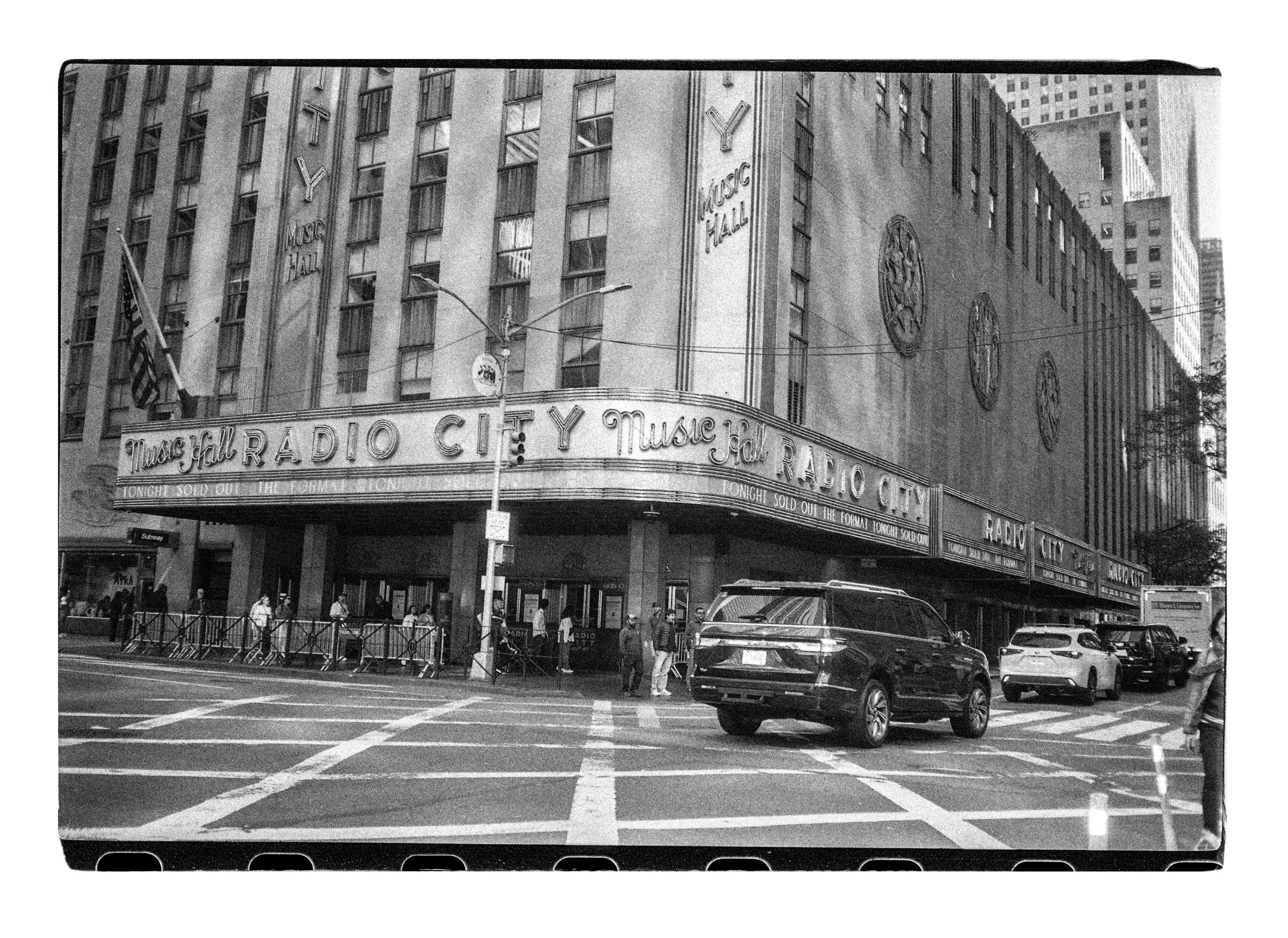
I started walking toward Radio City. Soundcheck was supposed to begin around noon, which gave me enough time to get there, get through security, and figure out where I was supposed to be before anything really started moving.
11:43 AM. Past security.
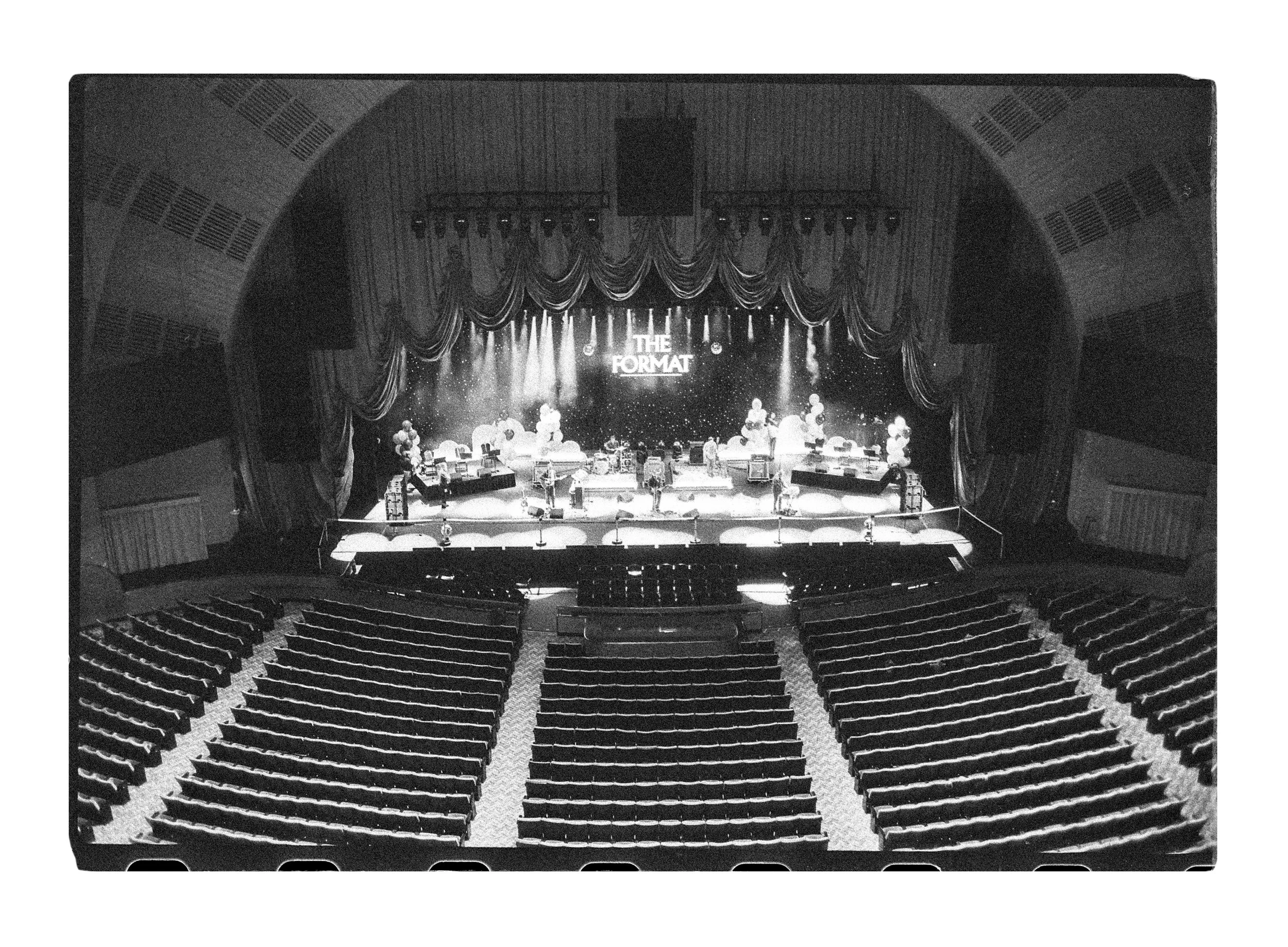
I made my way upstairs and kept going until I reached the balcony to make a photo of the room from above. There were so many stairs. So, so many stairs.
After I made it upstairs I realized there was a elevator…
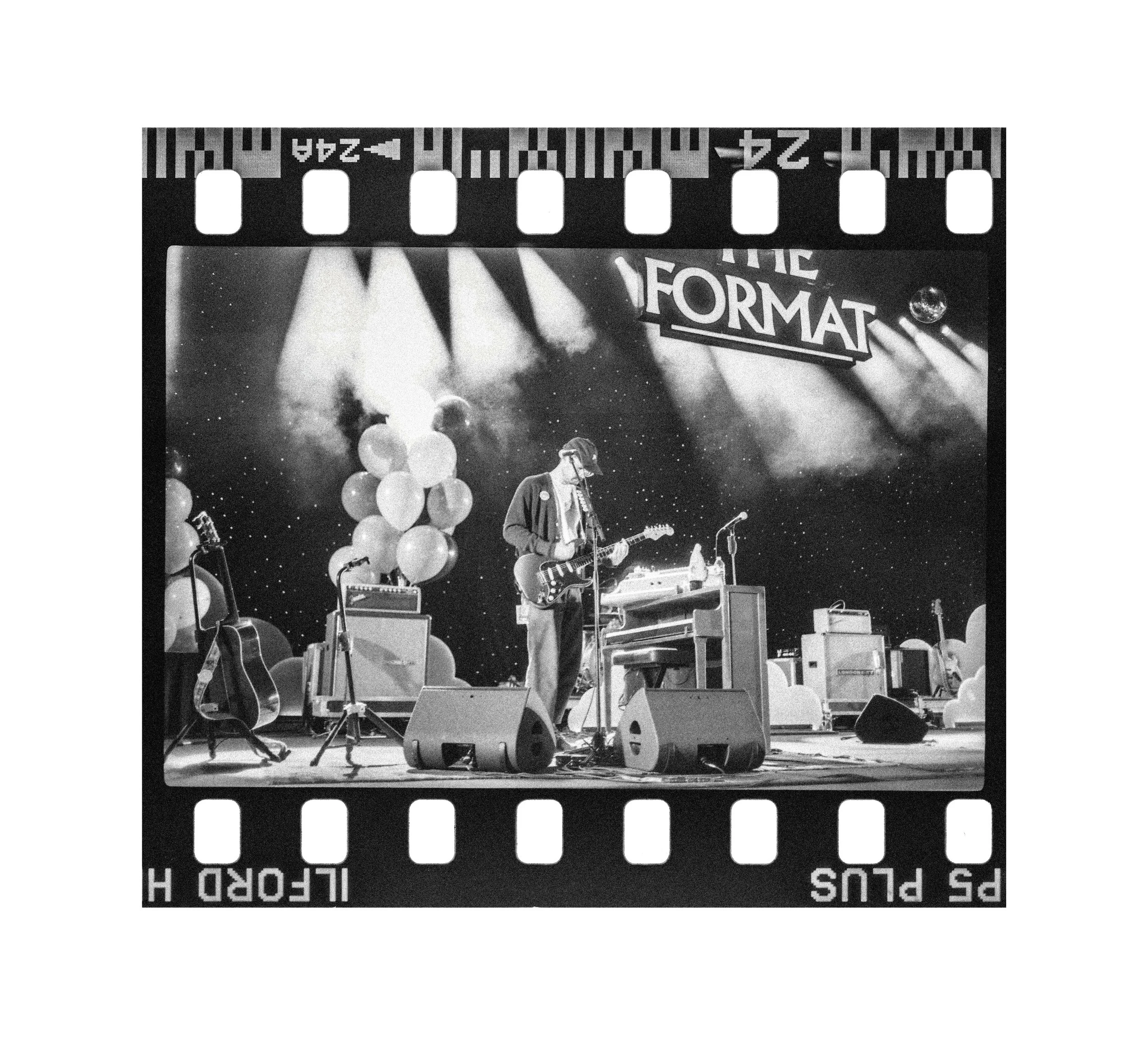
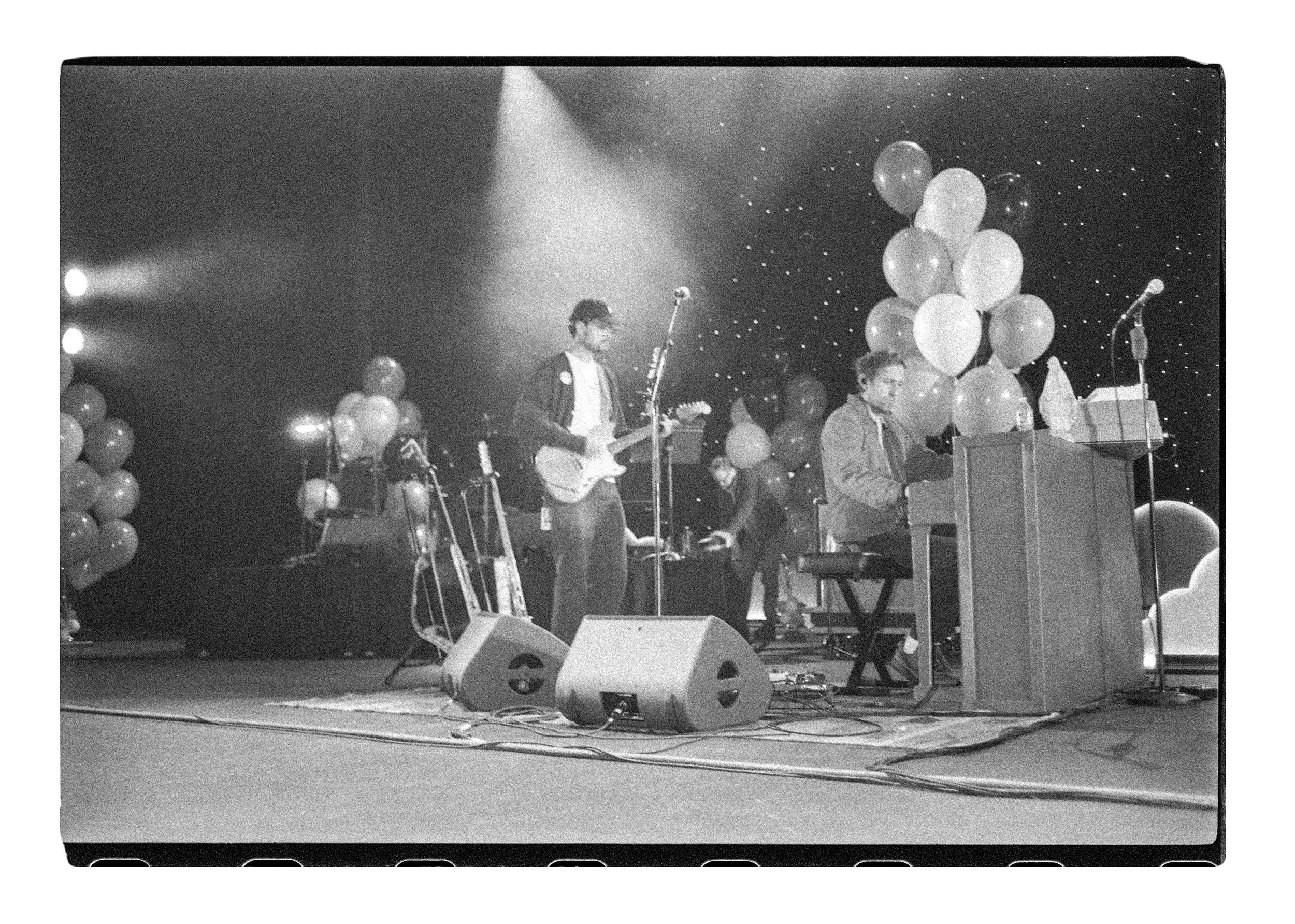
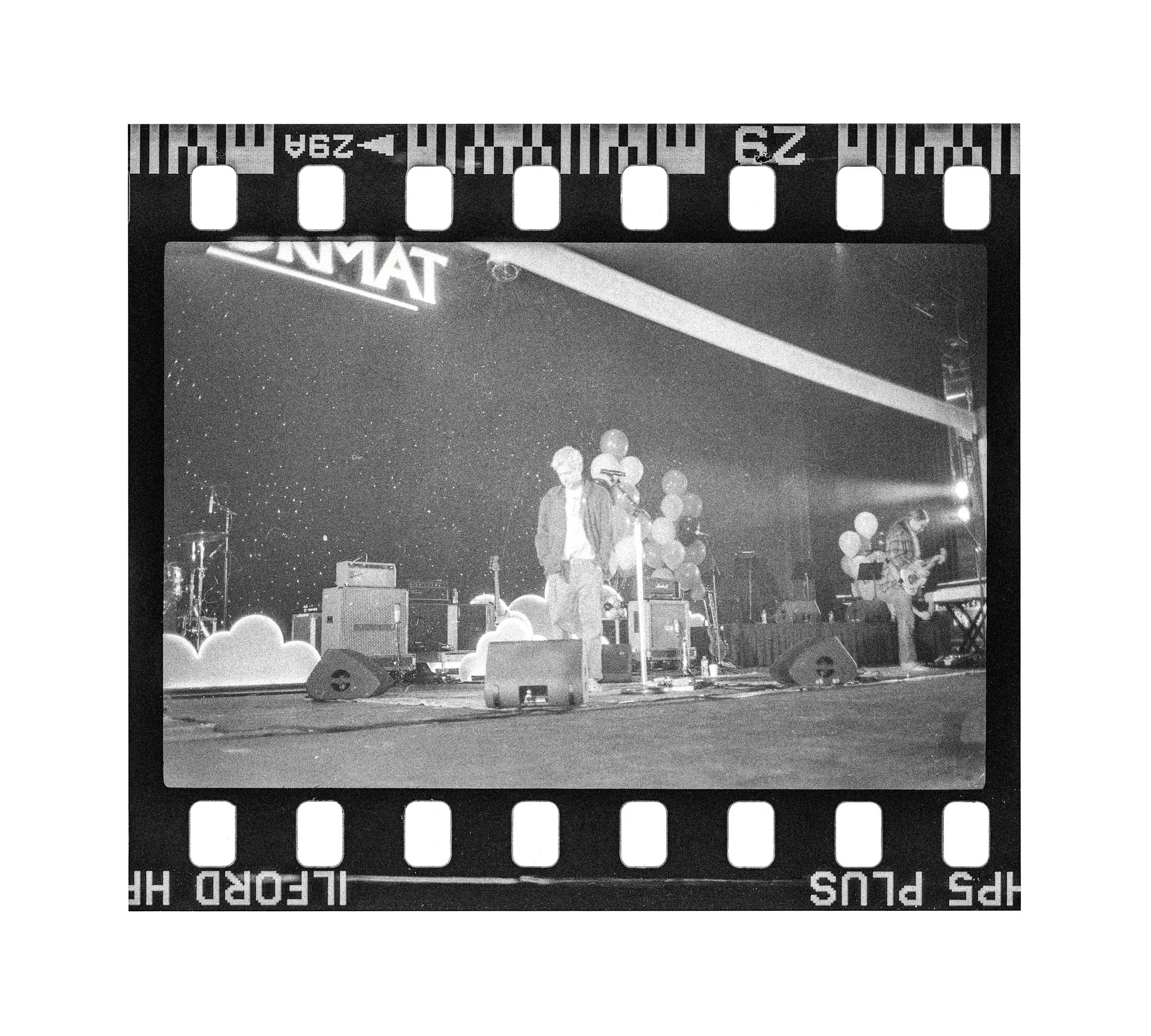
Down onstage, people were moving balloons around. Balloons getting pushed from one side of Radio City to the other. People disappearing behind curtains. Someone stopping to look at the stage, then moving something a few feet and looking at it again. After that, they started to soundcheck and make sure audio levels were right.
1:05PM. Break. There was about an hour to kill until they would reheard with everyone, so I left, got a hot dog, and walked around for a little before heading back inside.
2:00 PM. Rehearsal started.
For the next two hours, The Format worked through the show with the string and horn sections. A lot of it was coordination. Figuring out exactly when the strings would come in, where the horns would enter, where everyone needed to cut off at once, and how to make the abrupt stops actually feel abrupt. Songs would start, stop, back up a little, then start again while everyone worked through the small pieces of timing that would eventually disappear into the show itself.
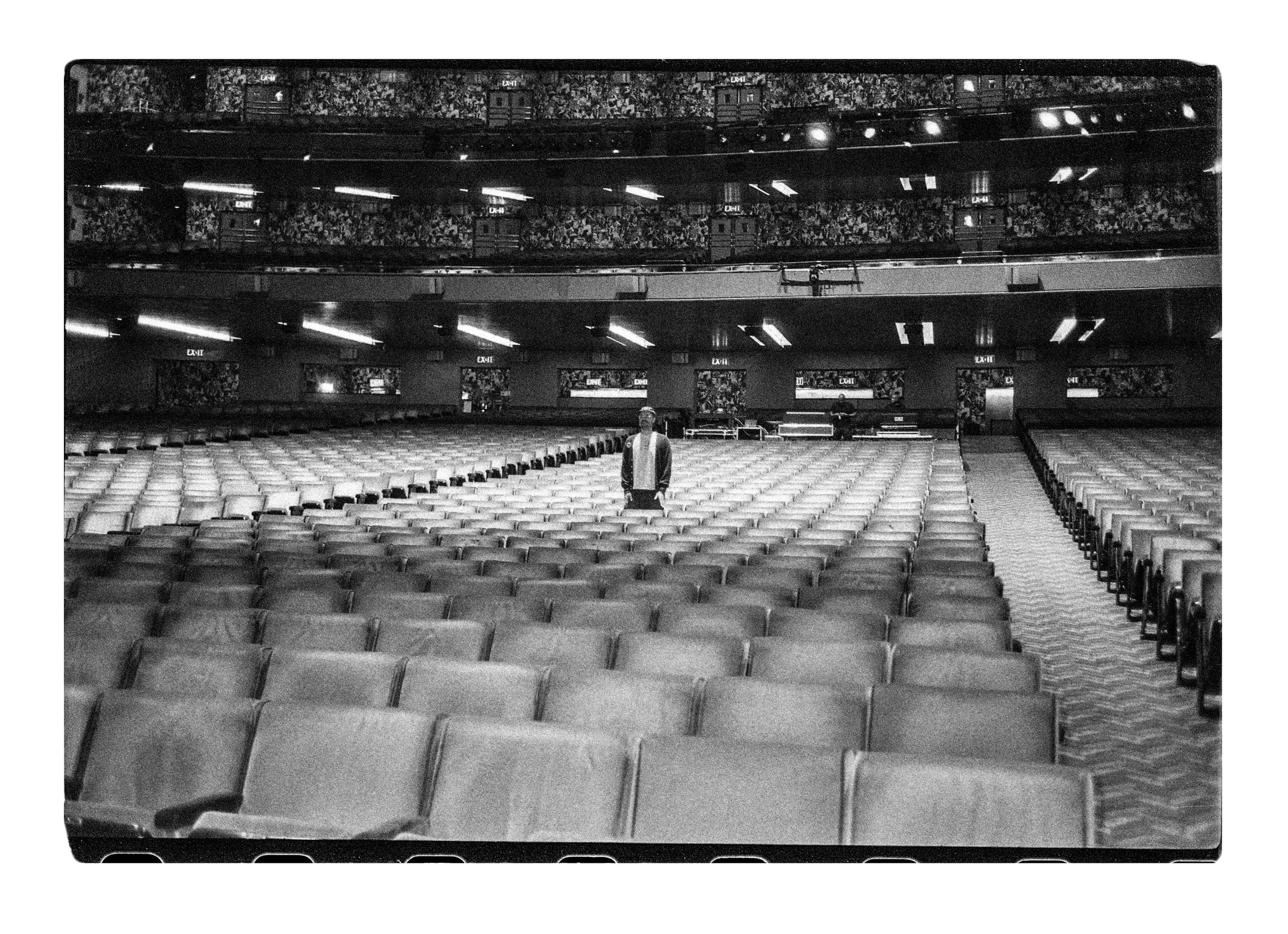
It was a pretty surreal experience getting to sit there alone and listen to one of my favorite albums being played in an auditorium that can hold around 6,000 people.
I picked a seat, sat down, and for a while had the whole thing to myself.
4:03 PM. Rehearsal ended.
In the days following my time with The Format at Radio City, I sent Sam and Nate a series of questions about Dog Problems
By July 2005, while you were still making demos, you were already calling the record Dog Problems. Then a couple years later Nate said having the name before the songs actually helped the record take shape. So before the album had figured out what it was, you had already given it a name. At what point did Dog Problems stop describing something happening around you and start dictating what belonged on the record? And Sam, did having that title that early affect the visual world you started building around it too?
(Sam): Nate came up with a loose concept pretty early on, but outside of that I don’t remember overthinking it much. We just wanted to make sure the album captured exactly who we were in that moment. No offense to Interventions + Lullabies, but making that album taught us a lot about what we didn’t want to do on Dog Problems. We had more time to plan. Nate had a lot to say, and we put our influences on display. I think it threw people for a loop at first, but it’s amazing how quickly they came around to it, especially once the songs took on a new life on stage.
Nate said he was in a pretty bad place while a lot of Dog Problems was being written, but by the time you actually recorded it he was already starting to feel better, which he thought may have made the music brighter. Sam, were you ever arranging music around an emotional state Nate had already started leaving behind? And Nate, did hearing those songs become bigger and brighter ever change what the words meant to you?
(Sam): What I find especially beautiful about Dog Problems is the contrast between the music and the words. So much of it sounds uplifting, but underneath all the bells and whistles are these powerful, sometimes dark lyrics. “Snails” is a good example. I expected it to be a much brighter song, but the subject matter took it somewhere completely different. If we hadn’t let the songs take on a life of their own, it wouldn’t be the album it is today.
“Dog Problems” and “I'm Actual” apparently started with Nate coming up with melodies alone, then singing them to Sam, who would figure out the progression underneath them. Nate, when you handed Sam one of those melodies, how specific was the thing you heard in your head? And Sam, was there ever a song where what you built underneath Nate's melody was completely different from what he thought he was handing you?
(Sam): We were both pushing each other a lot during the writing process. I was playing much more piano at the time, which was out of my comfort zone since I’m completely self-taught, but the songs needed it. The more intricate ones, like “Dog Problems” or “I’m Actual,” were much harder to work out than past ideas where we’d just find the chords on a guitar. But my limitations ended up producing some unique counterparts to Nate’s melodies. I’m sure they weren’t always what he had in mind, but I think they landed exactly where they needed to.
There’s always been something almost theatrical about Dog Problems to me. Not necessarily musical theater in a literal sense, but the way characters seem to enter and leave songs, the huge shifts in dynamics, the horns, the voices answering each other, even something like the harpsichord on “Snails.” The songs often feel like they are staging scenes rather than just moving verse to chorus. Was that sense of theater / progression something either of you were consciously thinking about while making the record, or is that just what happened once you started treating the album as one continuous story?
(Sam): We weren’t setting out to make anything overtly theatrical so much as wear our influences on our sleeves. At the time, people compared us a lot to Jellyfish, which was an enormous compliment, and we were lucky enough to have Roger Manning Jr. write most of the string and horn arrangements, play harpsichord, and contribute a few other things to the album. We spent hours talking through ideas with him. In the end, I think it came down to attention to detail, not just in the planning but throughout the entire process.
“I'm Actual” jumps between this incredibly self-absorbed narrator, resentment toward magazines and the music industry, and then very intimate breakup imagery. Were those originally two separate frustrations that got folded into the same song, or did romantic rejection and professional rejection genuinely feel like the same thing at that point in your lives?
(Nate): That’s a great question. At the time I’d say they were folded into the same song but in retrospect they were the exact same thing for me at the time.
You recorded this record for two months, roughly twelve hours a day, six days a week. Is there a song on the record where you can still hear the hour of the day it was made? Something that could only have happened because your ten hours into the day and everybody had stopped making reasonable decisions?
(Sam): The title track, “Dog Problems,” was probably the most tedious. It has a pretty elaborate tempo map that took a long time to sort out, one of those behind-the-scenes details a casual listener might never notice. I remember one night in particular when we stayed in the studio until about 3 a.m. trying to get the timing right on a single section. I’m sure Steve McDonald and Ken Sluiter still carry some trauma from those sessions. We definitely kept them on their toes!
Aaron Wendt is credited with “Doppler” on “Pick Me Up.” Is that referring to a Doppler monitor? If so, do you remember what it was actually used on to make the sound? I’m wondering if that’s what we’re hearing in those first few seconds, that warped, warbling sound before the song really settles in.
(Sam): I think there was a Pro Tools plug-in with a similar name. We tried to recapture that sound during the album sessions, but it never quite landed, so we ended up pulling it straight from the original demo we’d made with Aaron in Phoenix.
What I find interesting is how subtle a lot of those choices are. You can hear something like the opening texture on “Pick Me Up,” or the harpsichord on “Snails,” and it just feels completely natural inside the song. Then you look at the credits or start pulling the arrangement apart and realize how unusual some of the decisions actually were. Was there somebody involved in making the record who was especially responsible for pushing those kinds of ideas, where the goal wasn’t necessarily to sound experimental, but to find strange sounds that could disappear into the song and somehow just work?
(Sam): We picked Steve and Roger specifically because we knew they’d be on the same page with us about our ’60s and ’70s pop ideas. We weren’t trying to make a period piece, but it was important to blend our “modern” songs with some timeless touches. Not to compare us to them, but similarly to the way The Beatles did with George Martin. We knew that without the right collaborators, it just wouldn’t come together.
Nate described the original idea for Dog Problems as almost a two-sided record, the first half being the gloom and the second half arriving at some big realization. Then you admitted the realization never really came. When you were actually sequencing the record, did you know you were building toward an ending the person in the songs hadn't completely reached yet? And was "If Work Permits" written to solve that problem, or was that simply as far as the story could honestly go?
(Nate): In my head the plan was for “if work permits” to loop back into matches and restart the album with the thought that “no matter how hard I try to stop it, this feeling is never going to end”. But I actually think with the relationship finally ending, the label stuff resolved, and the band stopping, it was the bookend to that time in my life. I don’t really spend much, if any, time looking back - but being forced to kinda do so now makes me realize that that part of my life or story or whatever, pretty much ended right there an entirely different chapter starts after.
When Atlantic dropped you, Sam has said it was a real letdown, but years later you've both talked about getting out of that situation as one of the best things that could have happened. Looking back now, do you think Dog Problems could have actually become the same record if Atlantic had said yes? Or was getting dropped, and eventually releasing it yourselves, necessary for the album to become what it did?
(Sam): Getting dropped was never really the letdown. It was more the timing of Interventions coming out just as Elektra folded. It’s unfortunate the album never got a fair shake in the “mainstream,” but at this point I wouldn’t trade that experience for anything. I believe we’re in the timeline we’re supposed to be in. Everything that happened back then was meant to be. It put us on the road, where we spent years building an audience that’s carried us nearly 20 years down the line, and we’re still doing this on a much bigger scale. I’m grateful for all of it, and for every lesson we learned along the way.
When you finished Dog Problems, were there songs the two of you assumed would become the important ones, the songs people would still care about years later? Twenty years later, what were you completely wrong about? Was there something you thought was a centerpiece that became more of a deep cut, or some relatively small song that people ended up carrying with them?
(Sam): I’m fascinated by how much that album keeps growing with people. We’re so proud that Dog Problems has lived on all these years and been passed down to new generations. It’s not lost on us how rare that is, especially considering how abruptly we stopped playing not long after. I’m just thrilled to have been a part of it, and to still be able to perform it with some of my closest friends all these years later.