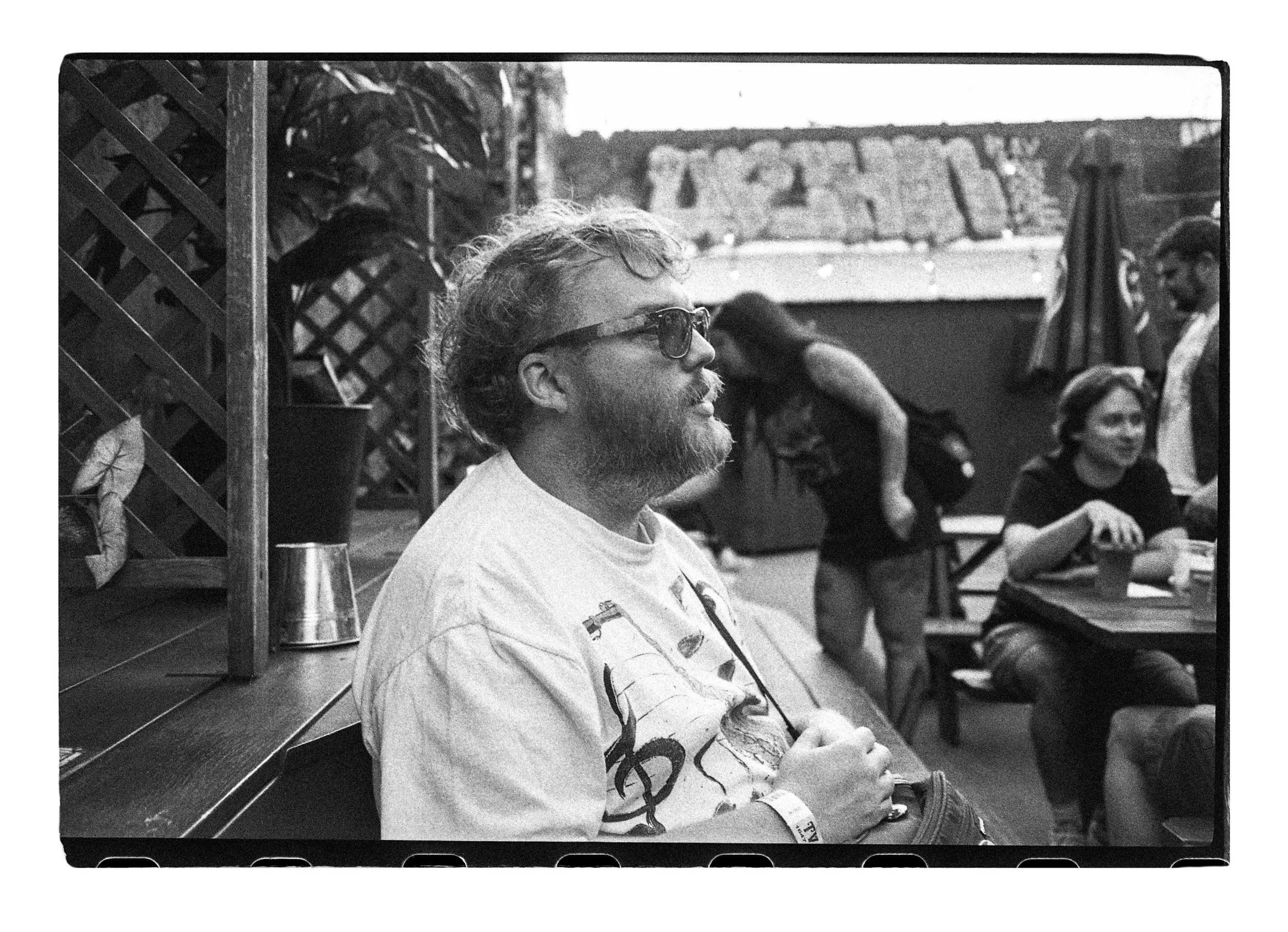
I reached the venue just as a car pulled up and Sam stepped out. He said hello before he had finished gathering his things, and within a few minutes we were walking up the street for pizza. Soundcheck was still an hour away, so nothing needed to happen immediately. Somewhere between the venue and the pizza place, we discovered that we had both been born in Michigan.
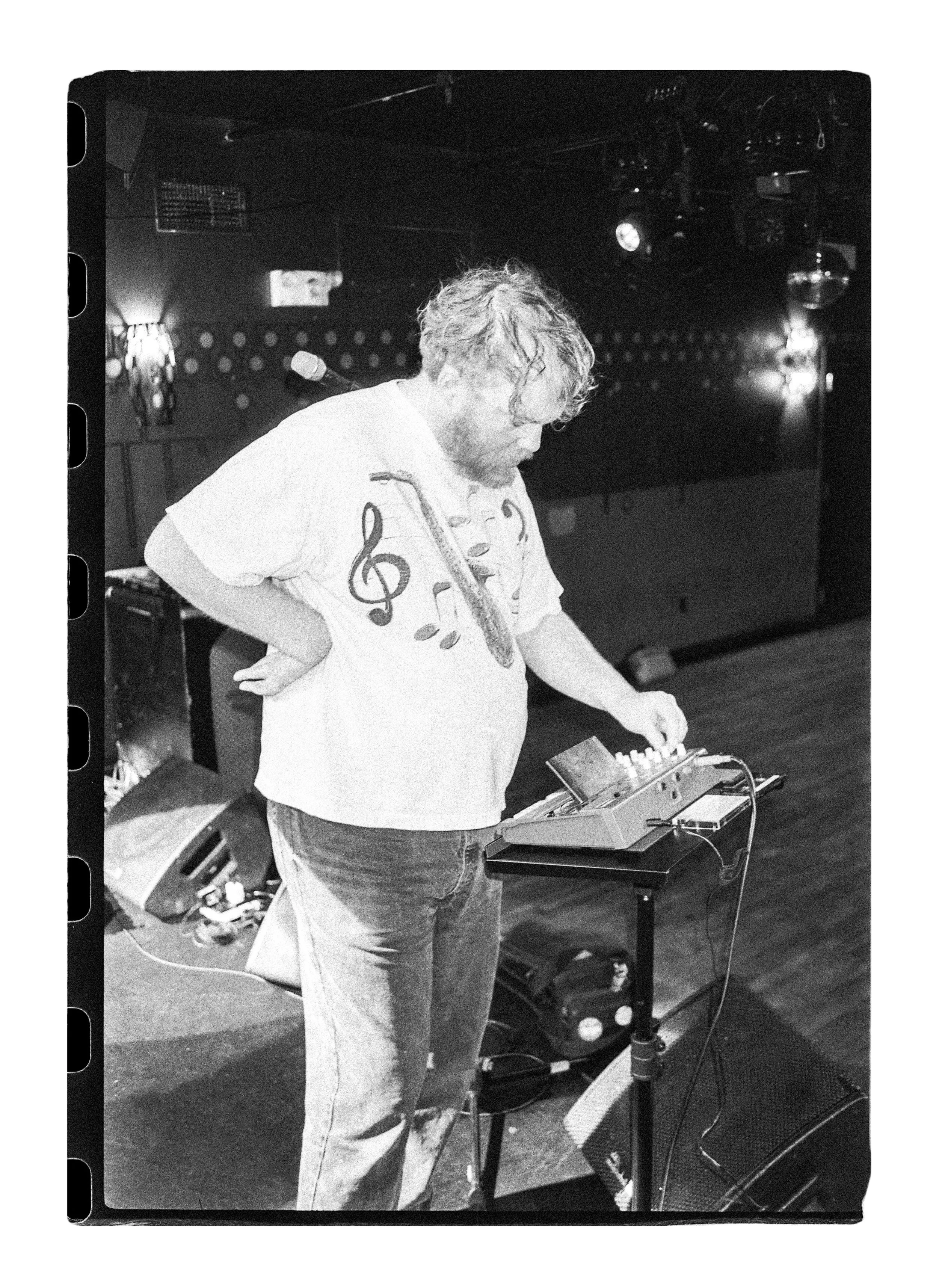
I had brought him a seven-minute loop cassette as a gift, hoping it might eventually find its way into something. This led us into talking about four-track recorders. Sam still uses the same one he bought in high school, a machine he found at a yard sale for fifty dollars and now carries onstage with him. Later, he showed me the cards he keeps with each cassette. Every one is marked with the precise knob levels needed for the songs it holds. Tiny handwritten instructions for rebuilding an entire arrangement in real time.
Before soundcheck, we walked over to the photo booth. I never like giving too much direction inside those things. The booth already controls the light, the timing, and the four small chances it gives you, so it feels better to leave something to accident, my only request was he take his 4-track in with him. For the final frame of the second strip, I climbed inside with him.
We talked about old remarks that I came across while doing some research. At an early house show, after too many crowdsurfers kept landing on the stage, Sam apparently declared, “No more flying people.” Years later, when an interviewer gave him the word “guitar,” he replied, “Boring.” Both comments made more sense after spending a little time with him. There is a playfulness to the way he speaks about music, but also a restlessness. Nothing seems too sacred to be questioned, laughed at, recorded backward, or rebuilt into something else.
In the minutes before the set, I stayed behind the curtain while he gathered himself. Gear switched on. Cables were checked. The correct cassette was placed into the four-track. Sam adjusted its levels using the notes written on the card, then when his desk clock he brought with him showed it was time he told the front-of-house he was ready.
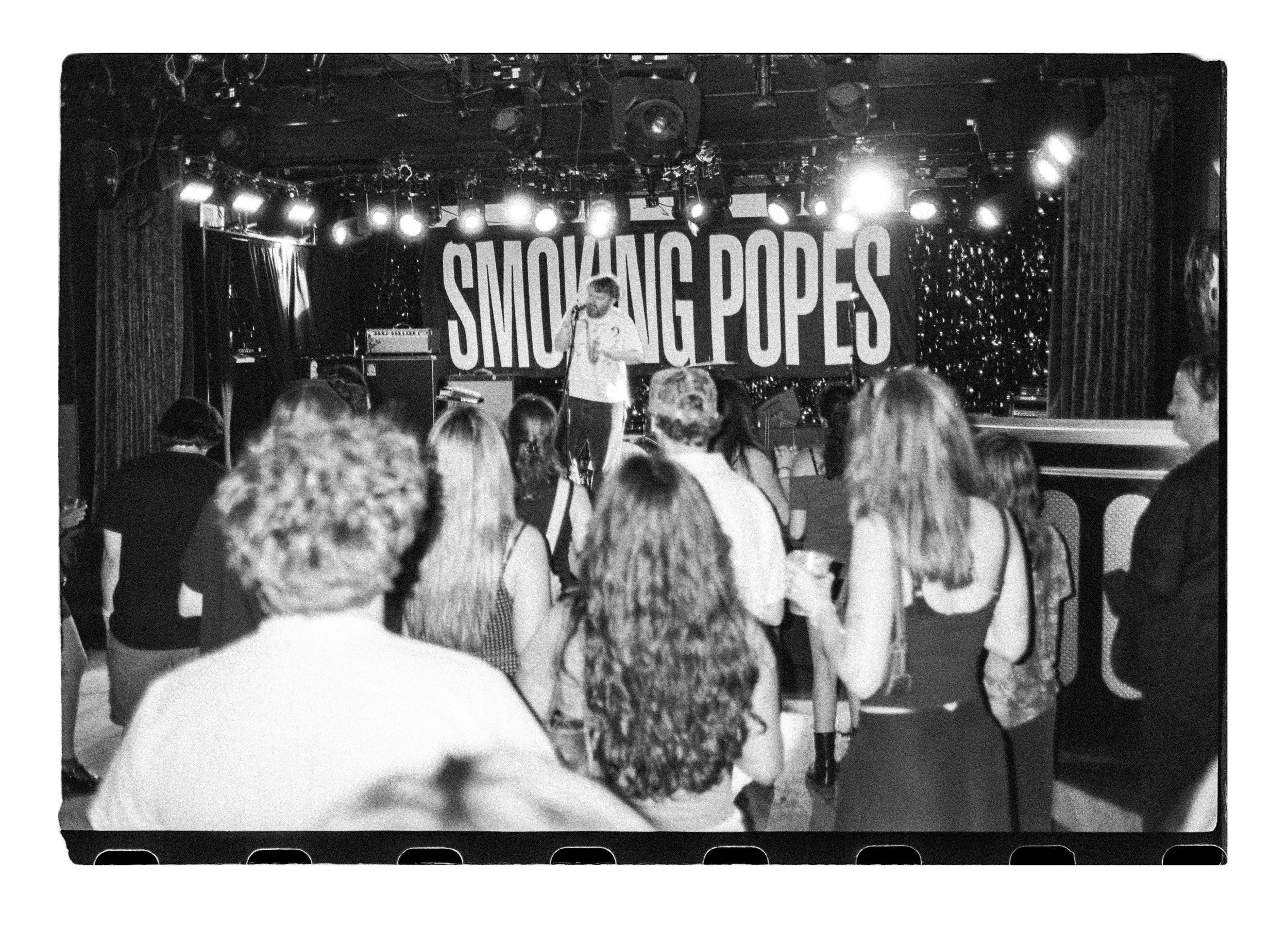
The curtain began opening almost as soon as the words left his mouth.
I made a few photographs from the side of the stage before slipping into the crowd. During the first few songs, a question internally seemed to move slowly from person to person: are you going to stand there, or are you going to dance? More of the room began giving in. Sam carried the same joyful energy he had while walking around for pizza and sitting inside the photo booth. He was going to dance. He was going to enjoy himself whether the room followed or not.
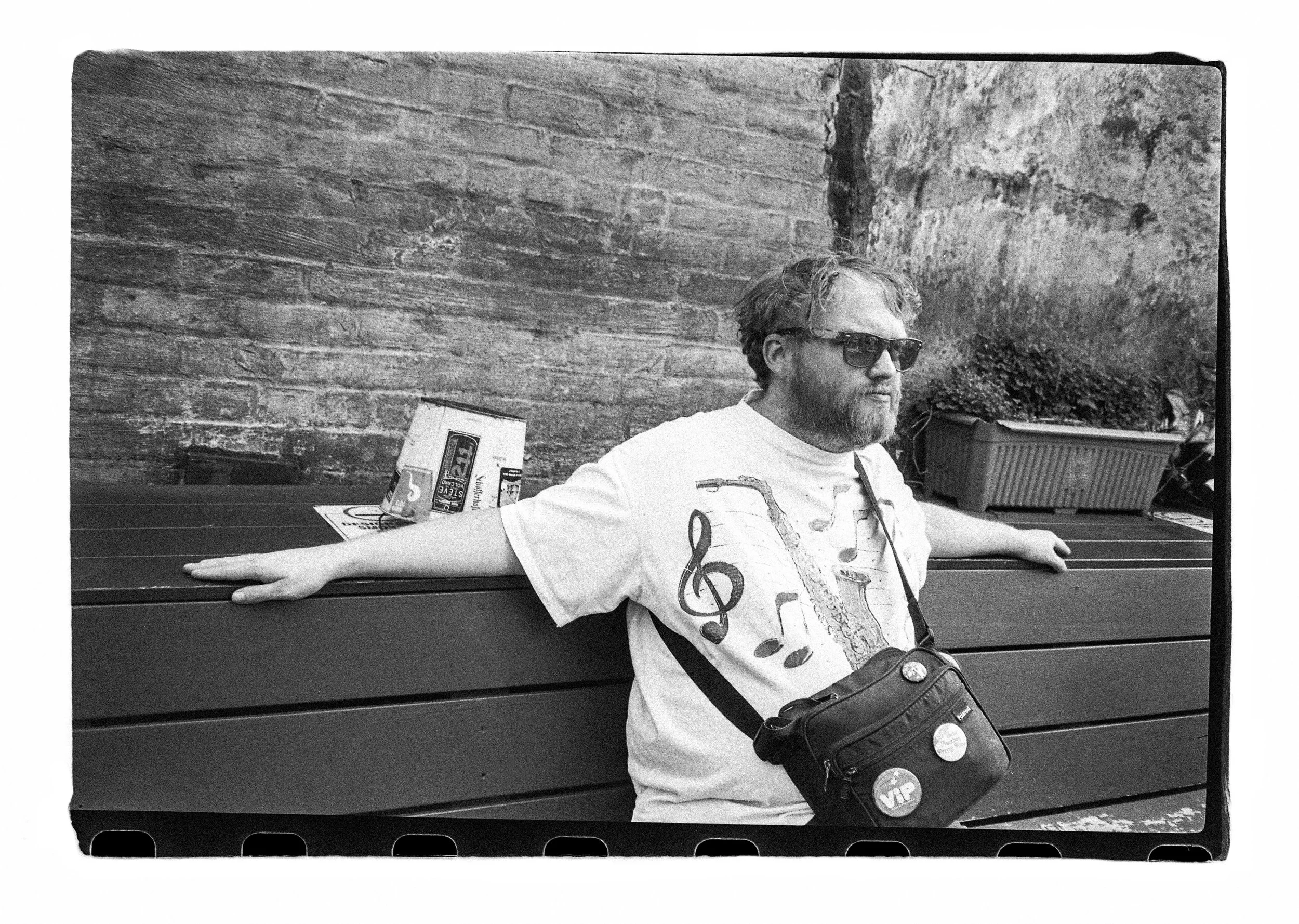
Before Distorting Time, you considered allowing these songs to exist under a different name. I have struggled with a similar impulse in my own work, wanting things to have separate identities before eventually recognizing the thread connecting them. What changed that made you hear these songs as part of Radiator Hospital again? Was there a particular night, sound, or physical sensation when the project seemed to switch back on?
Well all the songs for the LP I actually made specifically after I decided it was going to be an RH album. For several years prior, I was writing songs with the idea fhat I was gonna maybe try something different, but once I scrapped that, it was pretty easy to switch back into RH mode, with all my new kind of ideas and attack plans in place.
Can’t Make Any Promises captured Radiator Hospital as a four-piece, while Distorting Time was made primarily alone, even though you still describe the other members as irreplaceable. When you are recording without them, what remains present in the room? Do you hear their instincts, anticipate their reactions, or carry certain habits that could only have developed through playing together?
Well, that album is actually only about half with the band and half with just me. And pretty much all of the lyrics are about the band itself breaking up. I played with the same lineup for 10 years, even though before/during/after that it was always kind of a solo project. So i certainly would write to their playing when I was playing with them, but it was incredibly freeing to just make an album by myself knowing that I could recreate it myself without other musicians. They are irreplaceable because I wasn't gonna keep doing a live band RH with different people, which ultimately led me to my new live performance path.
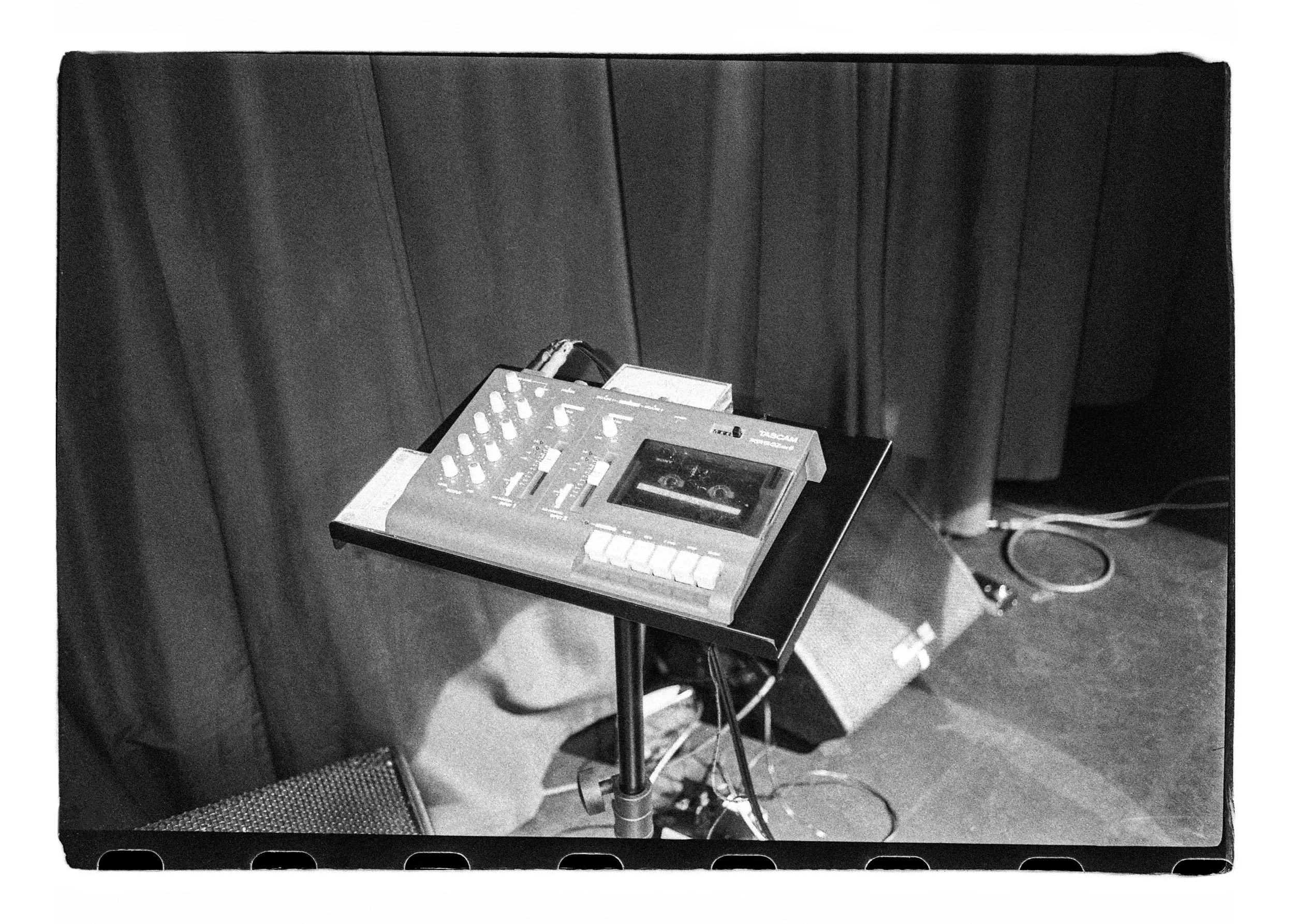
There is something strange about returning to the four-track connected to the earliest Radiator Hospital recordings and having it become not only the center of the new album, but another body onstage carrying the instruments and voices that are no longer physically there. When did that machine stop feeling like a way backward and reveal itself as the way forward? Has the studio swallowed the live show, or have you simply exchanged human chaos for the possibility that one small machine could ruin the entire night?
Last fall I was asked to go on tour with the band Saintseneca. I was initially just going to play solo guitar, typical singer/songwriter style which I've done many times before. But then I had the idea to try the tape machine thing, and it worked really well. I initially only planned to do it for half my set, but then i just went crazy from there. It honestly only ever felt completely natural, and i wasn't really thinking of it as a throwback or a future thing, just a present thing.
A cassette forces every sound to occupy a physical strip of time. It can be rewound, slowed down, damaged, recorded over, or simply run out. The album was also written and recorded within a relatively short period. Did working quickly on that particular format make time feel less like the subject of the record and more like one of its instruments, while preserving the moment before you could question or polish it away?
Sure :) I love working quickly and to a deadline, I think i end up making better stuff that way. And recording to tape and with just four tracks only helped to simplify and streamline what i was up to.
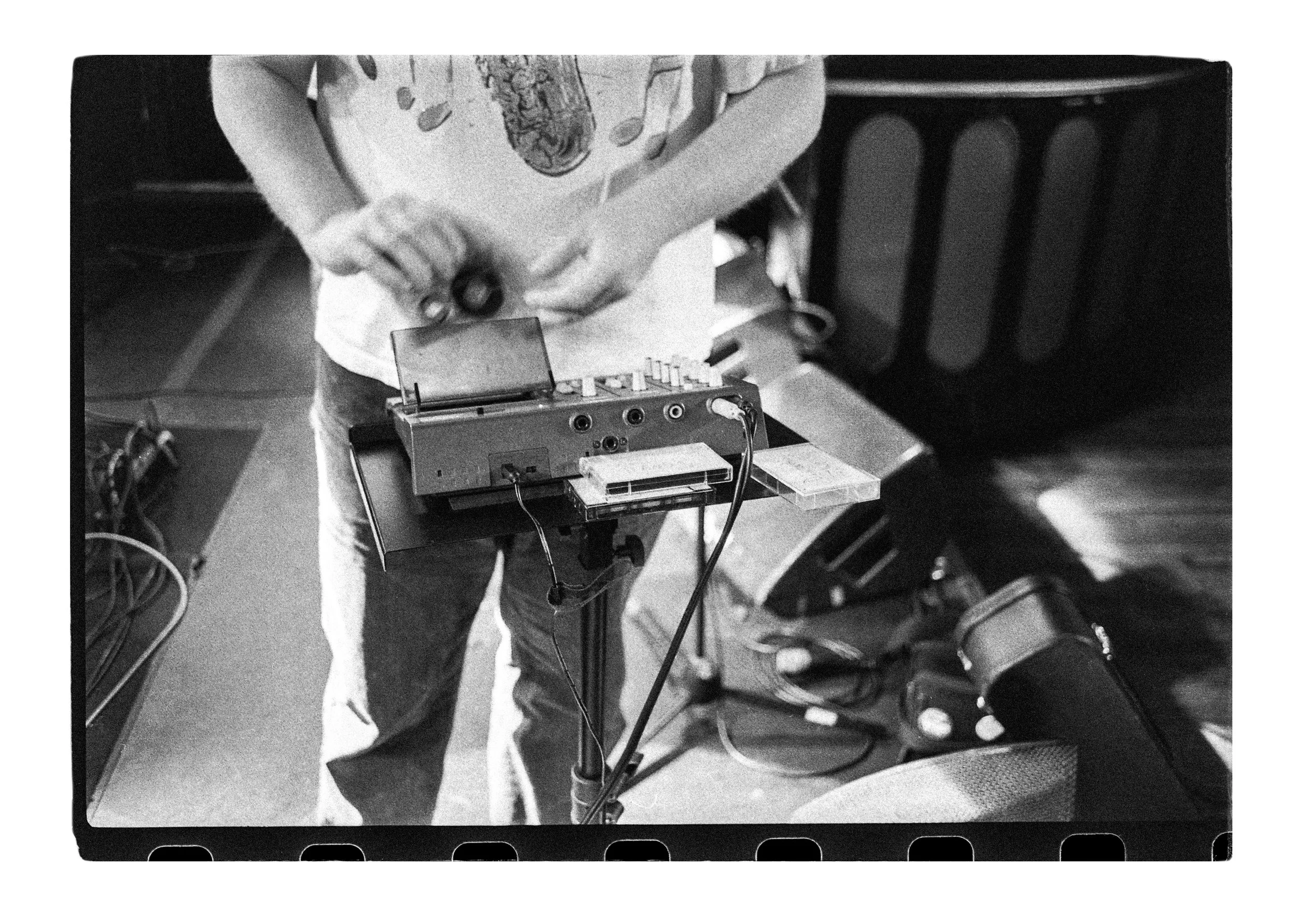
You have said that you could never have made this record at another point in your life. What is present in Distorting Time that the younger person holding the same four-track would not have known how to make, leave alone, or understand? After doing this for nearly half your life, what has become genuinely easier, and what has become harder because you can now recognize your own escape routes before taking them?
Well I definitely am better at recording, like the sounds are technically captured better, but that's not really what i meant. I guess i always was making home recordings and thinking about how i would either play them stripped down, or with a rock band. And now I've found this new way which isn't either of those. So i'm just making my songs my way. It's still hard to write a bridge so i usually skip those :)
In “Wall Between Us,” some of the distance is blamed on Father Time and Mother Nature, but then you ask who actually laid the bricks. Were you thinking about the difference between distance that forms naturally and distance that people actively construct, then blame on the passing years? When you sing about living the old you down, does that mean escaping an earlier self, accepting him, or simply learning which parts of him cannot be outrun?
That song is about when a friendship just drifts apart, not for any bad blood or ill will. Like it just kind of fades away even though both people still think fondly of each other. And the part about living the old me down is partly about making new RH music, and partly about just always wanting to be better and improve myself and learn from my mistakes.
The album begins with “Can You See the Future?” and ends with “Distorting Time.” It feels like a movement from trying to look ahead to admitting that our view of time is unreliable in every direction. Was that arc intentional, and where does the present tense exist between those two songs?
The arc and title of the record was not intentional, after a while it sort of started becoming aparrent and i leaned into it.
Years ago, when somebody asked you about the guitar, your immediate response was “boring.” On this record it has to sit beside keyboards, bass, drum machines, manipulated tape, and all these other possible textures. What did you have to make the guitar compete with before it became strange enough to interest you again?
Honestly the most fun I have been having with guitar lately is recording to tape backwards. You can play really bad and it still sounds cool!
Earlier Radiator Hospital records sometimes used fictional characters or invented events to carry emotionally truthful material, but the project now contains more than fifteen years of actual history. Does fiction become more useful as the biography gets heavier, or harder to hide inside? With “Wildman Dance” looking toward an artist who kept working into his nineties and “Ballad of Big Nose George Parrott” reaching backward into your own family history, were those figures helping you measure inheritance, longevity, or the distance between the person you came from and the person you may become?
I love embodying someone else and writing from different perspectives.
Those 2 people and stories were just kind of branching off points to really write things about myself or people i know.
This record moved between a lot of different spaces. It began at home, was partially finished in a professional studio, and includes songs that first reached people through Patreon. Then the official Bandcamp credits end with political statements that are much more direct than the songs themselves. After all these years, has maintaining control over how the work is made and shared also given you the freedom to decide when a song should remain ambiguous and when something needs to be said plainly?
Actually none of the songs on the LP were from patreon, but i did put out a bunch of songs that way that the label is gonna put on an exclusive tape. Those are the songs that are a little more trying to do something different than RH. As for being plainly political, it's hard because ultimately the kind of music i write is really simple pop songs, and it's hard to not sound trite or heavy handed. I try to make my beliefs and politics clear in my everyday actions. I'm always trying to make something meaningful within the fine parameters of a simple song.