I had known about Cash Only Tony’s for a while before I really knew Cash Only Tony’s.
My friend Luke had put me onto them, and after that they seemed to keep appearing somewhere in my peripheral. I first remember meeting them last year at Music Hall, when I was there working on a piece with a band they were opening for. After that, their name just kept showing up. Which is maybe the strange thing about Cash Only Tony’s. For a band that has released relatively little music out into the world, they seem to exist almost everywhere.
Their audience has largely been built the old-fashioned way, physically. People show up. Friends bring friends. Someone hears about a show happening somewhere and suddenly there are bodies pressed against the walls. The recorded songs almost feel secondary to the larger thing happening around them. So when Annika asked if I wanted to spend two days in the studio while they recorded their upcoming album, there wasn’t much to think about. I filled two bags with cameras and said I would be there.
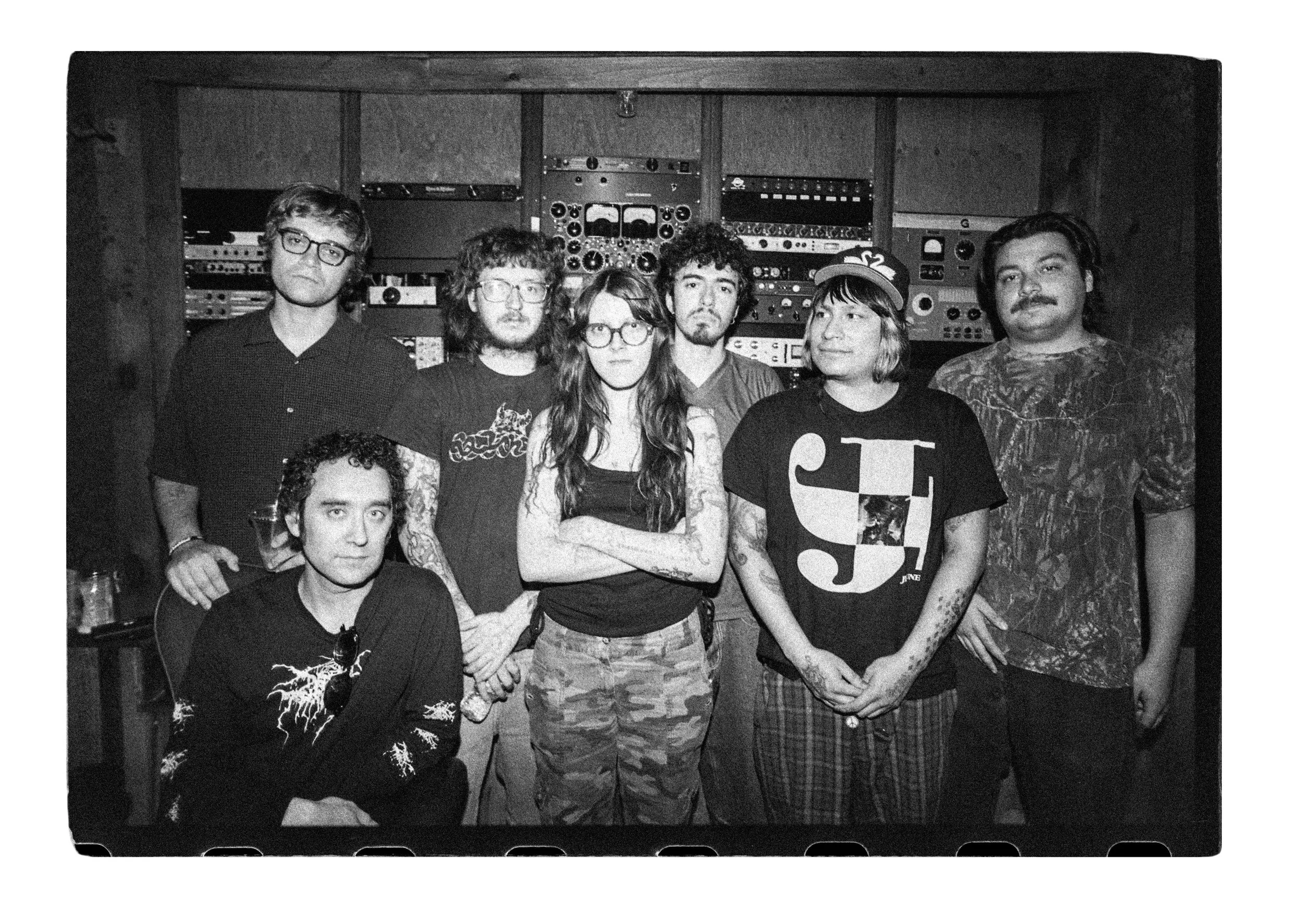
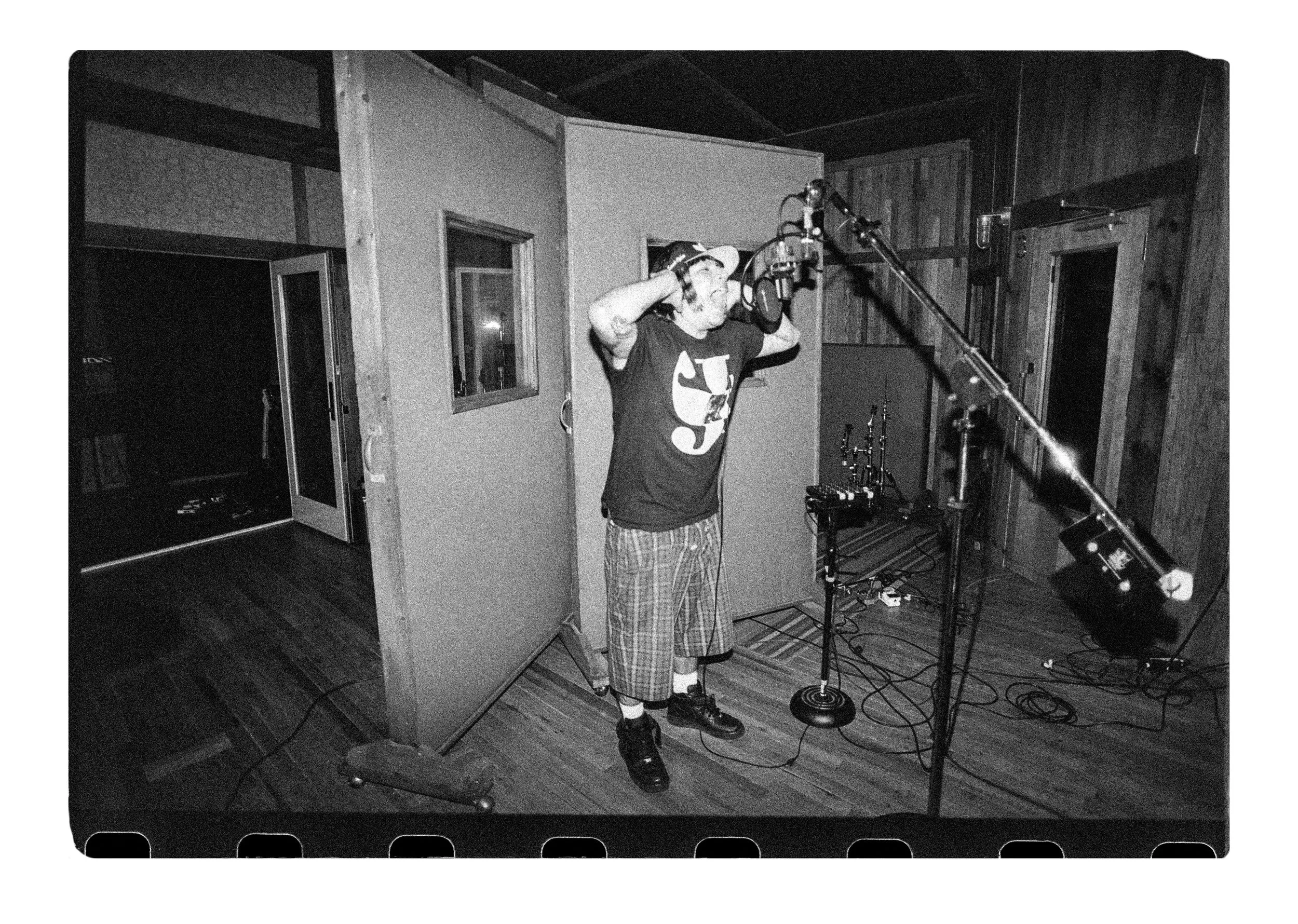
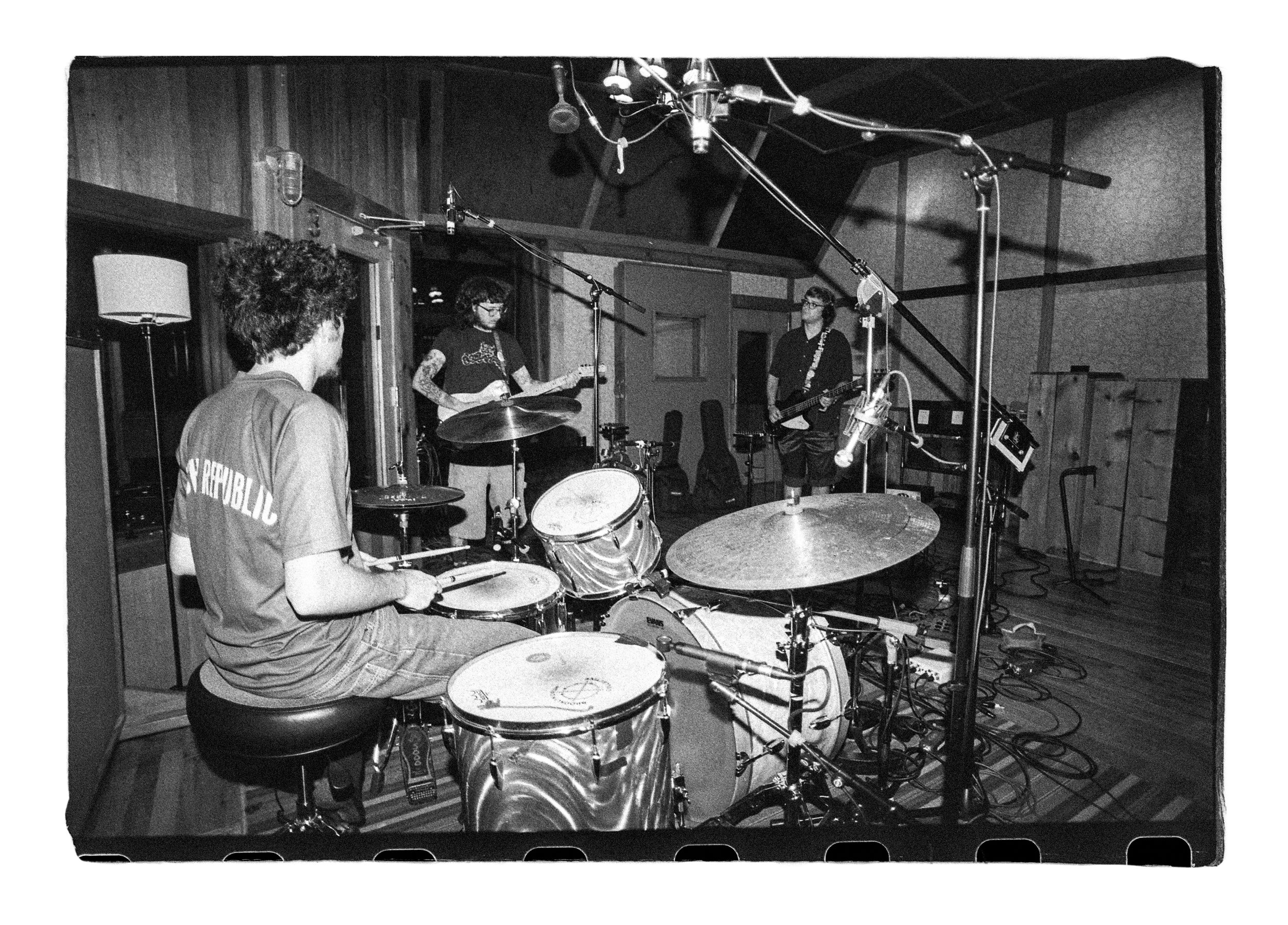
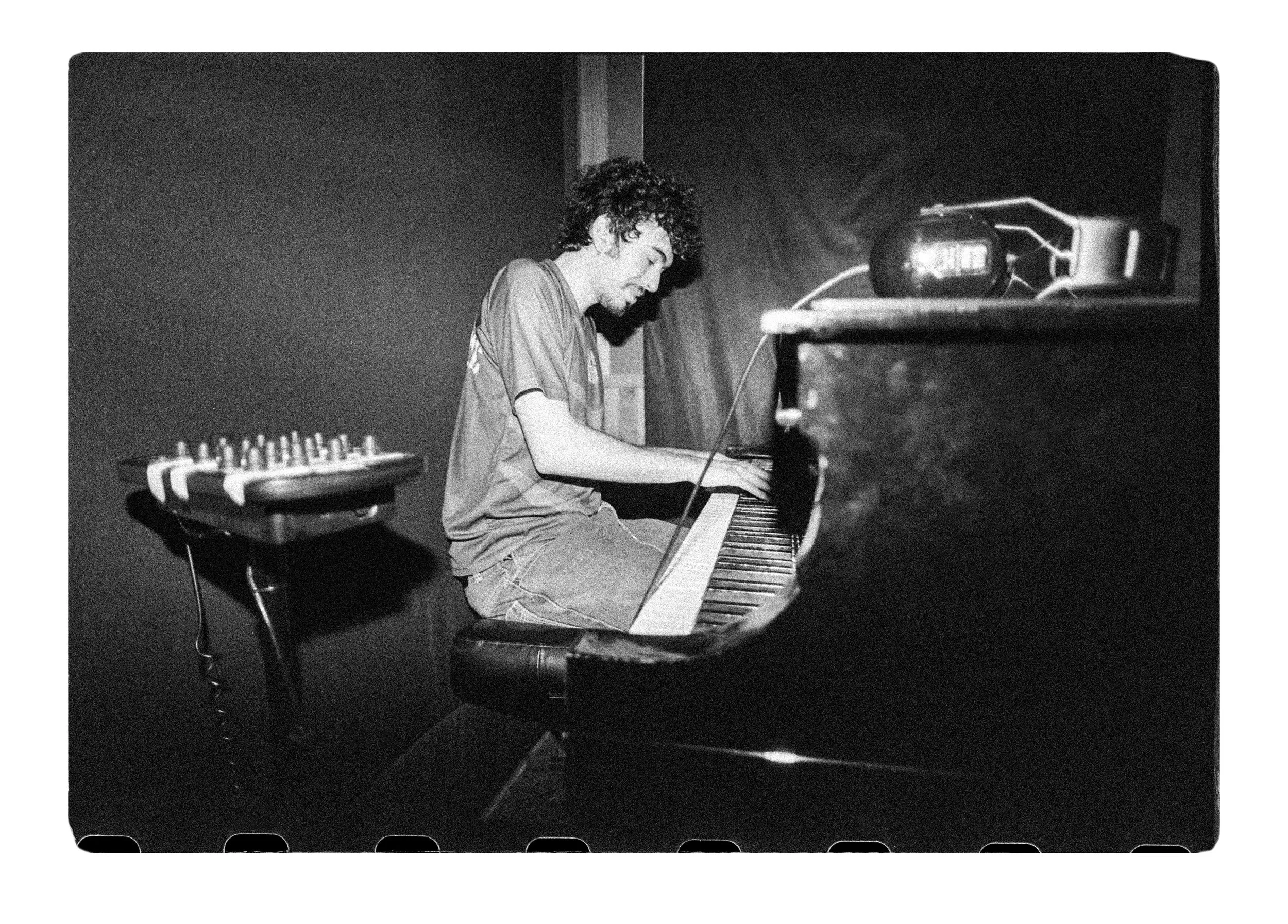
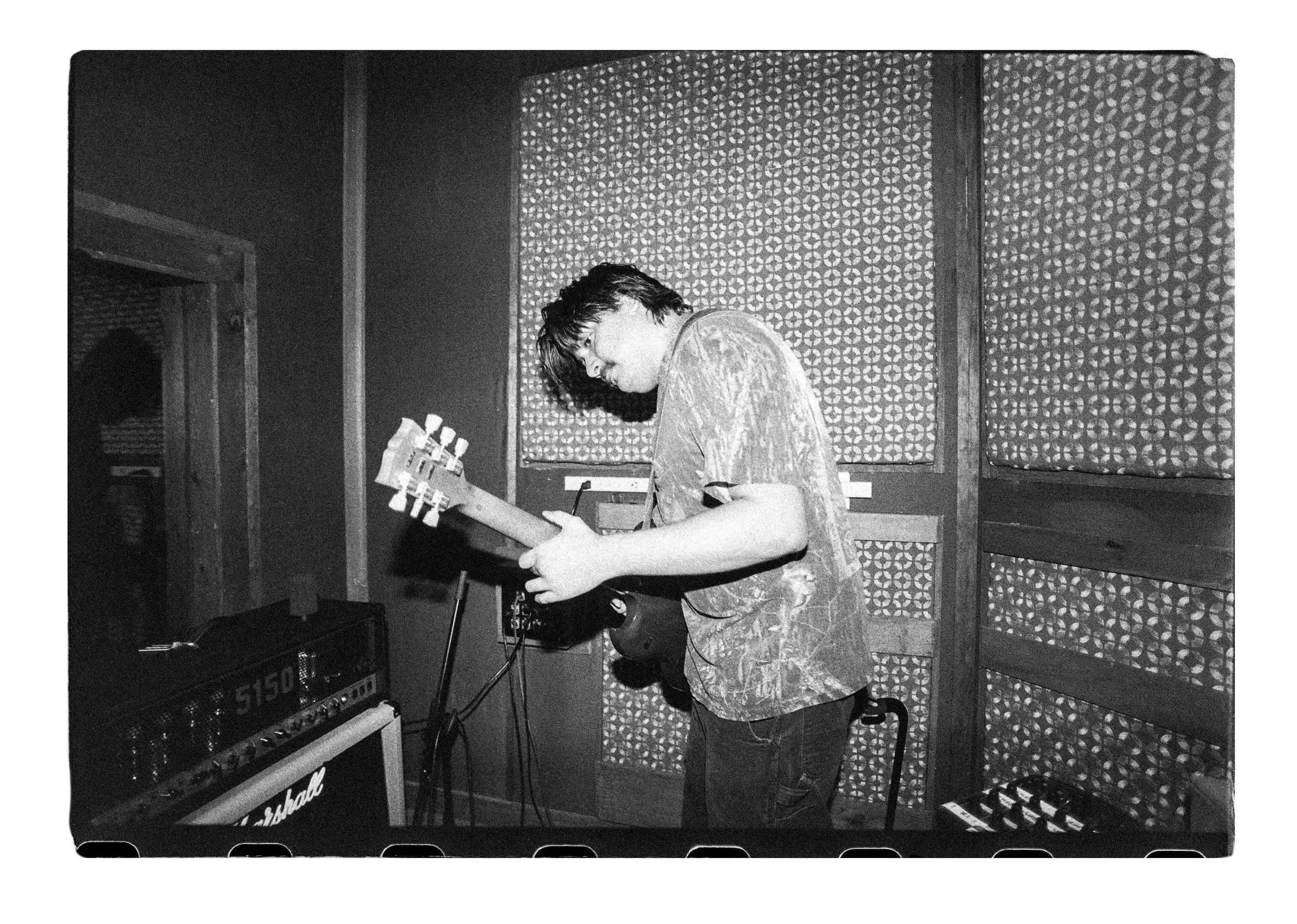
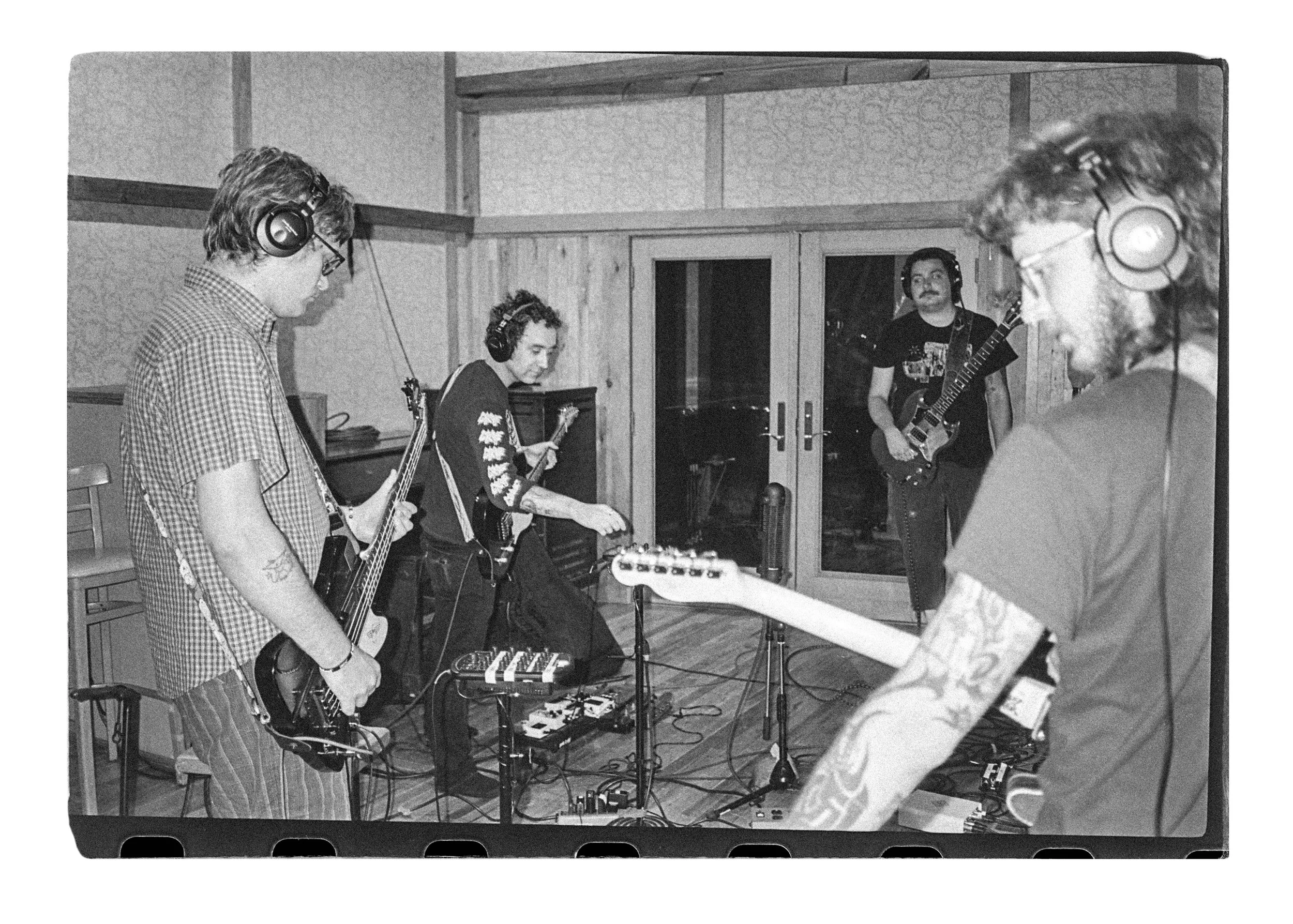
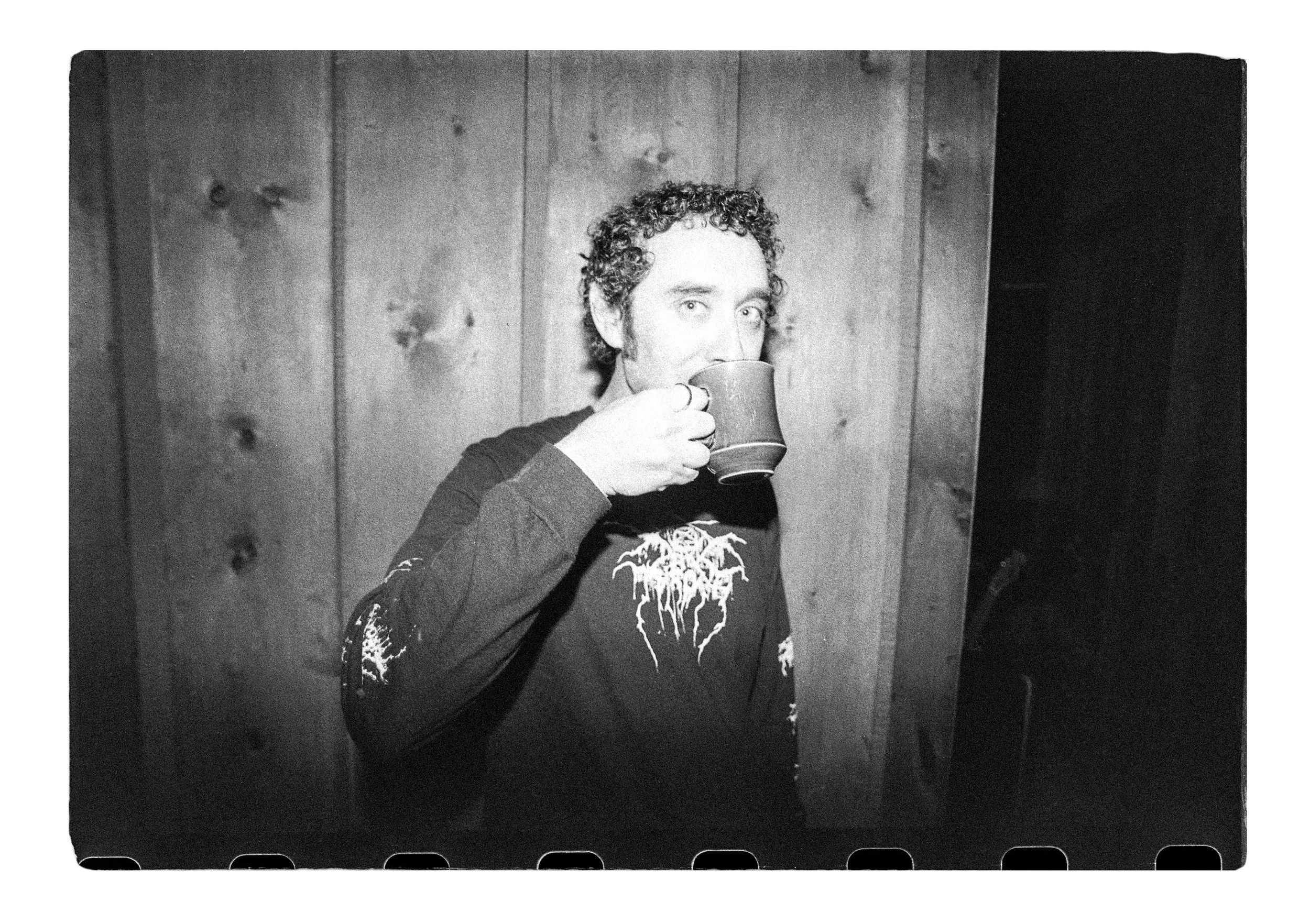
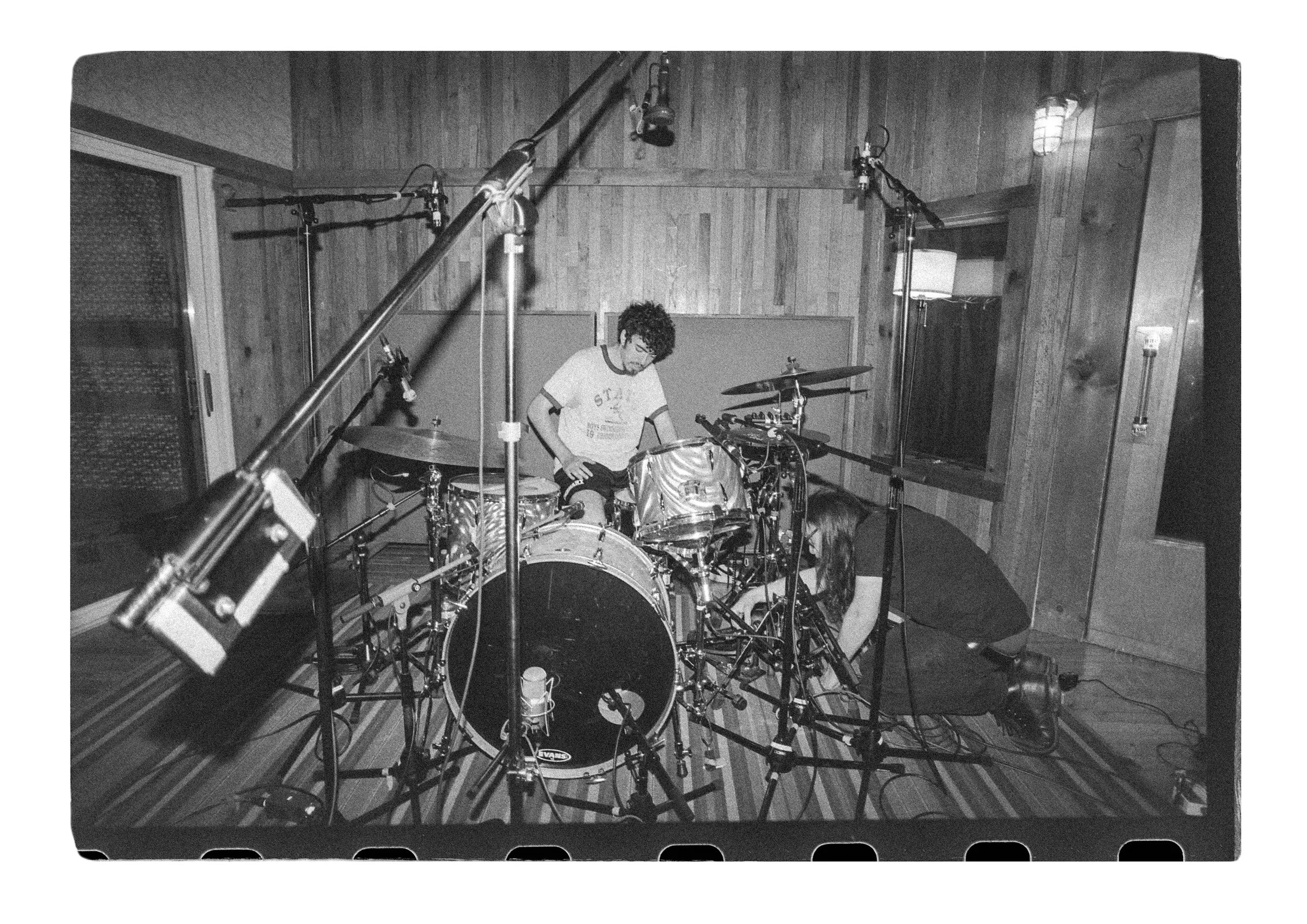
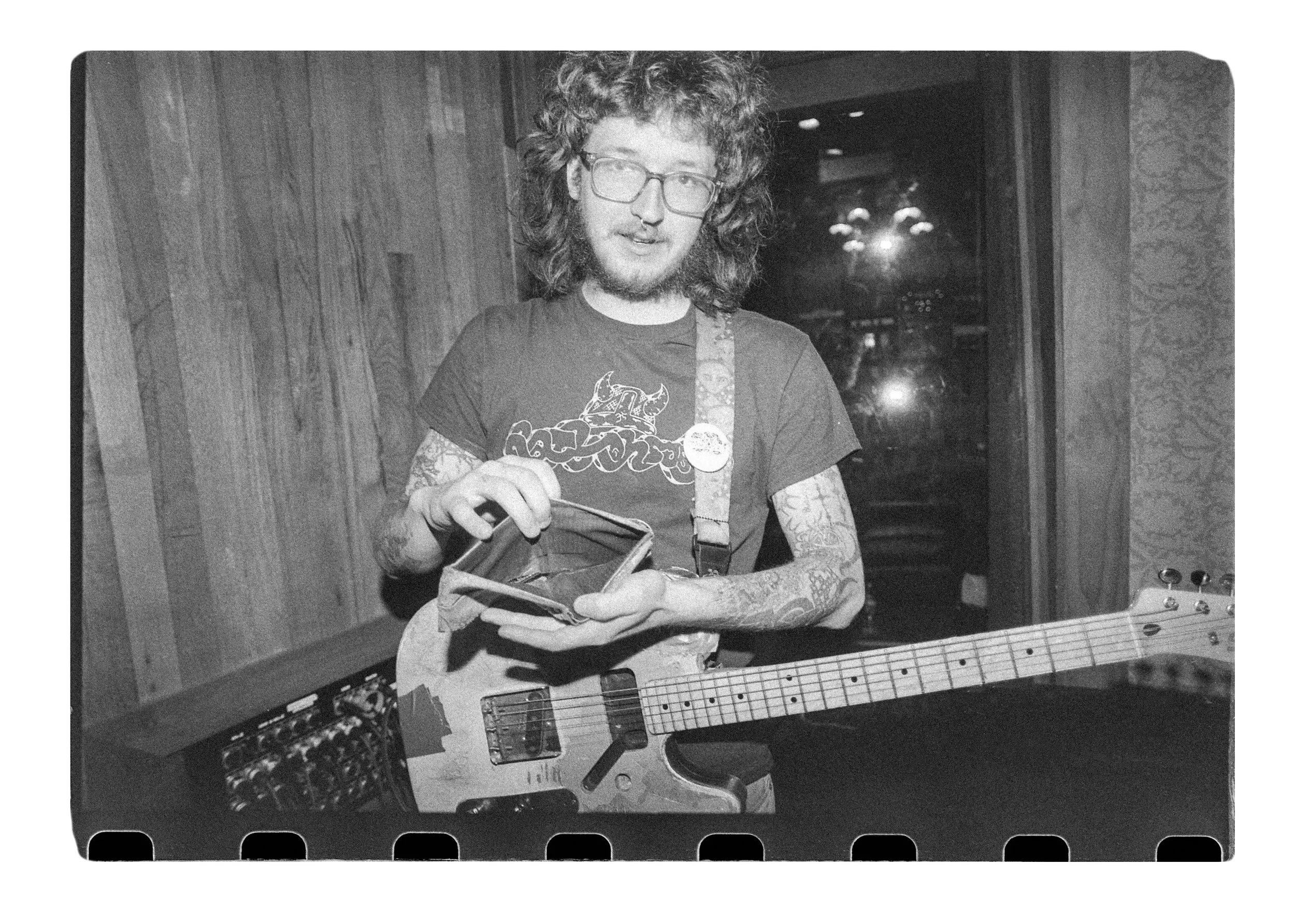
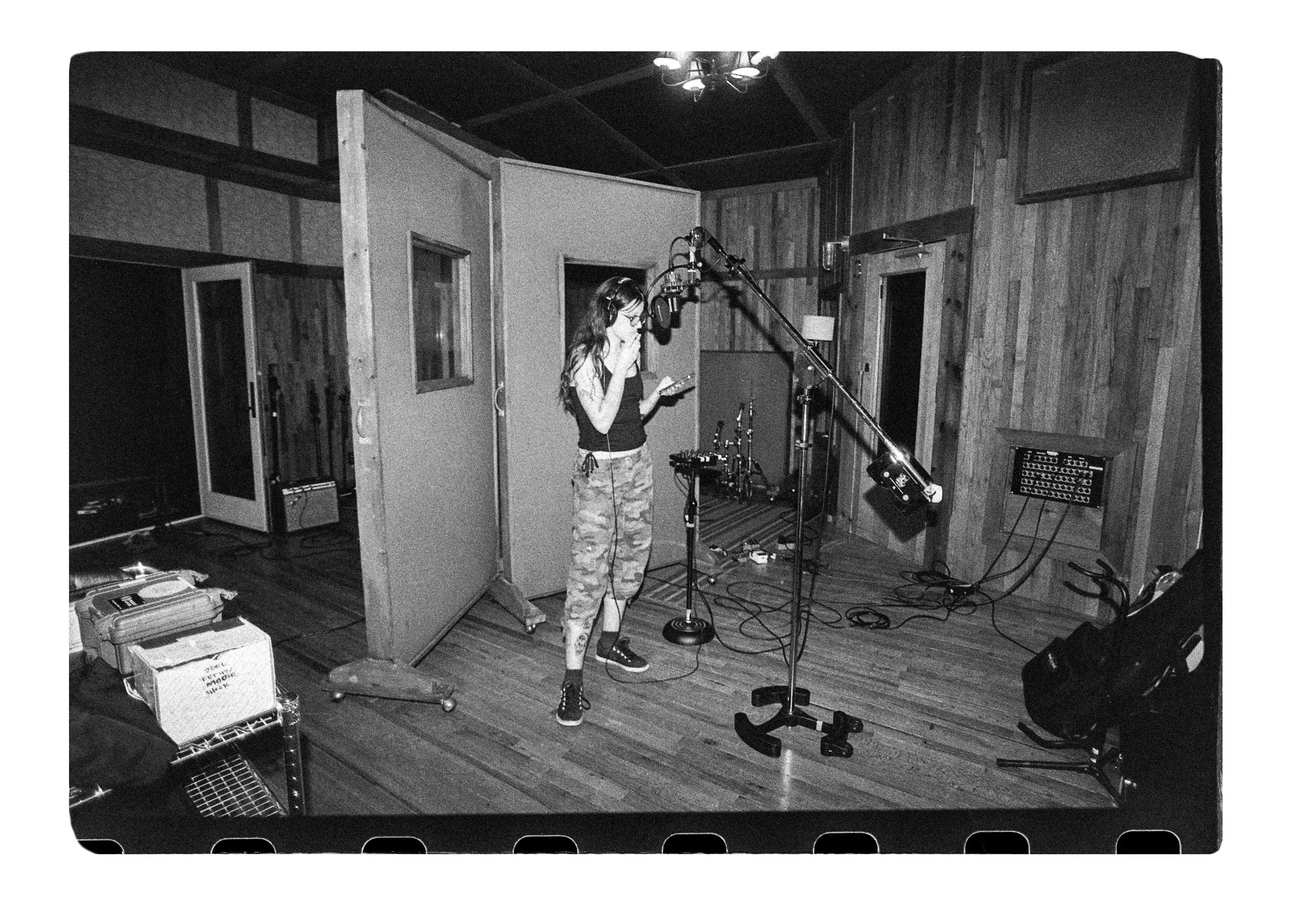
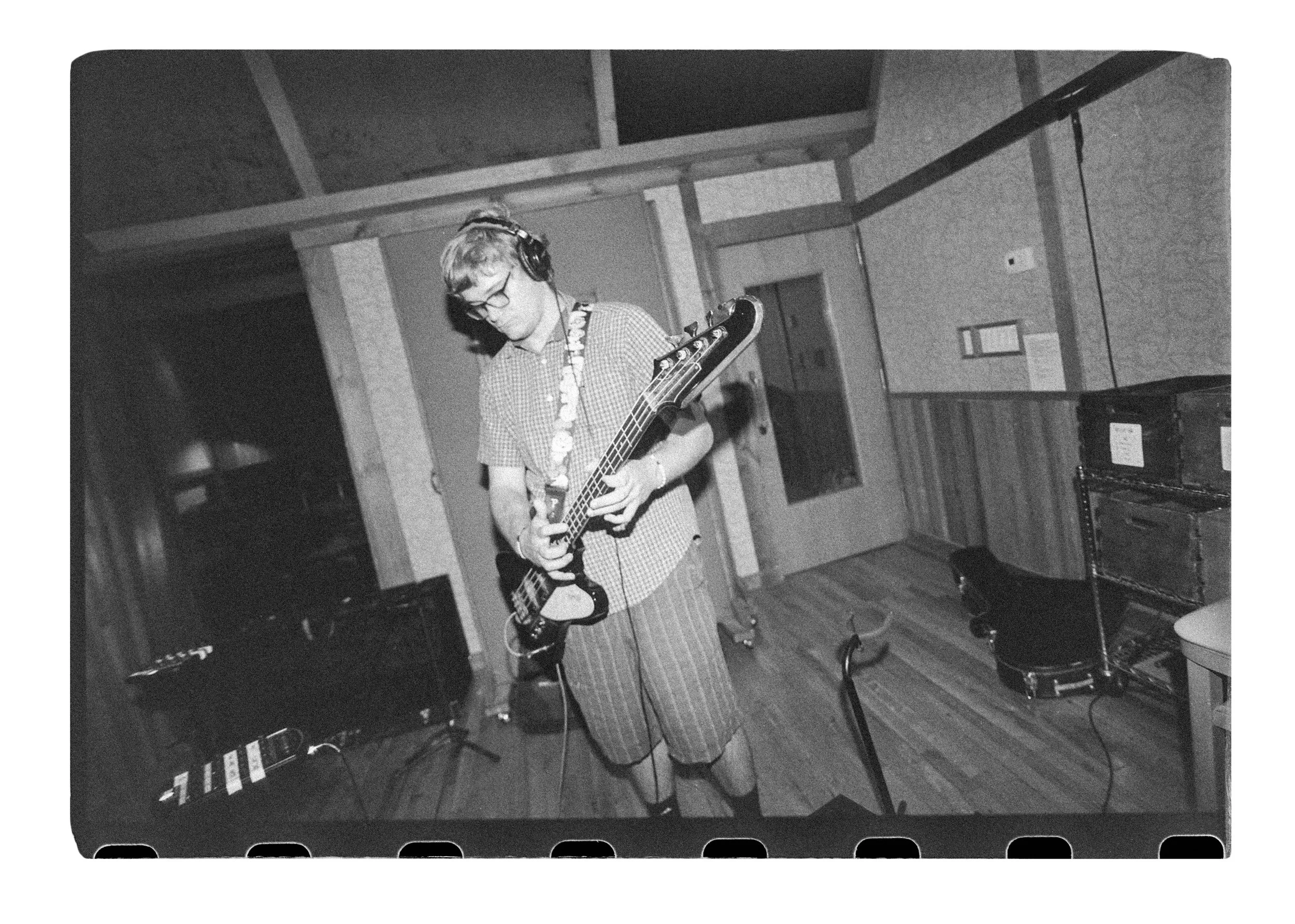
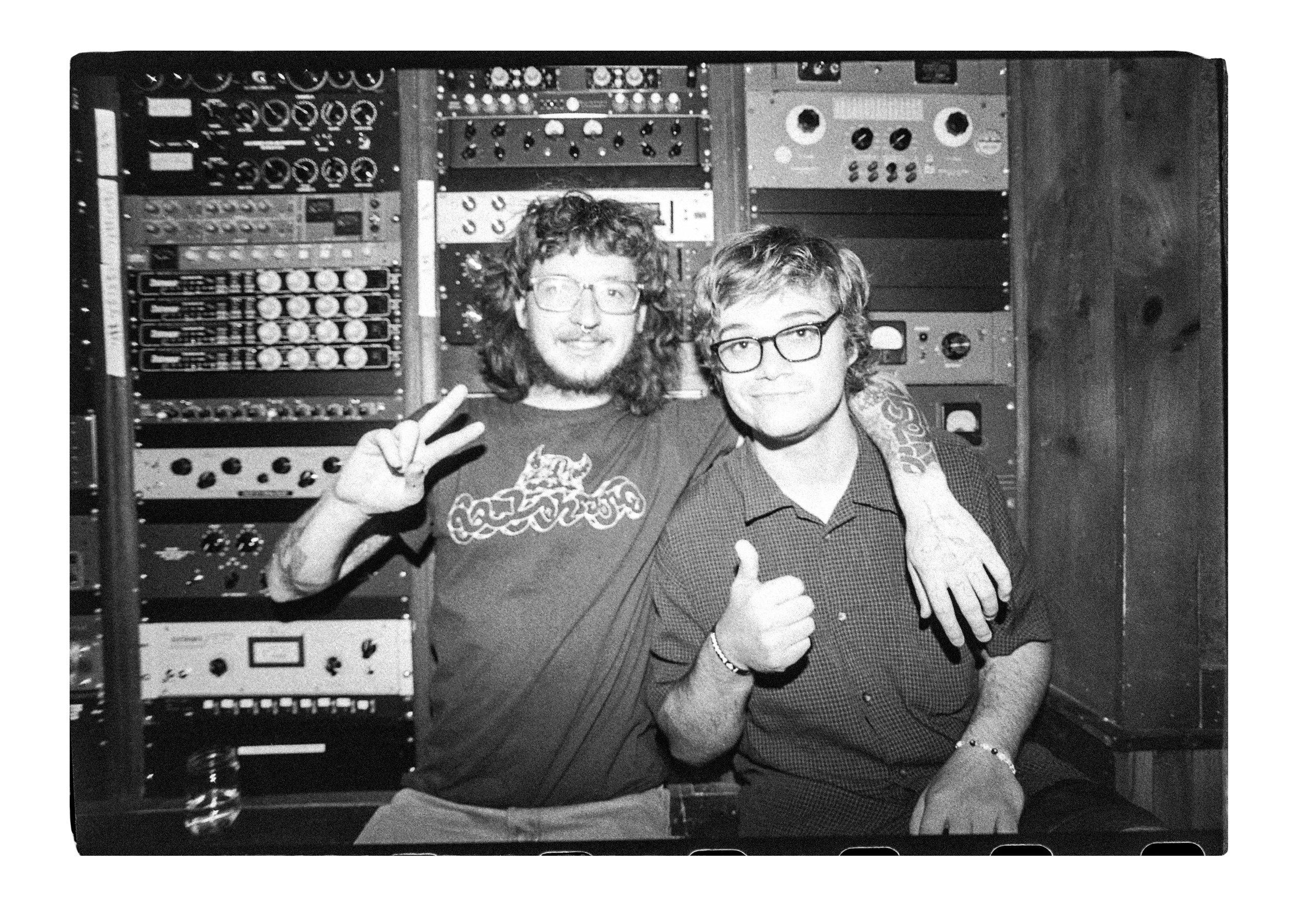
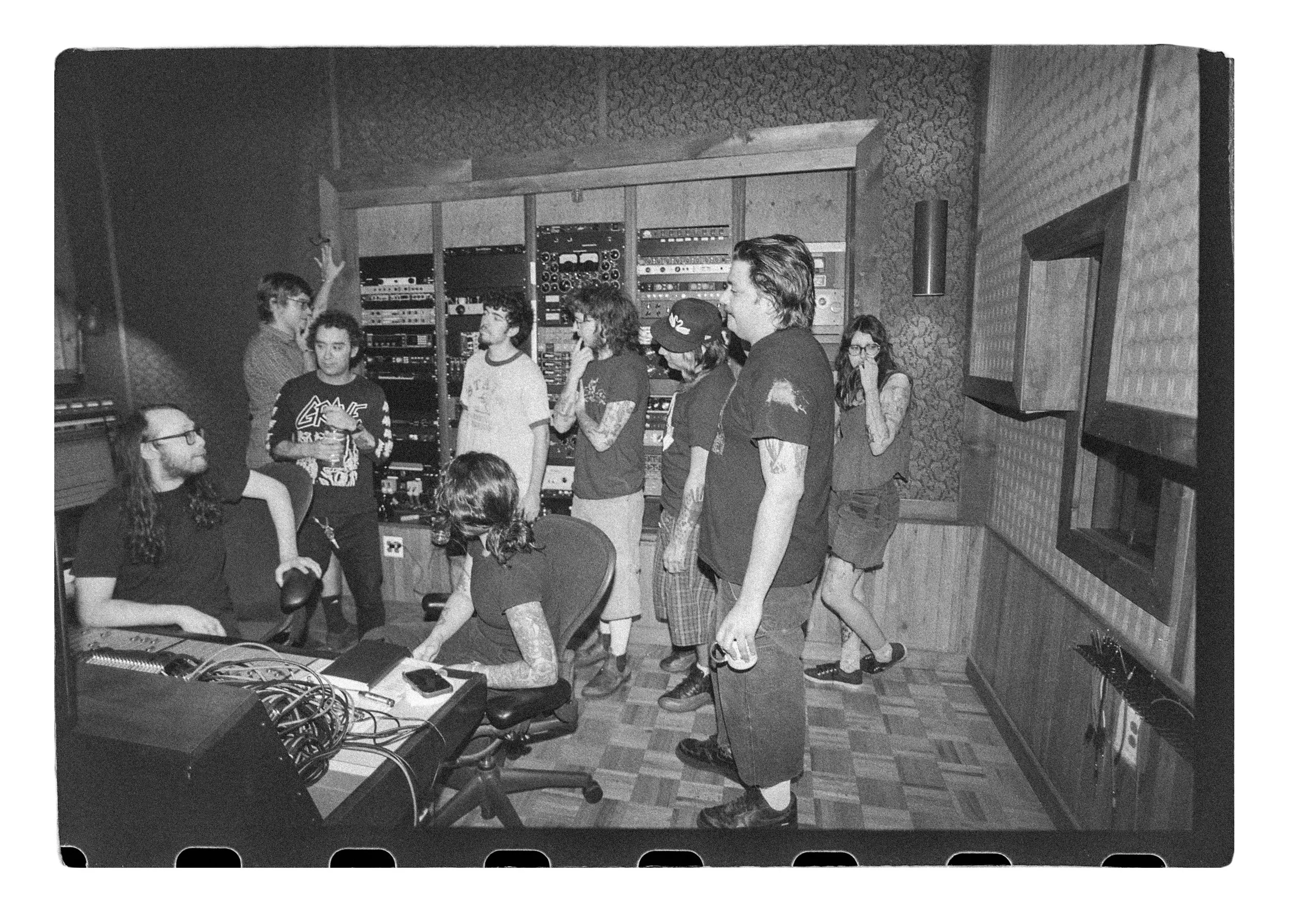
For two days, I watched seven people try to turn the songs that have mostly existed in basements, packed rooms, and on the road into something that could survive being trapped inside a recording. I shot seven rolls of film and three hours of footage hoping I could capture that lightning in a bottle.
Maybe that was what interested me most about being there. Cash Only Tony’s already play like a band in constant conversation with themselves. Onstage, they spend most of the set facing one another instead of the crowd. From the outside, you could mistake it for distance, maybe even feel like you are watching something you were never entirely invited into. Spend enough time around them, though, and it starts to look completely different.
They are always checking in with one another. Little jokes passed across the room. A quick look when something goes wrong. Eye contact that seems to say everything is fine without anyone actually having to say it. What looks like seven people turning away from the audience is really seven people turning towards the thing keeping the whole machine moving.
The studio takes that same private language and slows it down.
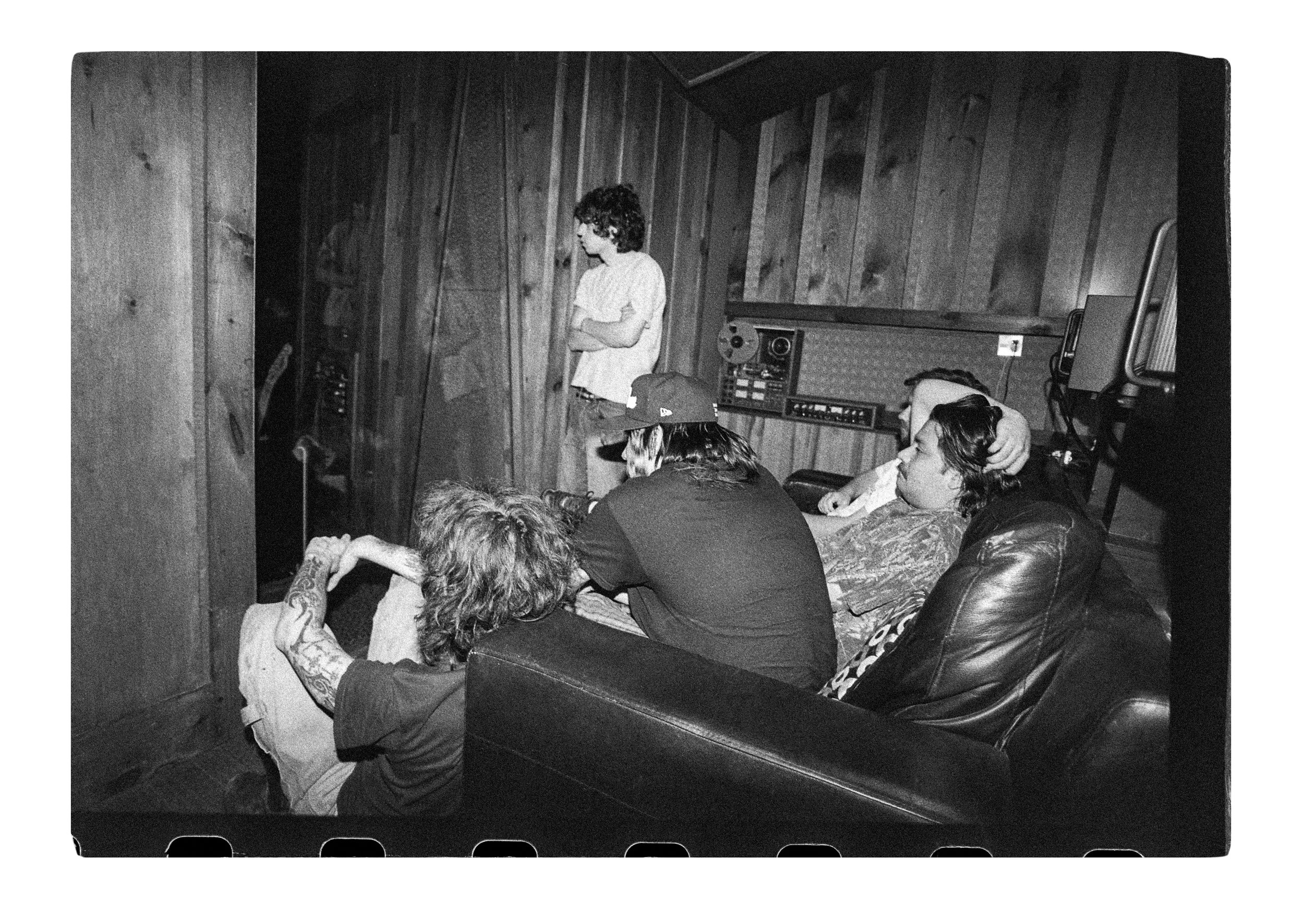
Now there are headphones. Repeated takes. Seven people listening back to a few seconds of sound that most of us will eventually hear without ever knowing how long they spent talking about it. Someone plays something again. Everyone listens. Someone disappears outside and comes back in. A joke gets thrown across the room. Then the room gets quiet.
They listen again. Then they do it again.
These photographs are from those two days.